






















Table of Contents:
Introduction
Industrial sewing machine: are you looking for a high-performance solution to optimize your textile projects? Discover in this article everything you need to know about the industrial sewing machine, a true ally for professional sewers and production workshops. More robust, faster, and more precise than a home machine, a professional sewing machine allows you to work with both lightweight fabrics and more technical materials like leather or upholstery. Wondering how to choose between a flat industrial machine, an industrial machine for heavy fabrics, or an industrial machine for upholstery? This comprehensive guide helps you select based on your needs, budget, and production goals. You will also find a comparison between industrial and home machines, advice on evaluating essential criteria, and a focus on models suited for each use. Ready to discover the industrial sewing machine that perfectly matches your ambitions? Follow the guide!
What is an industrial sewing machine?
An industrial sewing machine is designed to meet the needs of professionals. It allows assembling textile pieces with great speed, consistent precision, and durability that domestic machines cannot match.
The industrial sewing machine is built with sturdy materials (metal frame) and offers specific features depending on the application: straight stitch, overlock, cover stitch, upholstery, or leatherwork. Unlike consumer models, it is often dedicated to a single type of sewing to ensure optimal performance.

What are the advantages of an industrial sewing machine?
Choosing an industrial sewing machine offers many benefits, both in terms of productivity and sewing quality.
Among the main advantages:
- Increased power to easily work with thick or technical fabrics.
- Very high sewing speed (up to 5000 stitches per minute).
- Exceptional durability thanks to professional-grade materials.
- Reliability during long intensive work sessions.
- Assembly precision and unmatched stitch quality.
Industrial sewing machine vs home machine: what are the differences?
Before making your choice, it is essential to understand what sets an industrial sewing machine apart from a standard domestic sewing machine.
Here is a concise comparison table to better visualize the major differences:
| Criteria | Industrial sewing machine | Semi-industrial machine |
|---|---|---|
| Power | Very high | Moderate |
| Speed | 3000-5000 stitches/min | 800-1200 stitches/min |
| Usage | Intensive (workshops, pro) | Occasional (hobby) |
| Durability | Full metal frame | Light plastic/metal frame |
| Weight | Heavy (30 kg and up) | Light (10-15 kg) |
| Maintenance | Regular professional |
Minimal domestic |
How to choose your industrial sewing machine?
Selecting an industrial sewing machine suited to your needs is crucial to maximize your investment.
Here are the essential criteria to evaluate before purchase:
- Type of fabric worked (light, thick, leather, technical).
- Type of stitches used (straight stitch, zigzag, overlock, etc.).
- Frequency of use (daily or occasional use).
- Type of production (small batch, large batches).
- Available budget for purchase and maintenance.
- Recognized brand (Juki, Janome…).

Which industrial sewing machine model for which use?
Each trade or textile project requires a specific model of industrial sewing machine. Here’s how to choose according to your specialty.
Flat industrial machine for garments
The flat industrial machine is ideal for garment making. It produces fast, clean straight stitches, perfect for assembling medium to lightweight fabrics.
Industrial machine for saddlery or heavy leather
For leather goods, car seats, or leather accessories, opt for an industrial machine for heavy fabric equipped with a powerful motor and a reinforced presser foot.
Industrial machine for lightweight fabric and lingerie
Lingerie and fine fabrics require an ultra-precise machine with meticulous settings. Choose a machine dedicated to lightweight fabrics, capable of making flexible stitches without damaging delicate materials.
Bonus for industrial sewing machines: essential accessories
To fully utilize your industrial sewing machine, certain accessories are essential.
Among the essentials:
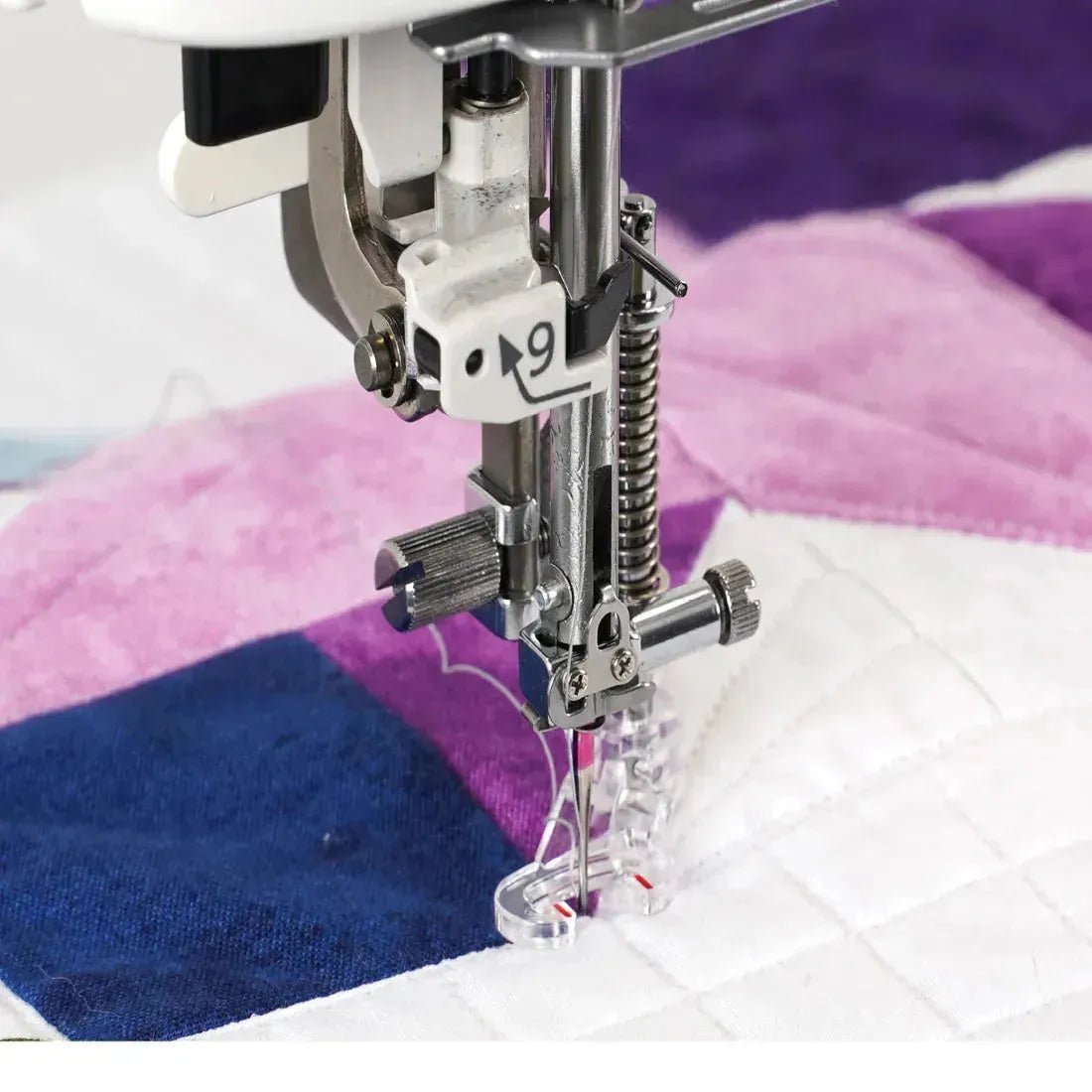
- Specific presser feet (zipper foot, Teflon foot for leather, etc.).
- Industrial needles suited to the fabric type (standard, leather, jersey…).
- Reinforced tables with anti-vibration support for comfortable work.
- Precise LED lighting to work without visual fatigue.

Also consider specific oils for the regular maintenance of your equipment.
FAQ on industrial sewing machines
What is the best industrial machine for thick fabric?
Industrial machines with triple feed are ideal for leather and heavy fabrics.
Can you use an industrial sewing machine at home?
It is possible, but you need to provide a suitable space that is resistant to vibrations and noise.
How much does annual maintenance of an industrial machine cost?
Maintenance varies depending on the complexity of the machine and frequency of use. For any requests, you can consult our maintenance and repair offer.
Are there versatile industrial machines for multiple types of fabrics?
Yes, some high-end models allow you to work with both lightweight fabrics and heavy materials with a few adjustments.
Conclusion
Choosing the right industrial sewing machine is essential to ensure the quality and profitability of your textile projects. By considering your specific needs, the type of fabric you work with, and the frequency of use, you can select an industrial sewing machine perfectly suited to your activity. Remember that the durability, speed, and precision offered by a professional sewing machine are real assets to optimize your production. Whether you want to sew clothing, leather, or technical fabrics, this guide has provided you with the keys to make the best choice. Take the time to compare models, learn about the necessary accessories, and anticipate your maintenance needs to invest confidently in your future industrial machine. Start your textile project with quality equipment!


Leave a comment
This site is protected by hCaptcha and the hCaptcha Privacy Policy and Terms of Service apply.