











Table of Contents:
The choice of fabric is essential to make table towels that are practical, absorbent, and attractive. Used daily or on special occasions, they must feel pleasant to the touch, withstand frequent washing, and effectively absorb moisture.
Natural fibers are generally the most recommended for this type of sewing project. Cotton and linen are especially appreciated for their softness, durability, and absorbency. Other specific fabrics, like waffle or tea towel fabric, are also widely used for their everyday effectiveness.
Which fabrics should you prioritize to sew a table towel?
Given the variety of fabrics, it is important to choose a material suited to the use of towels.
Here are the most recommended fabrics:
Cotton
Cotton is the most used fabric for table towels. It is soft, absorbent, and easy to care for. It is perfect for daily use.
Linen
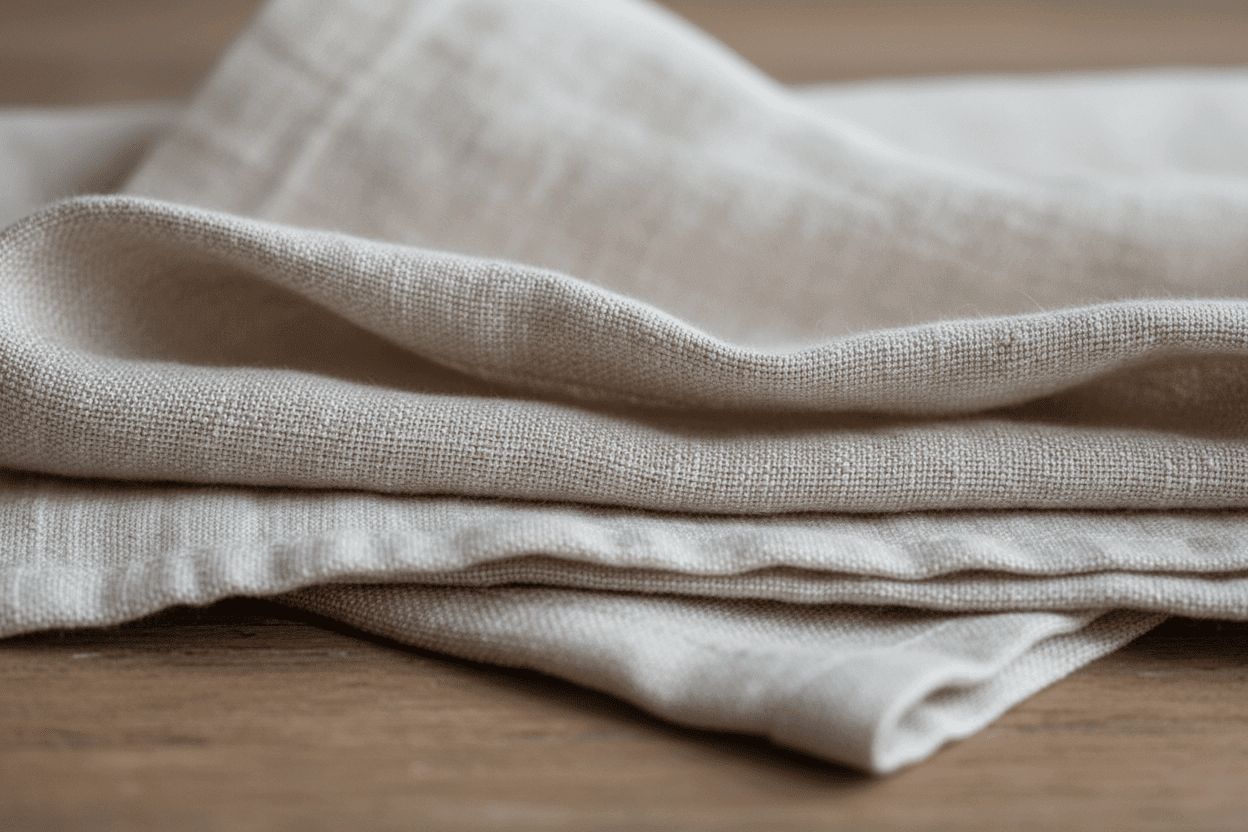
Linen is a high-end natural material. Very absorbent and durable, it also has antibacterial properties. It is ideal for elegant meals.
Cotton twill
Cotton twill is thicker and more durable than regular cotton. It withstands frequent washing very well and is ideal for regular use.
Tea towel fabric
Tea towel fabric offers excellent value for money. Very absorbent and durable, it is perfect for everyday towels.
Waffle
Recognizable by its textured surface, waffle is very absorbent and dries quickly. It is often used for premium quality towels.
The linen-cotton blend
This blend produces a fabric that wrinkles less than linen while retaining its natural qualities.

Which fabric to choose according to the use?
The choice of fabric depends on the use of the towels:
- Daily use: cotton, tea towel fabric, cotton twill
- Elegant table: linen or linen-cotton blend
- Heavy use: thick cotton or twill
- Decorative table: waffle
Matching the fabric to the use improves durability and comfort.
Which fabric to choose for an absorbent table napkin?
Absorption is one of the most important criteria for a table napkin. The fabric must be able to absorb liquids while remaining comfortable to use.
The most absorbent fabrics for a napkin are:
- Cotton: very absorbent and soft
- Linen: absorbs moisture well
- Cotton terry cloth: very absorbent
These materials are particularly suitable for napkins used daily. Synthetic fabrics like polyester are not recommended because they absorb moisture poorly.
Which size and length to choose?
The standard size of a table napkin is generally 40 × 40 cm.
For cutting the fabric, allow a margin for finishing:
Recommended cutting size: about 45 × 45 cm
This allows adding:
- the hems
- a safety margin
With 1 meter of fabric (width 140 cm), it is possible to make about 4 napkins.
Tip: always allow a little extra fabric to avoid cutting mistakes.
Cotton, linen, or polyester: which fabric to choose for a napkin?
Comparing different materials can help understand which fabric to choose for a table napkin.
| Fabric | Advantages | Disadvantages | Use |
|---|---|---|---|
| Cotton | soft and absorbent | can wrinkle | everyday napkin |
| linen | elegant and natural | more expensive | reception napkin |
| Polyester | very resistant | less absorbent | durable napkin |
Each fabric has its own characteristics depending on the intended use.
Choosing the finish for your napkin
When sewing a table napkin, finishing is an important step to achieve a clean, durable, and attractive result. A good finish not only improves the appearance of the napkin but also prevents the fabric from fraying over time and with washing.
Here are the most common finishes for a table napkin:
- Single hem: the most classic and easy-to-make finish. It consists of folding the fabric edge and then sewing it.
- Double hem: stronger and more aesthetic, it is often used for napkins intended for frequent use.
- Mitered corners: a neater finish that allows for clean and elegant angles, ideal for a reception table.
The choice of finish depends on the desired style and sewing skill level. For a simple and quick project, the classic hem is often sufficient, while mitered corners add a more professional touch to table napkins.

Conclusion
Choosing which fabrics for a table napkin is essential to get practical and durable table linen. Materials like cotton, linen, or fiber blends allow you to create napkins suited to different uses.
Cotton remains one of the most popular fabrics thanks to its softness and absorbency. Linen, on the other hand, adds a more elegant and natural touch for reception tables.
By comparing different materials and their characteristics, it becomes easier to select the ideal fabric to make table napkins that are both practical and attractive.
FAQ about which fabrics for a table napkin
Which fabric is most used for table napkins?
Cotton is the most used fabric because it is absorbent, soft, and easy to wash.
Which fabric to choose for an absorbent table napkin?
Cotton and linen are particularly suitable because they absorb moisture well.
Can you sew table napkins in linen?
Yes, linen is an excellent fabric for table napkins because it is natural and very durable.
What size for a table napkin?
The standard size of a table napkin is generally about 40 to 45 cm per side.

Leave a comment
This site is protected by hCaptcha and the hCaptcha Privacy Policy and Terms of Service apply.