





























Table of contents:
This is an essential question for anyone who wants to sew under good conditions and preserve their equipment in the long term. A poorly maintained machine can quickly cause irregular stitches, thread jams, or abnormal noises. Understanding how and why to maintain a sewing machine helps avoid these issues and ensures smooth and reliable operation.
Sewing machine maintenance is not limited to occasional cleaning. It includes precise actions such as cleaning the sewing machine, oiling the sewing machine when necessary, and sewing machine maintenance adapted to your usage frequency. Knowing when to maintain your sewing machine is just as important as knowing how to do it, to prevent premature wear of mechanical parts.
In this article, you will discover how and why to maintain a sewing machine step by step: ideal frequency, priority areas to clean, mistakes to avoid, and best practices to extend the lifespan of a sewing machine. The goal is to provide you with a simple, clear, and reassuring method, suitable for both beginners and more experienced sewists.
Why is sewing machine maintenance essential?
Maintaining your sewing machine ensures smooth, precise, and quiet sewing over the long term. Understanding how and why to maintain a sewing machine helps prevent breakdowns and significantly extends the equipment's lifespan.
The risks of a poorly maintained sewing machine
A poorly maintained machine accumulates dust, textile fibers, and thread residues. These elements disrupt the internal mechanism and eventually degrade sewing quality.
- Frequent thread jams
- Irregular or skipped stitches
- Unusual noises
- Premature wear of mechanical parts
The benefits of regular maintenance
Conversely, a well-maintained machine is more pleasant to use and more reliable. Sewing machine maintenance improves stitch consistency and reduces motor effort.
How often should you maintain your sewing machine?
The maintenance frequency mainly depends on your sewing pace and the fabrics worked on. Adapting maintenance to your usage helps avoid both neglect and unnecessary excesses.
When to clean a sewing machine?
The sewing machine cleaning should be done regularly, especially after projects producing a lot of lint (jersey, fleece, sweatshirt).
When to oil a sewing machine?
Oiling depends on the type of machine and the manufacturer's recommendations. Some modern machines do not need it, others require occasional oiling.
| Type of use | Cleaning | Oiling |
|---|---|---|
| Occasional | Every 2–3 months | Rare |
| Regular | Every 2–4 weeks | Once a month |
| Intensive | Every week | Depending on use |
According to most brands of sewing machine, regular maintenance is a key factor for longevity
When to have your machine serviced by a professional?
Even with good home maintenance, some internal areas are only accessible during a full service.
👉 General recommendations:
- Every 2 years for normal or occasional use
- Every year for very frequent or intensive use
How to properly clean a sewing machine?
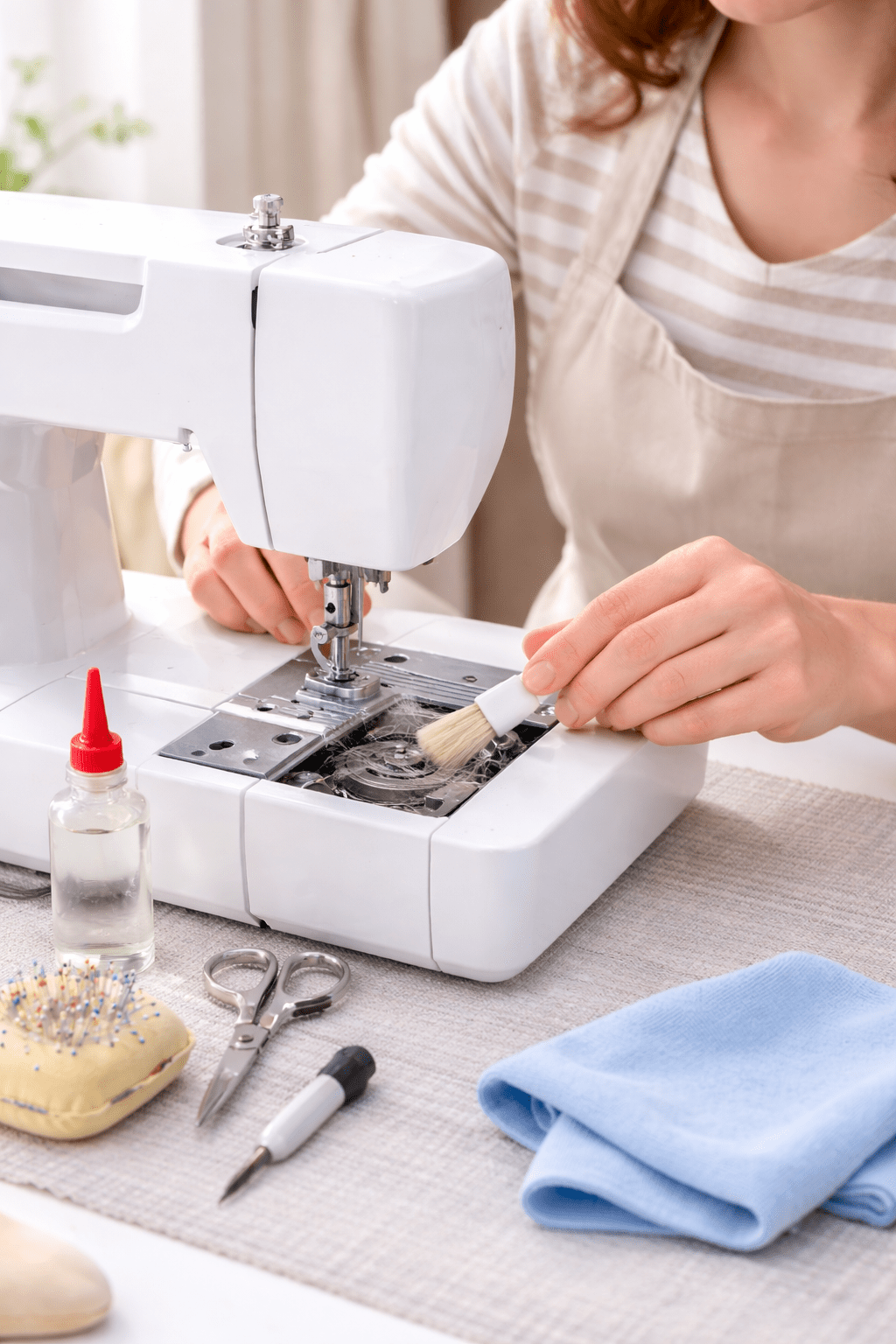
Effective cleaning relies on simple, precise, and safe actions. It removes residues without damaging internal mechanisms.
Priority areas to clean
Some areas accumulate dust and fibers more quickly.
- Bobbin case
- Feed dogs
- Needle plate
- Compartment of the bobbin
Tools to use (and to avoid)
Use only suitable tools to avoid any damage.
- Soft brush or paintbrush

- Dry cloth or microfiber

- Small specific vacuum (optional)
How to oil a sewing machine without making mistakes?
Oiling is a delicate but essential step for certain machines. When done well, it reduces friction and protects mechanical parts.
Which oil to use for a sewing machine?
Il est impératif d’utiliser une huile pour machine à coudre, fine, claire et non résineuse. Toute autre huile est à proscrire. 
Where and how to oil your sewing machine?
Oiling must be precise and moderate.
- A single drop is enough
- Never oil electronic components
- Wipe off excess before sewing
Mechanical machine maintenance vs electronic machine: what are the differences?
Not all machines are maintained the same way. It is essential to know the specifics of your model.
Maintenance specifics for mechanical machines
Mechanical machines generally require more oiling because their parts are mainly metallic and movable.
Special precautions for electronic machines
Electronic machines require more precautions: frequent cleaning, limited oiling, and strict adherence to the manufacturer's manual.
Bonus for How and why to maintain a sewing machine?
This section gathers practical advice to avoid common mistakes and adopt good lasting habits.
Common mistakes to absolutely avoid
Some practices can damage the machine in the long term.
- Over-oiling
- Using inappropriate oil

- Cleaning the machine while plugged in
- Neglecting maintenance after intensive use
Sewers' tips to extend the machine's lifespan
Experienced sewers recommend:
- Clean after each major project
- Change the needle regularly
- Cover the machine when not in use
Conclusion: simple maintenance for a durable machine
Knowing how and why to maintain a sewing machine is essential for sewing calmly and durably. By combining regular home maintenance with professional servicing every two years (or every year in case of intensive use), you ensure your machine's performance, reliability, and longevity. These simple actions not only improve the equipment's lifespan but also the quality of every stitch.
FAQ on How and Why to Maintain a Sewing Machine?
Can you maintain a sewing machine yourself?
Yes, routine maintenance is accessible to everyone with the right actions.
Should all sewing machines be oiled?
No, some electronic machines do not need it.
What signs indicate a lack of maintenance?
Unusual noises, irregular stitches, frequent jams.
When should you have your machine serviced by a professional?
Every 2 years, or every year in case of very frequent use.

Leave a comment
All comments are moderated before being published.
This site is protected by hCaptcha and the hCaptcha Privacy Policy and Terms of Service apply.