









Table of contents:
Why choose a professional embroidery machine?
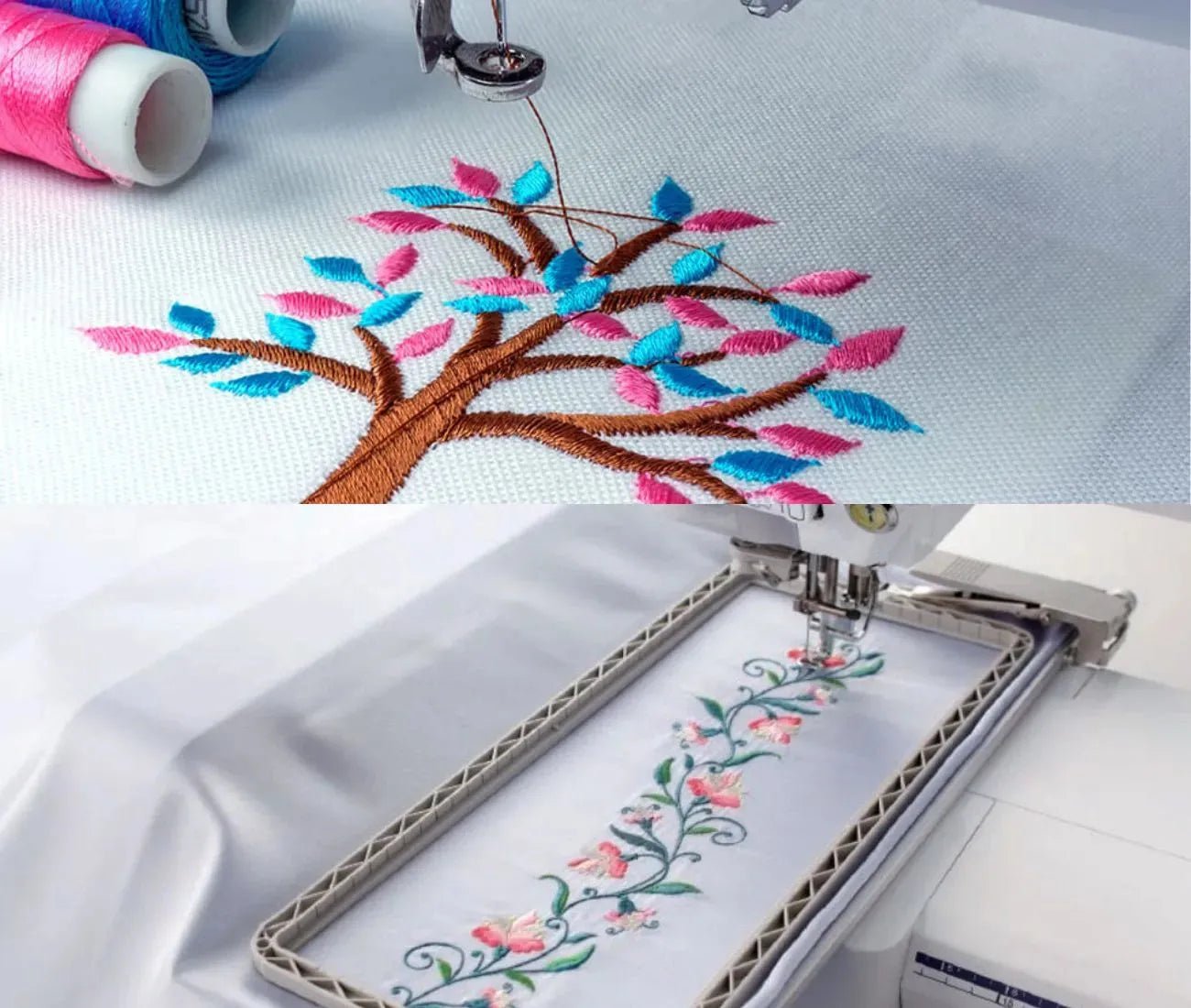
Professional embroidery machine: if you are a textile creator, artisan, or manager of a customization workshop, investing in a professional embroidery machine can transform your business. Faster, more precise, and designed for intensive production, it stands out clearly from classic embroidery machines. This type of multi-needle embroidery machine offers you exceptional working comfort, impeccable embroidery quality, as well as advanced automation, ideal for meeting market demands.
In this article, we will guide you step by step to understand the differences between a professional embroidery machine and a domestic machine, how to choose your equipment well, and present you with an exclusive comparison of the best 2025 models: Janome Continental M17, Janome MB-7 and Juki QVP Sai by Tajima. You will also discover tips to optimize your investment thanks to the right embroidery software and technical support services.
Whether you are starting your business or looking to take it to the next level, this comprehensive guide on the professional embroidery machine will help you make the right choice and equip your workshop with reliable, efficient, and cost-effective tools.
Investing in a professional embroidery machine is a real asset for companies in the textile sector or artisans specialized in embroidery. This type of equipment is designed to meet high production demands, with precision, speed, and finishing quality superior to domestic models.
Impeccable embroidery quality for textile professionals
Professional machines are designed to produce complex patterns on a wide variety of textiles, from thick denim to delicate muslin. They guarantee clean, consistent embroidery, with impeccable durability over time, even after many washes.

Automation designed for mass production
With multiple needles, a free arm, and programmable features, the professional embroidery machine allows smooth pattern sequencing without constant supervision. This enables professionals to save time, reduce errors, and optimize every minute of production. Some machines like the Juki QVP Sai even offer diagnostic and real-time monitoring functions for maximum productivity.
Professional embroidery machine vs classic embroidery machine: the real differences
Before buying, it is crucial to understand the differences between a classic model and a professional embroidery machine. This comparison will help you evaluate the performance and ergonomics of high-end models.
Capacity, speed, and embroidery formats
Professional machines have a much higher embroidery speed (up to 800 to 1000 stitches per minute), a larger embroidery field, and can handle multiple colors simultaneously thanks to their built-in multi-needles.
Comparison table: Home embroidery machine vs professional machine
| Criterion | Home embroidery machine | Professional embroidery machine |
|---|---|---|
| Embroidery speed | 400-600 stitches/min | 800-1000 stitches/min |
| Number of needles | 1 | 7 or more |
| Embroidery area | Medium (10x10 cm) | Large (up to 30x30 cm and more) |
| Connectivity | USB | USB + Wi-Fi + touchscreen |
| Heavy use | No | Yes |
| Software compatibility | Limited | Range (Hatch, Digitizer, etc.) |

How to choose your professional embroidery machine?
The choice of a professional embroidery machine depends on your activity, your production volume, and the type of embroidery you do. Here are the essential criteria to consider for an informed purchase.
Essential technical criteria
- Number of needles: the more there are, the fewer manual adjustments needed.
- Maximum embroidery size: for embroidering complex or large designs.
- Software compatibility: some models are optimized for Hatch, Tajima Writer, Artistic Digitizer.
- Production speed: between 800 and 1000 stitches/minute.
- User interface: touch, intuitive, multilingual.
- Technical support & after-sales service: crucial for professional use.
The reference brands for professional embroidery: Janome and Juki
Janome offers high-performance professional embroidery machines like the MB-7, ideal for semi-industrial activity. Juki, in collaboration with Tajima, offers the QVP Sai, a robust, fast, and intuitive machine.

Comparison of 3 professional embroidery machines in 2025
In this section, we review the three most efficient models currently available for professional use. All are suitable for intensive use, with high-end embroidery quality.
Summary presentation of the models
- Janome Continental M17: combined sewing + embroidery machine with a very wide field, HD screen, AcuStitch technology, advanced connectivity.
- Janome MB-7: 7-needle embroidery machine, compact and powerful, perfect for small professional setups.
- Juki QVP Sai by Tajima: true industrial embroidery machine with 8 needles, high speed, extreme precision, and ergonomic interface.
For which profiles are these embroidery machines designed?
- The M17 is aimed at professionals looking for an all-in-one sewing and embroidery machine with high technology.
- The MB-7 is ideal for small workshops or independent creators seeking an excellent performance/price ratio.
- The Juki QVP Sai stands out in environments with high volumes and high-quality requirements.
Bonus for professional embroidery machines
Beyond the purchase, it is essential to master digital tools, compatible software, and plan for personalized support to get the most out of your machine.
Compatible embroidery software and key features
Software like Hatch Embroidery, Tajima Writer Plus or Artistic Digitizer allow the creation of custom designs, stitch management, logo vectorization, and automation of embroidery sequences.

Technical support, training, and maintenance
A good supplier will offer comprehensive technical support: installation, initial configuration, training on the interface and software. Many online or physical training centers allow you to professionalize quickly.
FAQ on professional embroidery machines
Can you use a professional embroidery machine at home?
Yes, provided you have enough space, good ventilation, and a suitable power outlet for the device.
What is the lifespan of a professional embroidery machine?
Well maintained, a professional embroidery machine can last more than 10 years, even with intensive use.
Is training necessary to use a professional embroidery machine?
Yes, a short training is highly recommended to fully exploit the advanced features.
Can you create your own designs with a professional machine?
Yes, via compatible embroidery software like Hatch or Artistic Digitizer.
What is the average price of a professional embroidery machine like the Juki QVP Sai?
Prices vary, but for a Juki QVP Sai by Tajima, expect around €10,000 to €13,000 including tax, depending on included accessories.
Conclusion
Choosing a professional embroidery machine is a strategic decision for any business or artisan wishing to gain in quality, speed, and profitability. Models like the Janome Continental M17, the Janome MB-7, or the Juki QVP Sai by Tajima offer advanced features perfectly suited to the demands of professional production. Thanks to their technical performance, precision, and compatibility with professional embroidery software, these machines are true allies for developing your textile business.
Whether you are in the launch phase or in full growth, it is essential to carefully compare options, think about your concrete needs, and rely on reliable technical support. Take the time to test the models, explore software options, and give a new dimension to your textile creations.


Leave a comment
All comments are moderated before being published.
This site is protected by hCaptcha and the hCaptcha Privacy Policy and Terms of Service apply.