


















Table of Contents:
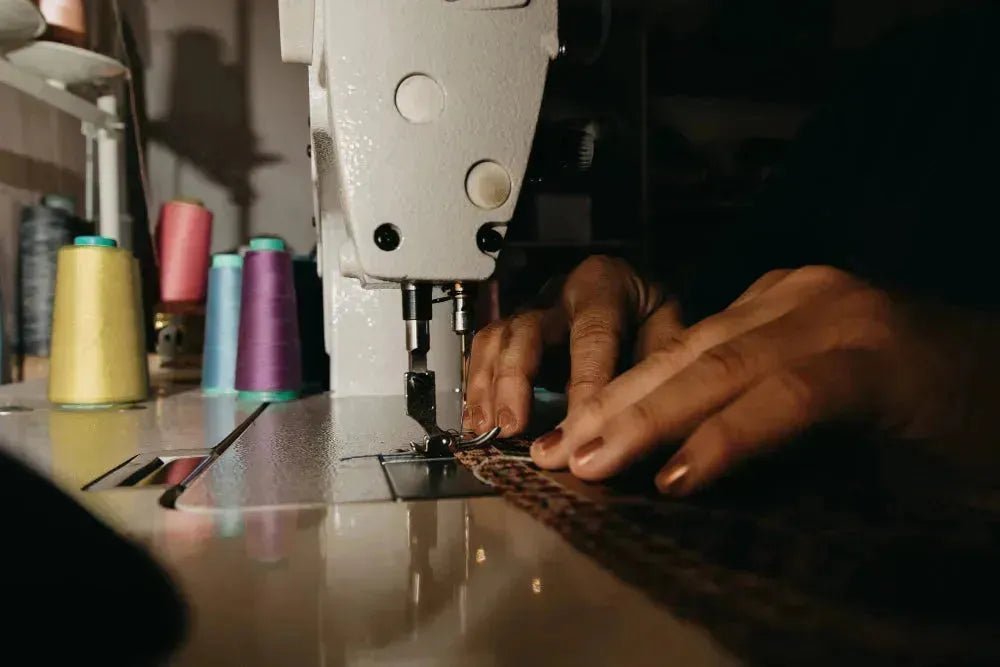
For sewing enthusiasts and professionals alike, choosing a reliable sewing machine can quickly become a challenge. The Juki sewing machine manual is a trusted reference thanks to its legendary durability and BOX Feed system, ensuring even stitches on the most demanding fabrics.
This article explains how this Japanese brand has established itself in the sewing world with its home and industrial models suited to all skill levels.
Juki sewing machines: a Japanese benchmark
History and reputation of the Juki brand
Founded in 1938 in Tokyo, the Juki brand was born from the merger of 900 sewing machine manufacturers in the region, united within the "Tokyo Juki Manufacturers Association."
In 1943, the company became a joint-stock company and took the name "Tokyo Juki Industrial Co., Ltd." The development of its first industrial sewing machine in 1953 marked the start of rapid growth in the global market. The Japanese brand gradually established itself as a key leader in the industrial sewing machine sector.
Recognized quality and reliability
Just like Juki ironing equipment, Juki sewing machines stand out for exceptional durability and the ability to work with thick materials, including the most demanding fabrics like denim.
The BOX Feed Mechanism system, derived from Juki's industrial expertise, is a major innovation. This rectangular movement of the feed dog maintains constant pressure on the fabric throughout its movement, ensuring optimal sewing quality.

Product range offered
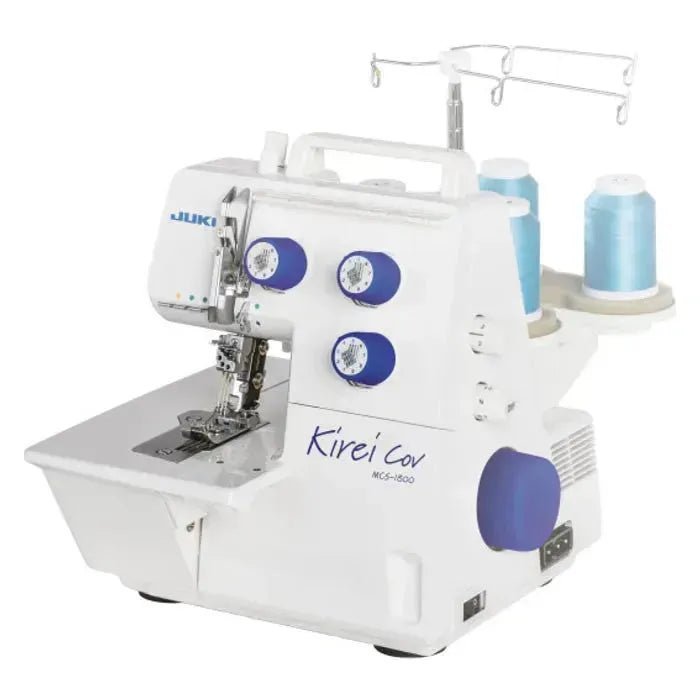
Juki offers an impressive range of sewing machines, from simple mechanical models to high-performance industrial machines, including sergers and Juki coverstitch machines that satisfy both hobbyists and demanding professionals.
| Comparison of Juki sewing machine categories | ||
| Category | Main features | Typical use |
| Mechanical home machines | Simple, sturdy, reliable | Beginners, occasional sewing |
| Electronic home machines | More features, digital screen | Regular sewing, varied projects |
| Semi-professional (Flatbed sewing machine) | High-quality straight stitch, durability | Heavy-duty projects, demanding sewers |
| Industrial | High performance, durability | Mass production, workshops |
| Overlockers | Professional finishes | Fast assembly, clean finishes |
Most popular machines
Some Juki sewing machine manuals have especially won the hearts of sewers thanks to their unbeatable value for money and features suited to all types of projects.
Here are some of the machines Juki sewing the most popular right now:
- Juki HZL-F370 : Appreciated for its versatility and advanced features.
- Juki HZL-DX5 / DX7/ DX3 : High-end electronic machines for demanding sewers.
- Juki TL-2200 Mini QVP : Ideal stitcher for quilting projects.
- Juki MO-214 : Robust overlocker for professional finishes.
- Juki MO-2000QVP : Overlocker with simplified threading for easy use.
These models combine quality, reliability, and innovation to meet all your sewing needs.
Juki sewing machines: from home to industry
A manual for a family Juki sewing machine meets the needs of individuals with a variety of stitches and functions, while an industrial Juki machine offers robustness and performance for intensive workshop use.
They stand out for their Japanese manufacturing quality and exceptional durability, with technical variations across ranges that allow each model to be tailored to the user's specific needs.

Choosing your Juki sewing machine according to your level
Machines suitable for beginners
The Juki HZL-353ZR, HZL-355ZW, and HZL-357ZP sewing machine manuals are considered true "little tanks" thanks to their robustness and simple mechanical operation.
Models like the HZL-60HR-B, HZL-70HW-B, and HZL-80HP-B and the Juki HZL-80H sewing machine also suitable for beginners, with a digital screen available from the HZL-70HW-B for simplify getting started.
Options for intermediate users
For more experienced sewers, the Juki HZL-G120 and G220 sewing machine manuals offer a typically Japanese sewing experience with a speed reaching 900 stitches per minute.
The G220 stands out with its automatic thread cutter activatable with a simple press.
Machines for professionals
Juki machines aimed at experienced sewists start with the HZL-F370. This model offers professional-level performance with 16 different types of buttonholes.
Juki flatbed machines like the TL-2200QVP-MINI CE and the TL-2300 Sumato are specially designed for demanding work with their industrial-quality straight stitch.
Technical features of Juki sewing machines
Technological innovations
The Juki sewing machine manual stands out with its exclusive technologies that make sewing more precise and enjoyable. This is especially true of its the famous BOX Feed system which ensures perfect fabric feeding.
The Juki machine feed system greatly enhances the sewing experience thanks to its rectangular path. The feed dog stays in constant contact with the fabric throughout the cycle, producing flawless stitches even on challenging materials like denim or slippery fabrics.
Needle and thread system
Juki sewing machines feature a high-performance needle system that easily penetrates all types of fabrics, even the thickest. To optimize results, it’s important to choose the right needle for your sewing machine, matching the fabric and thread used.
Thread management on these models reduces common tension issues. On some industrial machines, like the LH series, the curved thread path improves flow and ensures perfectly tight stitches.
Stitches and buttonholes
The Juki brand machines offer an impressive variety of stitches. They suit all your creative projects, from basic stitches to more elaborate decorative stitches depending on the model.
On electronic models like the HZL-F series, you’ll find automatic buttonholes that greatly simplify this often dreaded step. Just place your button in the special foot, and the machine automatically calculates the perfect size for your buttonhole. This ensures a professional result every time.

Accessories and compatibility for Juki machines
Presser feet and their functions
The Juki sewing machine manual offers a wide range of presser feet suited to various sewing techniques. This includes models for zippers, rolled hems, piping, quilting, and even Teflon feet for difficult fabrics.
Presser foot compatibility varies by model. Some accessories are specifically designed for the TL series and single-feed industrial machines.
Extension tables and additional accessories
Juki extension tables improve working comfort on large projects. They provide an expanded sewing surface that makes handling fabrics easier.
Additional accessories include magnetic guides and retractable gauges. They make your sewing experience smoother and more precise. These tools help you achieve professional-quality results.
Spare parts and maintenance
Spare parts for Juki machines are available from specialized dealers who offer everything needed, from power cables to needle threaders. You can also find specific accessories that make threading a Juki serger easier, a sometimes tricky but crucial step for smooth operation.
Regular maintenance extends the device’s lifespan. It keeps the mechanism clean and well-oiled. This ensures optimal performance over the years.
Buying guide to choose your Juki sewing machine
Budget and price ranges
The Juki sewing machine manual covers several models. Prices start at €384 for entry-level mechanical machines. They can exceed €3600 for high-end professional versions.
The Japanese manufacturing quality and exclusive technologies like BOX Feed justify this investment. These machines offer exceptional durability compared to other brands on the market.
And to make this quality even more accessible, you can take advantage of our promotions on a selection of models, depending on the season. Since Juki is a leader in the industrial market, this expertise is also found in their home-use models.
Tips for choosing the right model
Before buying your Juki machine, carefully assess your needs. Think about how often you will use it, the types of fabrics you will sew, and the projects you have in mind.
Here is a checklist to help you choose the ideal model:
- Assess your level: Beginner, intermediate, or expert.
- Define your needs: What types of sewing projects do you plan?
- Consider your budget: How much are you willing to invest?
- Check the features: Make sure they match your needs.
By following this checklist, you will be sure to choose the perfect machine for you.
Warranty and after-sales service
The Juki brand generally offers a manufacturer’s warranty. This shows their confidence in the quality of their machines.
Buy from authorized dealers. They have the technical skills and original spare parts to keep your machine in perfect condition.
The Juki distribution network includes specialists trained to service all brand models. Feel free to contact us with any questions about warranty, repairs, or choosing the nearest dealer.
Buy new or used
Buying a new Juki machine gives you access to the latest technological innovations. You also benefit from a full warranty, an important advantage for a tool used over many years.
If you choose a used model, carefully examine the overall condition of the machine. Pay special attention to the drive system, thread tension, and motor noise. Request a sewing demonstration on different fabrics and make sure spare parts for this model are available.
Also consider testing basic functions, such as winding a bobbin with the Juki sewing machine, to ensure ease of use and proper operation.
The Juki sewing machine user manual is aimed at beginners attracted by the durability of family models. It is also suitable for professionals seeking industrial precision. The BOX Feed drive system guarantees flawless stitching on all types of fabrics. Choosing a Juki machine means opting for a reliable partner who supports you in all your creative projects.

Leave a comment
This site is protected by hCaptcha and the hCaptcha Privacy Policy and Terms of Service apply.