






Table of Contents:
Making a hem is an essential step in sewing, whether you work with a sewing machine or by hand. It allows you to neatly finish a garment, prevent the fabric from fraying, and provide a polished finish to your creation.
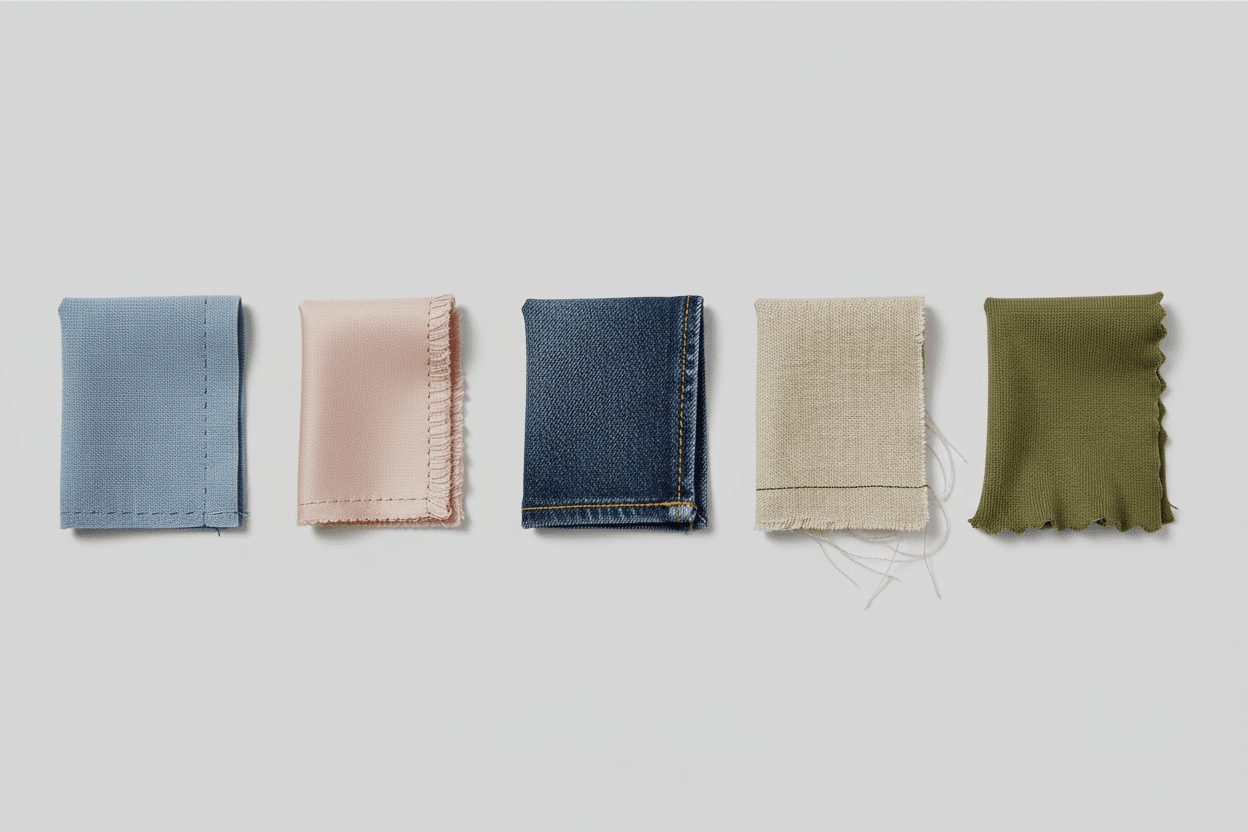
Depending on the fabric used cotton, jeans, linen or fluid fabric, the type of hem will not be the same. Each finish has its specifics, its look, and its level of difficulty.
In this guide, discover the different types of hems and learn how to choose the one that best suits your sewing project.
The essentials of the guide
A hem consists of folding the edge of the fabric and then sewing it to hold it in place and prevent fraying.
There are several hemming techniques, ranging from the simplest to the most technical. Some finishes are visible and sturdy, while others are invisible and more elegant.
The choice will mainly depend on the fabric, the use of the garment, and the desired look.
How to choose your hem?
Choosing a hem is not done randomly. Several criteria must be considered to achieve a result suited to your project.
The type of fabric is essential: a thick fabric will require a strong hem, while a thin fabric will need a light and discreet finish. The shape of the garment also plays a role, especially for rounded hems or corners.
Finally, the aesthetic result is important: some hems are visible and decorative, while others are designed to remain invisible.
What are the different types of hems?
There are many hemming techniques, each suited to a specific use. Knowing them well allows you to choose the best finish for your creations.
The invisible hem
The invisible hem

esA technique which completely hides the stitching on the right side of the fabric.
It is particularly used for elegant garments like dress pants, skirts, or dresses. This finish provides a very neat and professional look.
The stitching is usually done by hand or with a specific machine stitch, taking only a few threads of the fabric to stay discreet.

The rolled hem
The rolled hem is a very narrow hem, made by rolling the fabric edge onto itself.
It is ideal for lightweight and delicate fabrics like silk, voile, or scarves. This technique provides a neat finish without weighing down the fabric.
It is a finish often used for flowing garments or decorative elements.

The topstitched hem
The topstitched hem is one of the simplest to make. The stitching is visible on the right side of the fabric.
It is very strong and perfectly suited for everyday garments like jeans or trousers.
It’s an excellent choice for beginners because it is quick to make and very durable over time.

The zigzag stitch edge
The zigzag stitch is a simple technique to prevent the fabric from fraying.
It is often used as a quick finish, especially for delicate fabrics or when you don’t want to make a classic hem.
This method is practical and quick, but it remains more visible and less aesthetic than a traditional hem.

The “false hem”
The false hem consists of adding a strip of fabric to extend or finish a garment without making a classic hem.
It is often used when you want to keep the length of a garment or give it an original finish.
This technique also allows playing with contrasts and adding a decorative detail.

The rounded hem
The rounded hem is used for garments with curved shapes, like shirts or some dresses.
It requires more precision because the fabric must be worked to perfectly follow the curve.
The result is elegant and helps maintain a nice flow in the garment.

The corner hem
This type of hem is used for pieces with corners, such as tablecloths, napkins, or certain garments.
It allows for sharp and clean corners, without excess fabric.
This technique requires a bit more precision, but it offers a very professional finish.

The iron-on hem
The iron-on hem is a no-sew solution. It is made using a special adhesive tape activated by the heat of the iron.
It is a quick and easy method, ideal for beginners or for quick alterations.
However, it is less durable than a sewn hem.

The hem edged with bias tape
The hem edged with bias tape consists of covering the fabric edge with bias tape.
It provides a clean finish while adding a decorative touch.
This technique is particularly suited to fabrics that fray easily or for creations where you want to add an aesthetic detail.
The hem: an essential finish for a neat result
Choosing the hem is a key step to achieve a clean and durable creation. At Verotex, we support you with fabrics suited to each type of finish: easy-to-work cotton, durable jeans for strong hems, or flowing fabrics for light and elegant finishes. Our materials are selected for their quality and hold, to facilitate sewing and guarantee a flawless result.
Whether you make an invisible, rolled, or stitched hem, you will find fabrics at Verotex suited to all your projects and skill levels. Well chosen, the fabric allows you to succeed in your finishes and achieve a clean and professional result.
Conclusion
Hems are an essential step in sewing. They provide a clean finish, prevent the fabric from fraying, and improve the durability of a garment.
Each type of hem has its specifics and suits a particular use. By choosing the right technique according to your fabric and project, you will achieve a result that is both aesthetic and durable.
With a little practice, you will quickly learn to adapt the perfect hem to each of your creations.
FAQ - What are the different types of hems?
Which hem to choose for jeans?
A stitched hem is ideal for its durability.
Which hem for a thin fabric?
The rolled hem is best suited for lightweight fabrics.
Can you make a hem without a machine?
Yes, by hand or with an iron-on hem.
Which hem is the most discreet?
The invisible hem is the most discreet.
Which hem to start with?
The stitched hem is the easiest to make.

Leave a comment
This site is protected by hCaptcha and the hCaptcha Privacy Policy and Terms of Service apply.