
























Table of contents:
There is nothing more frustrating than finishes that fray or hems that pucker on jersey creations. If the difference between a serger or coverstitch machine remains a mystery for many sewing enthusiasts, we are here to clarify it.
This article untangles once and for all the superpowers of these two devices. At the same time, it reveals the best tips to choose the machine that will enhance your stretch fabrics, not forgetting the pro tricks to master threading, settings, and creative stitches.
Serger vs Coverstitch Machine: Comparison of Specialized Sewing Machines
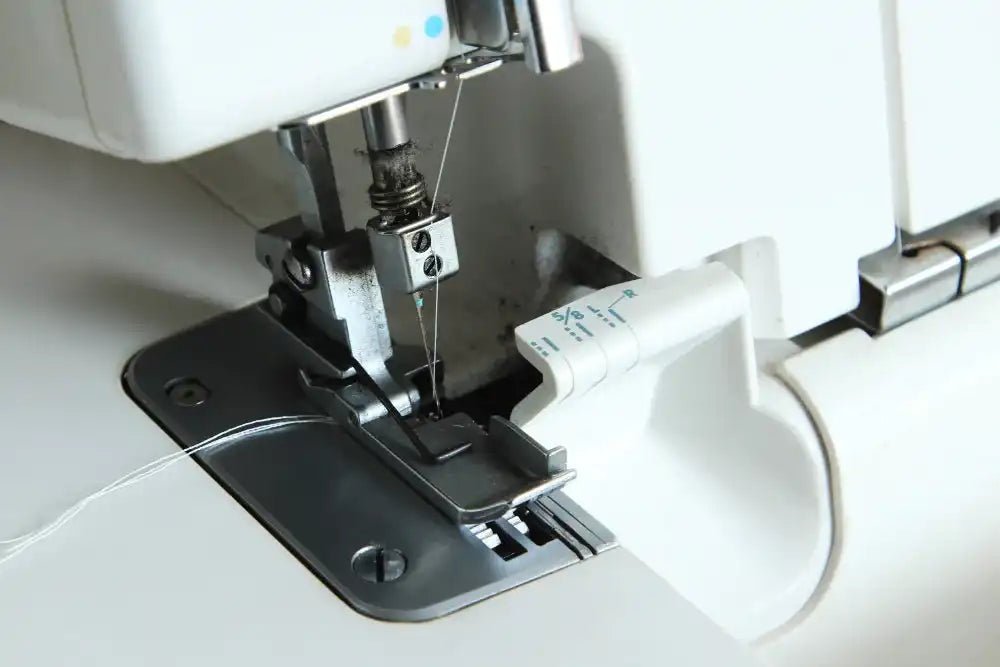
Imagine two allies to boost your textile creations. The serger or coverstitch machine is often the big question for seamstresses seeking perfect finishes. The serger is the magician of the cut-assemble-overlock trio in a single pass. Perfect for stretch fabrics, it frees you from frayed edges with its 2 to 5 threads.
Opposite it, the coverstitch machine excels in the art of topstitched hems without cutting the fabric. Its secret lies in the elastic parallel seams that work wonders on t-shirts and leggings. For lighter projects or tight spaces, a mini sewing machine can also prove to be a valuable complement.
Here are the 5 major distinctions that make these machines complementary tools:
- Key function: the overlock machine sews and cuts fabric, while the coverstitch machine creates hems without cutting
- Visible result: strong overlock stitches vs elastic parallel seams
- Number of threads: 2 to 5 threads for overlock machines versus 2 to 4 threads for coverstitch machines
- Specific equipment: integrated knife on the overlock machine, absent on the coverstitch machine
- Versatility: some combined machines offer both functions at the same time
The winning combo is using both. The overlock or coverstitch machine, well chosen according to your needs, quickly becomes indispensable. The overlock machine prepares the edges, while the coverstitch finishes the hems. This duo is formidable for achieving professional finishes. Find the best brands in our Verotex online store.

Master sewing techniques
Mastering sewing techniques starts with choosing the right machine: overlock or coverstitch? From stress-free threading, precise tension and pressure adjustments, to discovering lesser-known stitches, every detail counts to unleash your creativity and sew with ease. Here are the keys to mastering your machine like a pro.
The art of threading: a stress-free guide
Thanks to this comparison table, you will be able to choose the right thread for your overlock or coverstitch machine. To save time on threading, which is a step dreaded by most sewing enthusiasts, choose high-quality machines that make the task easier. You will have plenty of options on Verotex with our wide coverstitch collection and overlock machines.
|
Comparison of threads suitable for overlock and coverstitch machines |
||
|
Type of thread |
Characteristics |
Ideal use |
|
Polyester |
100% polyester |
Overlock machines: |
|
Cotton cord |
100% cotton |
Coverstitch machines: |
|
Foam thread |
Elastic |
Loopers: |
The professional tip is to number the thread guides with colored stickers. This method turns threading complex machines into a real routine, even for beginners. Remember to regularly check the thread path in the loopers to avoid unexpected knots.
The settings that change everything: tension and pressure
Thread tension is the secret to flawless seams. Whether you use a overlocker or coverstitch machine, adjusting the tension according to the fabric is essential. On Juki overlockers or Janome, start by testing on a fabric scrap before you begin.
Slightly increase the tension for thick materials like denim, reduce it for delicate silks. Remember that if it’s too tight, the tension creates puckers, and if it’s too loose, it produces loose stitches.
To avoid skipped stitches, don’t forget to check the needle carefully. A dull or improperly inserted tip causes 90% of problems. The issue is also very often caused by approximate looper threading, whether on a overlocker or coverstitch machine.
Unlock your creativity: the little-known stitches
Did you know your coverstitch machine can create decorative patterns? Experiment with the flatlock stitch on towel edges or visible jacket seams. 5-thread overlockers offer surprising combinations for professional rolled hems.
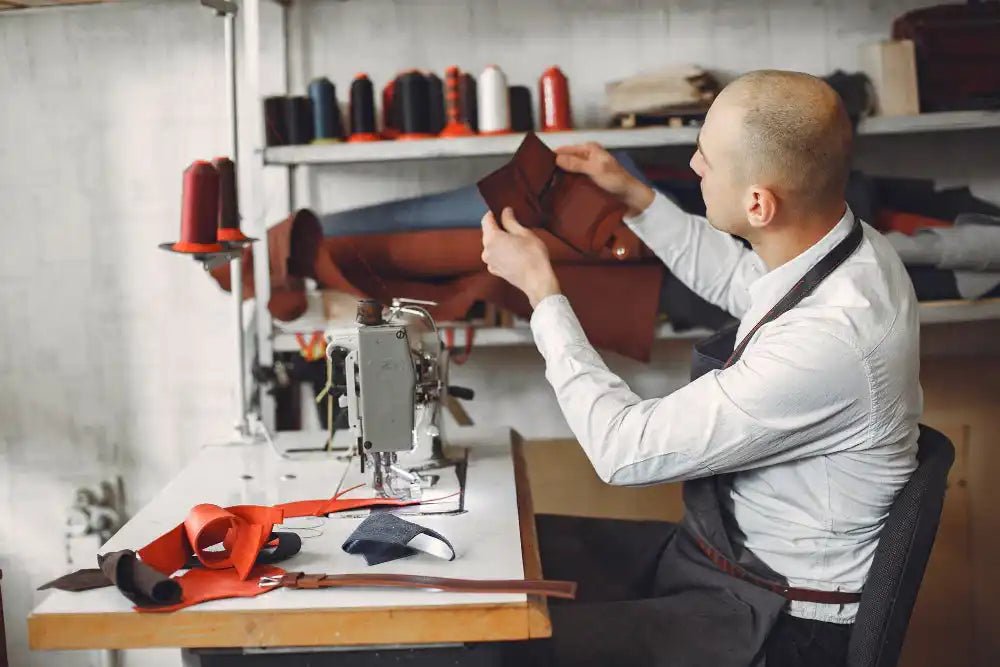
Try decorative overlock stitching on t-shirt collars or quilt edges. Whether you use a overlocker or coverstitch machine, or even a leather sewing machine, you’ll see that the result rivals high-end ready-to-wear finishes.

Choosing your professional machine
Choosing your professional machine means laying the foundation for efficient and uncompromising sewing. Overlocker or coverstitch machine, each model has its specifics, and the options are numerous.
To make the right choice, it’s best to know the 5 essential criteria to consider and the brands that are benchmarks in the sewing world. Let’s discover how to invest without mistakes and gain performance from the very first stitches.
The 5 decisive elements for making the right choice
Your future sewing partner is chosen like a travel companion. Whether you choose a serger or coverstitch machine, prioritize details like adjustability, intuitive threading, and 3 stitch types for smooth use.
Jersey enthusiasts opt for automatic tension, while pros demand a removable extension table.
Here are the 7 essential features to tame stretch fabrics:
- Adjustable differential feed: prevents puckering on jersey and lycra
- Automatic tension: adjusts threads in real time for even stitching
- Stretch stitches: favor 3 or 4-thread sergers like the Juki QVP
- Specialized presser foot: holds stretch fabrics without stretching them
- Simplified threading: opt for practical systems that ease the process
- Variable speed: important for mastering delicate fabrics
- Integrated free arm: makes hemming sleeves and narrow legs easier
Between entry-level and professional models, the difference lies in longevity. Choosing a serger or coverstitch machine suited to your needs also means investing in a machine that will accompany you for a long time, both in the workshop and at home.
Overview of must-have brands
Among the heavyweights, Juki leads the pack with its indestructible industrial sewing machines. Their MO-735 switches from serger to coverstitch machine with one click, offering rare versatility for demanding sewists. Janome appeals to perfectionists with its air-jet threading that turns the most frustrating step into a pleasure.
The new generation combos are worth checking out. Whether you're looking for a serger or coverstitch machine, these compact models are perfect for small hands and handle everything from silk to fine leather. The bonus? A built-in LED light that illuminates like daylight, even at night.

Maintaining your machine: the survival guide
Just three simple steps after each sewing session to preserve the lifespan of your serger or coverstitch machine:
- Vacuum the rotary hook.
- Scrape fabric residues with the provided brush.
- Finish with a blast of dry air in the thread guides.
This quick routine prevents 80% of jams and extends the life of the knives.
Here is a smart schedule for experts:
- Every 3 months: oil the moving parts with the supplied dropper (max 2 drops!)
- Every year: replace the knife and check needle alignment
- Every 5 years: entrust your gem to a pro for a complete overhaul
|
Quick troubleshooting of common breakdowns |
||
|
Problem |
Probable causes |
Solution |
|
Threads breaking |
Tension too tight or dull needle |
Reduce the tension by 0.5 point |
|
Irregular stitches |
Incorrect threading or dirty looper |
Clean the loopers with a brush |
|
Persistent jamming |
Lint buildup under the plate |
Disassemble the hook for deep cleaning |
The secret to machines that last is using a dust cover between uses, and above all... never skip the fabric drop test before each new project.
At Verotex, we also offer a maintenance and repair service. To keep your machine in good condition or to restore it, don’t hesitate to contact us.

Leave a comment
All comments are moderated before being published.
This site is protected by hCaptcha and the hCaptcha Privacy Policy and Terms of Service apply.