





Table of Contents:
Tired of sewing machines giving up as soon as they touch leather or thick denim? Between unpredictable durability and slow stitching speed, choosing a professional sewing machine quickly becomes a real headache.
This article reveals the secrets to finding the perfect machine: we compare flagship models like the Juki HZL-80H and the Elna Excellence 580+, decode the pitfalls to avoid, and tell you everything about maintenance that extends the lifespan of your metal ally. Ready to go pro?
Key Features of a Professional Sewing Machine
Strength and Durability
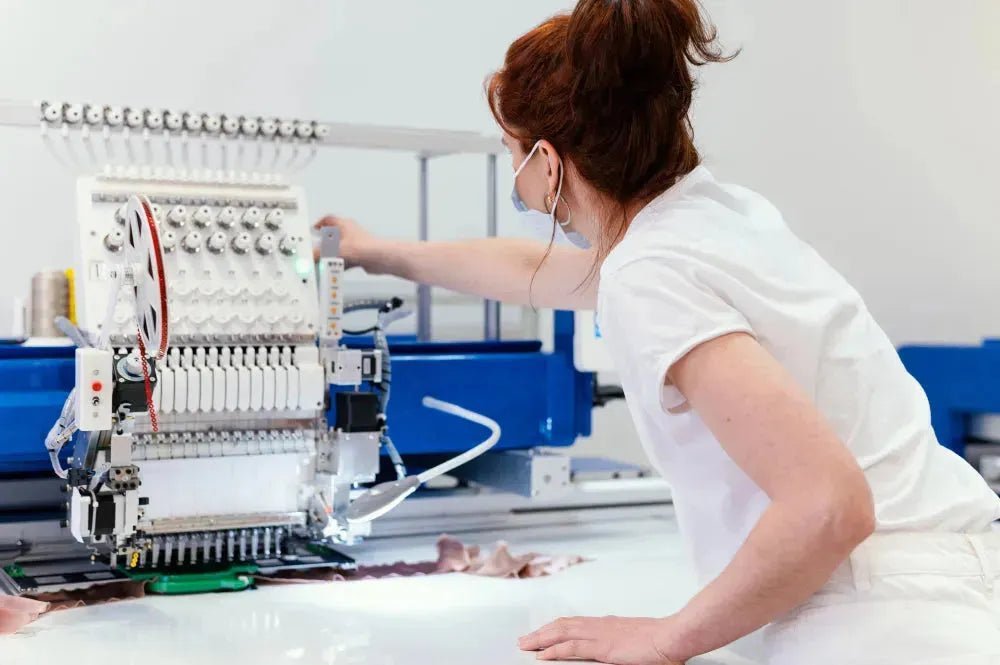
Forget plastic casings that crack at the first thick pair of jeans. Professionals rely on metal frames and hardened steel gears. These workhorses handle 8 hours of daily work without flinching, whereas domestic models give out after 2 hours. Their secret? A professional sewing machine equipped with oversized motors and machined parts designed to withstand 1000 stitches per minute.
Speed makes all the difference. A Janome Skyline S6 AE runs at 1000 stitches/min, which is 4 times faster than a home sewing machine. It maintains this pace during marathon sessions thanks to its built-in cooling system. For workshops handling back-to-back orders, it guarantees customers never have to wait.
|
Brands |
Cost Increasing Factors |
|
Elna |
Mechanism Specificity and |
|
Janome |
Patented Engineering and Systems |
|
Juki |
Industrial Specialization and High-Speed Production |
The triple feed changes the game for thick leathers. This technology holds the material layers from the top, bottom, and sides. No more unwanted slipping when stitching full-grain leather bags. A true revolution for any professional sewing machine dedicated to leather goods.
Technical Performance
35 basic stitches cover 90% of professional needs. The trick? Ultra-precise settings rather than an endless list of gimmicky programs. The JUKI HZL-DX3 proves you can sew perfect hems and decorative topstitching with several well-mastered key functions.
The real test? Sewing 17 layers of denim without breaking needles. Pros use 110/18 needles and activate the adjustable presser foot lift. The result: straight seams on motorcycle jackets as well as truck covers. Impossible to achieve without a professional sewing machine designed to handle this level of demand.
Thread tension becomes child's play with graduated dials. One turn left for stretch fabrics, two clicks right for PVC tarps. High-end models add a digital indicator—no more mistakes on silk crepes!
Customize your toolkit with special presser feet: rolled hem guide, Teflon sole for leather, or gathering foot. These accessories turn a professional sewing machine into a truly tailor-made tool.

Ergonomics and Maintenance
Allow at least 1m² to comfortably set up your pro machine. Height-adjustable tables save your back during long sessions. A pro tip? Place the machine on vibration-dampening mounts to reduce vibrations. If you’re upgrading from a beginner sewing machine to a professional model, gradually adapt your workspace for better comfort and precision.
Clean the shuttles and feed dogs after every spool of thread. A tip: use a brush reserved for this purpose and food-grade oil. For a professional sewing machine, mechanics recommend a full service every 150,000 stitches, or about 6 months of heavy use.
Recurring breakdowns often indicate poor maintenance. Difficult threading? Check the condition of the bobbin case and the cleanliness of the thread guides. Professionals always keep a set of new tension springs on hand for urgent repairs.
How to Choose Your Professional Sewing Machine?
Important Selection Criteria
Start by timing your current production. Need 50 hems/hour or just 10 unique pieces/day? It’s up to you to determine your needs to choose the model that suits you in our collection.
Above all, check presser foot compatibility. Some models require costly adapters. A professional sewing machine refurbished by authorized dealers, like our store, offers up to 40% savings, with warranty included.
Pro tip? Choose a machine that supports 130/705H needles if you already have a stock. For tight budgets, leasing lets you have new equipment with maintenance included.

Top models on the market
Our favorite picks for different professional needs:
- Janome DC7100 with 100 utility and decorative stitches, automatic buttonhole, and clear LCD screen.
- Juki HZL-353 ZR with 21 built-in stitches for a flawless finish, automatic needle threader, and 4-step buttonhole.
- Elna Explore 240S with its 23 built-in stitches, adjustable stitch width up to 5 mm, and 4-step buttonhole.
As confirmed by our in-depth analysis, the Janome DC7100 is one of the queens of intensive workshops with its legendary reliability.
Budget and financing solutions
Count at least €1500 for a serious entry-level model. Experienced pros invest €2000-3000 in workhorses like the JUKI HZL-UX8. Good tip: some regions subsidize up to 30% of the purchase of professional sewing machine equipment. Leasing with a purchase option allows spreading expenses over 36 months.
Concrete example: a workshop of 5 people chooses 3 used machines at €2000 each. With a maintenance contract at €150/month, they save 45% compared to new. Their secret? Buying off-season from suppliers who refresh their stock.
Mistakes to absolutely avoid
The pitfalls that burn your budget in no time:
- Unsuitable needles: risk of uneven stitches and mechanism damage
- Poor-quality thread: repeated breakages and premature component wear
- Overworking entry-level machines: motor overheating and desynchronization
- Incorrect tension setting: unbalanced seams and loss of professional quality
One tip: always test a used machine with your usual fabric. Check the hook wear and needle movement smoothness before any purchase. On our site, you’ll find brand-new machines with the best warranty.

Practical questions
Installation and setup
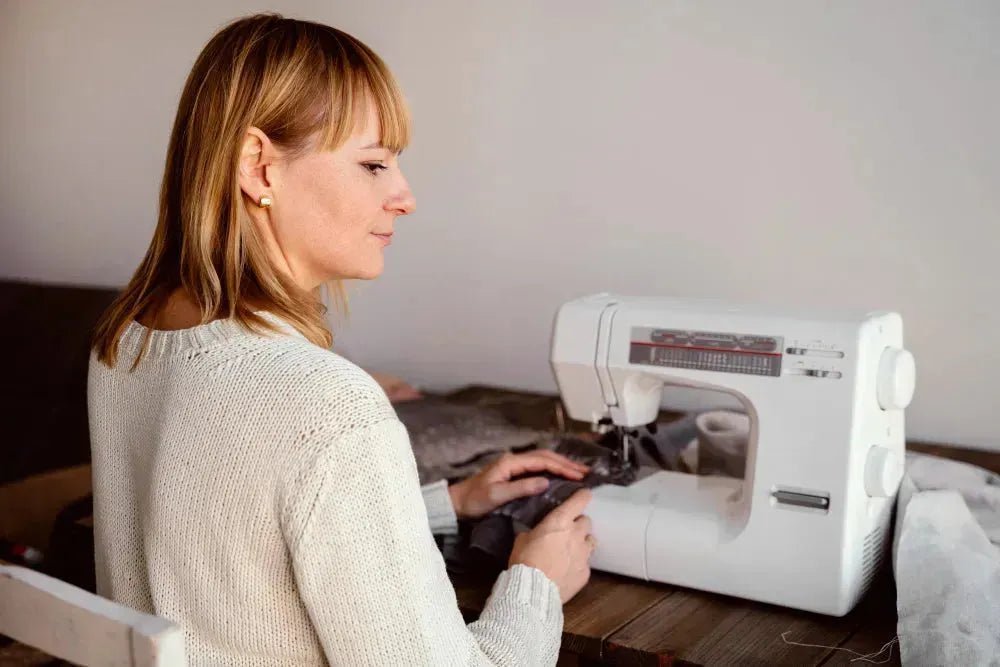
First startup? Plug the professional sewing machine into a dedicated 220V outlet – pro models can draw up to 750W at peak. No long training needed: 2 hours with a technician is enough to master the basics. The key adjustment? Thread tension: test on a fabric scrap with two different colored threads. If the underside dominates, tighten the dial by one notch.
For apartment workshops, rubber silent blocks under the table reduce noise by 70%. A smart €30 investment that protects your neighbors and your eardrums!
Usage optimization
Save 20% of your time with a pro tip: arrange your spools and tools. For a professional sewing machine, lubricate moving parts every 10 hours of use with high-viscosity oil. Your back will thank you for setting the table height to 73cm, the ideal height for sewing 8 hours without aches.
Store 110/18 needles in magnetic boxes and polyester threads in waterproof containers. A military-style organization that cuts the time spent searching for supplies in half.
Stainless durability, tailored technical performance, and simplified maintenance: this is what defines a professional sewing machine worthy of your ambitions. Now that you know how to avoid pitfalls and prioritize key criteria, all that’s left is to choose your ideal sewing partner. Your upcoming projects deserve this quality leap, and your workshop is just waiting for the satisfied hum of a high-performance motor.

Leave a comment
This site is protected by hCaptcha and the hCaptcha Privacy Policy and Terms of Service apply.