

















Table of Contents:
Do you have a sewing machine but don't know how to use it? Do the technical manuals seem incomprehensible and online tutorials too discouraging? Don't let this wonderful appliance gather dust and discover this simple sewing machine tutorial that will teach you the basics of using a sewing machine.
From effortless threading to your first stitches, along with basic adjustments and tips for preventing thread breakage, you will master the basics in less time than it takes to say it.
Discovering your sewing machine: a beginner's guide to its components
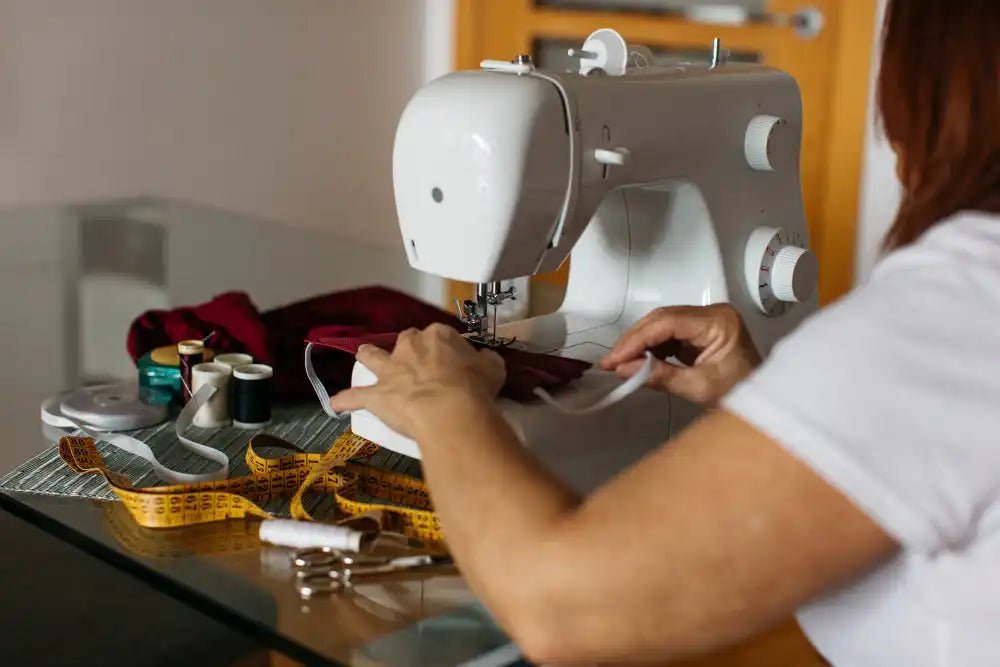
A sewing machine may seem intimidating at first, but its basic components are easy to identify. Understanding their role will allow you to sew with confidence, even if it is your first time:
- The handwheel: The large side wheel used to maneuver the needle (turn it towards you).
- The presser foot: A metal or plastic clamp that holds the fabric in place.
- The spool pin: The place for the upper thread spool, usually at the top or back of the machine.
- The stitch selector: The button or lever used to choose the stitch type.
- The needle plate: The metal plate beneath the needle, marked with graduations to guide the fabric.
- The reverse lever: For sewing in the opposite direction and reinforcing seams.
What is each component used for? The role of each part
Each component plays a key role in the success of your sewing. Here is what each one does:
- The presser foot holds the fabric firmly. Without it, the fabric could slip. Appropriate pressure prevents puckering on delicate fabrics or improves the feeding of thick fabrics.
- The handwheel allows you to position the needle manually. If it jams, check for jams in the bobbin case or lubricate the mechanism.
- The stitch selector adjusts the needle's movement to create straight stitches, zigzag stitches, or decorative stitches. The reverse lever reinforces seams by sewing in the opposite direction.
- The needle plate guides the fabric using its markings. A properly installed bobbin ensures a strong seam by interlacing the upper and lower threads.
Knowing these components helps prevent common mistakes. In addition, a well-maintained machine with a smooth handwheel and clean components guarantees lasting results.

Step-by-step threading: the essential preparation before sewing
Before you start sewing, mastering how to thread your machine is an essential step. This sewing machine tutorial guides you step by step through preparing and installing the bobbin, correctly threading the upper thread, and bringing up the lower thread. Careful preparation ensures even stitches and prevents jams, making it ideal for beginners and experienced sewers alike.
Step 1: Prepare and install the bobbin (the lower thread)
The bobbin contains the lower thread that interlocks with the upper thread. There are two types of bobbins: metal bobbins (for mechanical machines) and plastic bobbins (modern models).
To fill them, place the spool on the spool pin, then pass the thread through the designated guides. Next, insert the thread into the bobbin hole (if present) and activate the bobbin winder. Fill it to no more than 80% of its capacity to prevent uneven winding, as explained in this sewing machine tutorial for beginners.
For installing the bobbin, you have two options: on the side (the metal case) or under the presser foot (modern models). For side-loading bobbins, check the direction of rotation (generally counterclockwise) and insert the thread into the slot in the case.
You should feel a click confirming that it is locked when the bobbin is inserted. For front-loading bobbins, place it in its compartment according to the visual markings, then pass the thread through the guide and close the cover after gently pulling it toward the back.
Step 2: Thread the upper thread by following the numbered guide
Threading the upper thread follows a standard path where you simply need to raise the presser foot and needle as high as possible.
Pass the thread through the thread guide and down into the slot. Then move it back up toward the take-up lever, before bringing it down again to the needle. The numbered guides on the machine make this step easier. For needles without an automatic threader, pass the thread from front to back or from the side, depending on the model.
Use a manual accessory by sliding the thread into the needle threader's notch. Push it against the needle and retrieve the thread at the back after passing through, as explained in this sewing machine tutorial for beginners.
Modern machines often offer an automatic system. Activate it by pressing the dedicated button, position the thread in the needle threader's hooks, then slowly release the accessory. This helps avoid common beginners' mistakes, such as the thread getting caught or positioned incorrectly. To master this essential step, also follow this detailed sewing machine tutorial, which illustrates each movement.
Step 3: Bring up the bobbin thread, the final step
Once the threads are in place, turn the handwheel toward you so that the needle moves down and back up. The upper thread will "catch" the lower thread, creating a loop. Gently grasp this loop with tweezers to pull out the bobbin thread.
Pass both threads (upper and lower) under the presser foot and pull them toward the back of the machine, as explained in this sewing machine tutorial for beginners, to prevent tangling when starting.
For beginners, a common mistake is neglecting the direction in which the bobbin rotates. Thread unwinding in the wrong direction causes uneven stitches. Therefore, always check the instructions provided with the machine. Finally, remember that improperly positioned threads behind the presser foot lead to seam defects. To better visualise each step, also follow this complete sewing machine tutorial illustrating threading and thread preparation.
If you do not have a sewing machine, you can rent one from Verotex.
The fundamental settings for your first seams
Stitch name |
Common symbol |
Main use |
Straight stitch |
Continuous line |
Joining two fabrics, topstitching |
Zigzag stitch |
Broken line |
Finishing edges, sewing stretch fabrics |
Backstitch |
U-shaped arrow |
Securing the beginning/end of a seam |
Buttonhole |
Rectangle with slit |
Creating buttonholes |
Choosing the right stitch: essentials for beginners
The two essential stitches are the straight stitch (90% of seams) and the zigzag stitch (finishes and stretchy fabrics). Locate the stitch selector on your machine and practise switching between them by following this sewing machine tutorial to easily master the basic settings.
The straight stitch is used to join fabrics such as cotton or linen, while the zigzag is ideal for jersey or preventing fraying. The backstitch secures seams without unpicking them. To discover variations such as the triple straight stitch or stretch stitch and learn how to use them correctly, refer to a detailed sewing machine tutorial suitable for beginners.
Adjusting the stitch length and width
The stitch length (set to 2.5 mm by default) determines the strength of the seam. Increase it for gathers or basting seams. A short length (1-1.5 mm) prevents distortion on darts, as explained in this sewing machine tutorial to help you understand the essential settings.
The stitch width (specific to zigzag) varies depending on the fabric: a narrow zigzag (width 2-3) is suitable for thick fabrics such as denim, while a wide one (5-6) is suitable for fine voile or jersey. Always test on a scrap before sewing your project.

Understanding thread tension: the key to perfect stitches
Balanced tension between the upper thread and the bobbin thread ensures neat stitches. If loops appear on the underside, tighten the upper thread (increase the number). If they are visible on the top, loosen the tension. Most machines use a standard setting (4-5). To fully understand these adjustments and avoid common mistakes, follow this sewing machine tutorial for beginners.
Adjust according to the fabric: reduce the tension for delicate fabrics or increase it for thick ones. Clean the machine regularly, as incorrectly threaded thread or an improperly inserted bobbin can cause loops. A detailed sewing machine tutorial will also help you avoid these common mistakes and achieve perfect seams.
Practical tips to avoid common mistakes
Check that the needle is suitable for the fabric (universal for cotton, stretch for jersey) and thread the machine correctly to avoid uneven tension. If the seam pulls or becomes distorted, loosen the tension or use a stretch stitch. For thick fabrics, use a suitable presser foot. Consult the manual for settings according to the fabric.
Let's get started! From the straight line to your first practical project
Are you new to sewing and want to move from theory to practice? This sewing machine tutorial guides you in mastering straight-line sewing, a key step in learning to control the pedal and guide the fabric. Then take on a simple and motivating project: making your first makeup remover pad, perfect for building confidence and progressing quickly.
The straight-line exercise: mastering the pedal and fabric guidance
Start with the straight line, a simple but essential exercise. Take a piece of cotton fabric, thread your machine, and practice backstitching. Without it, your seam may come undone, especially on lightweight fabrics. To get started, follow this sewing machine tutorial, which explains step by step how to master your first straight lines.
Press the pedal gently to control the speed, then sew along the edge of the presser foot. Focus on keeping the distance between the thread and the fabric edge even, and repeat the exercise for straight lines and tight stitches.
For beginners, two types of stitches are sufficient: the straight stitch (strong seams) and the zigzag stitch (hems or stretch fabrics). The straight stitch, set to 2.5 mm, is the foundation. The zigzag secures frayed edges. To learn more about these settings and avoid common mistakes, also consult a complete sewing machine tutorial suitable for beginners.
You need to master these two stitches to work independently on simple projects. When you sew thick fabrics, however, be careful to reduce the presser foot pressure to make it easier to feed the two layers.
Easy project idea: sew your first makeup remover wipe
Here is the material needed to make a wipe:
- A 12x12 cm square of terry cloth or microfiber fabric
- A 12x12 cm square of cotton fabric (cotton sheeting)
- Matching thread
- Scissors and pins
Place the fabrics right sides together and pin the edges. Then sew all the way around 1 cm from the edge, leaving a 4 cm opening. Trim the corners by cutting diagonally 1-2 mm from the stitching to prevent bumps after turning it right side out.
Use fine scissors for greater precision. Here's a professional tip: on thick fabrics, sew an additional backstitch before cutting to prevent the seams from fraying. To carry out these steps correctly, follow this sewing machine tutorial, which explains the essential techniques for beginners.
Turn the wipe right side out using a blunt object (a hairpin or an empty ballpoint pen) so you don't pierce the fabric. Press carefully, then close the opening with topstitching to reinforce the seams and improve the appearance. Topstitching is important because it prevents the edges from fraying and gives a professional finish. Beginners can use an open-toe presser foot to see their work more clearly.
This quick project uses fundamental techniques, including seaming, backstitching and finishing. A homemade wipe is eco-friendly and economical. Did you know that 80% of beginners succeed with this project on their first attempt? To take it further, try some variations: add a small wooden ring for hanging it or use printed fabrics to personalize your wipes.
Sewing machine problems? Discover the solutions that make all the difference
Getting started with a sewing machine often feels like a series of challenges. But don't worry, because 89% of the problems beginners encounter can be solved in 5 simple steps. Did you know that 70% of jams are caused by incorrect threading? This practical guide breaks down the most common mistakes with tested and proven solutions, illustrated by visual explanations that are easy to reproduce.
Why does my thread break or form loops?
Thread breakage is often caused by excessively high upper tension or a blunt needle. To avoid this, check that the thread follows the path shown in the manual. A sewing machine tutorial can show you step by step how to adjust the tension correctly and choose the right needle.
Loops under the fabric appear in 95% of cases because of incorrect upper-thread threading. If this is the case, remove the thread completely and re-thread the machine with the presser foot raised. To learn more about these settings and avoid common mistakes, also follow a second detailed sewing machine tutorial explaining threading and thread selection according to the fabric.
Skipped stitches or a broken needle: what should you do?
Skipped stitches generally indicate a worn needle. You will not encounter this problem if you change the needle every 8 to 10 hours of sewing. In addition, a needle that breaks indicates a sudden movement while guiding the fabric or an unsuitable choice for the fabric's thickness. You can avoid this by letting the machine feed the fabric naturally. Here is the essential checklist:
- Re-thread the machine completely (upper thread and bobbin): 80% of problems disappear
- Replace the needle with a new one suitable for the fabric
- Clean the bobbin compartment with a soft brush
- Check the quality of the thread and its suitability for the fabric
- Make sure the bobbin is inserted the right way
The sewing machine becomes a valuable ally when you master the basics. By following these steps, you will avoid 90% of jams. Remember: every problem has a simple solution. Test these tips on a scrap of fabric before starting your final projects. With this method, even beginners turn their ideas into concrete creations, without frustration.

Maintaining your machine so it lasts longer
To ensure the longevity and performance of your machine, proper maintenance is essential. In this sewing machine tutorial, discover simple steps for cleaning your machine regularly and preventing dust from accumulating. You will also learn when and how to oil its mechanisms correctly to ensure smooth, long-lasting operation. Practical advice for sewing with peace of mind while preserving your equipment over the long term.
Basic cleaning: a simple and essential step
A poorly maintained sewing machine accumulates dust and fibers, which causes jams or uneven stitches. Always unplug the machine before starting and use a soft brush or fine brush to reach sensitive areas without damaging them.
For optimal operation of your sewing machine, carry out:
- Daily cleaning: Brush accessible areas after each use with a soft brush to prevent debris from accumulating.
- Deep cleaning: Remove the needle plate every 5 to 10 hours of sewing. A dry cloth removes residue from the bobbin compartment.
Avoid using compressed air, as its powerful stream pushes dirt farther into the mechanisms. A brush or cotton swab is sufficient for hard-to-reach areas.
When and how should you oil your sewing machine?
Self-lubricating machines do not require any additional oil. For others, use a special white sewing machine oil that is fluid, colorless, and protects moving parts.
Here are the steps to properly oil the machine:
- Check the oiling points indicated in the manual.
- Apply one drop to each sensitive point (thread guides, moving shafts).
- Wipe off the excess with a dry cloth to prevent dirt from being attracted.
Too much oil attracts dust and clogs the mechanism. For beginners, oiling every 20 to 30 hours of sewing is ideal. Check your machine's specifications, especially if you sew thick fabrics such as faux leather, which generate more friction.
Learning to sew on your own: our tips for staying motivated
Do you think sewing on your own is difficult? Rest assured, with the right methods, it is entirely possible. This sewing machine tutorial offers practical advice for learning independently, staying motivated, and progressing step by step. Thanks to a few simple tips, you will avoid discouragement and enjoy watching your projects take shape, even without guidance.
Yes, you can learn to sew on your own!
Online sewing machine tutorials show that 80% of beginners successfully complete their first projects. Your first stitches will not be perfect, but this is a normal step. Every mistake is a step toward mastery. Imagine making a cushion in 30 minutes… It is within your reach!
Our tips for staying motivated and making progress
No machine in sight? Start with hand-sewing projects. Making a simple cushion or pillowcase takes 1 hour. Keep your supplies within reach: 70% of beginners give up if their materials are inaccessible.
For your first sewing projects:
- Choose cotton or linen: these fabrics do not slip.
- Test the settings on a sample before sewing the final project.
- Use sewing machine video tutorials to visualize the steps
And if you hesitate, remember: even professionals started with uneven stitches. Your sewing machine will soon become your ally. The best way to learn is to take a sewing course with professionals. Sign up for Verotex's sewing machine beginners' courses to become a sewing expert.


Leave a comment
This site is protected by hCaptcha and the hCaptcha Privacy Policy and Terms of Service apply.