





















Table of Contents:
How to sew piping? Piping is a decorative element widely used in sewing to highlight a seam, add dimension or give a project an elegant touch. It can be found on cushions, clothing and accessories.
However, sewing piping can seem complicated at first. Between the thickness, precision and consistency required, it is easy to make a mistake if you do not master the technique.
In this article, you will discover how to sew piping easily, which tools to use, the steps to follow and tips for achieving a neat, professional result.
What is piping?

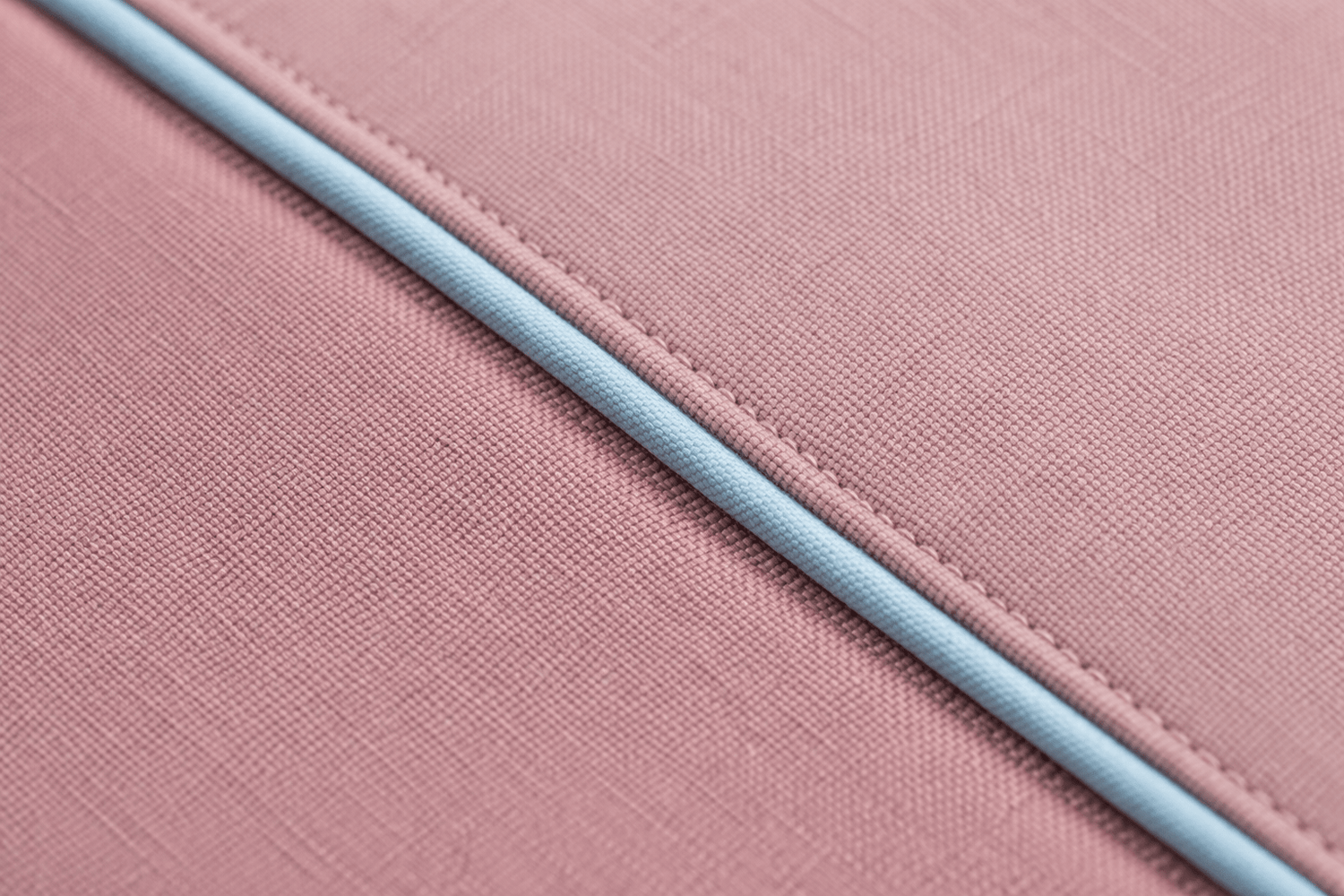
Piping is a fabric-covered cord inserted between two pieces to create a decorative effect.
It allows you to:
- highlight a seam
- structure a project
- add an elegant finish
It is often used on cushions, bags or clothing.
Essential equipment for sewing piping
Before you begin, it is important to have the right equipment:
- piping (ready-made or homemade)
- sewing machine
- special zipper or piping foot
- suitable thread
- pins or clips
Good equipment makes precision easier. A reliable machine like the Juki DX5 or DX7, for example, allows you to sew very close to the cord with great consistency.
Which foot should you use to sew piping?

Choosing the presser foot is very important.
Recommended presser feet:
- zipper foot → the most commonly used
- special piping foot → more precise
How to sew piping step by step
Sewing piping requires precision, but with a good method, it is accessible.
Steps
- Position the piping: place it against the first fabric piece, with the cord facing inward
- Attach it to the first piece: sew the piping along the cord
- Add the second piece: place the second fabric piece on top, right sides together
- Pin carefully: hold the layers securely to prevent them from shifting
- Sew as close to the cord as possible: use a suitable foot to follow the shape of the piping
- Turn the fabric: check that the piping is clearly visible and even
How can you sew corners successfully with piping?
Corners are the most delicate areas.
Steps
- sew more slowly
- make small notches in the piping bias strip
- adjust the fabric to follow the shape
- reposition the pins if necessary
Sewing slowly and precisely is essential for a neat result.
Conclusion
Knowing how to sew piping allows you to add an elegant, professional finish to your sewing projects. Although the technique requires some precision, it quickly becomes accessible with the right tools and a little practice.
By following the right steps and taking your time, you can achieve a neat, even and attractive result on all your projects.
FAQ: How to sew piping
Which foot should you use for piping?
A zipper foot is ideal.
Can piping be sewn easily?
Yes, with a good method.
How can you sew corners successfully?
Make notches and sew slowly.
Is piping required?
No, it is a decorative finish.


Leave a comment
This site is protected by hCaptcha and the hCaptcha Privacy Policy and Terms of Service apply.