















Table of Contents:
Finishing is an essential step in sewing, whether you work with a sewing machine or by hand. It gives your creations a neat finish, prevents the fabric from fraying, and improves their durability.
Depending on the fabric used, cotton, denim, linen, or a more fluid fabric, finishing techniques may vary. Some are simple and quick, while others require greater precision.
In this guide, discover the different finishing techniques in sewing and learn how to choose the ones that best suit your projects.

Overlocking
Overlocking is a basic technique that prevents the fabric edges from fraying.
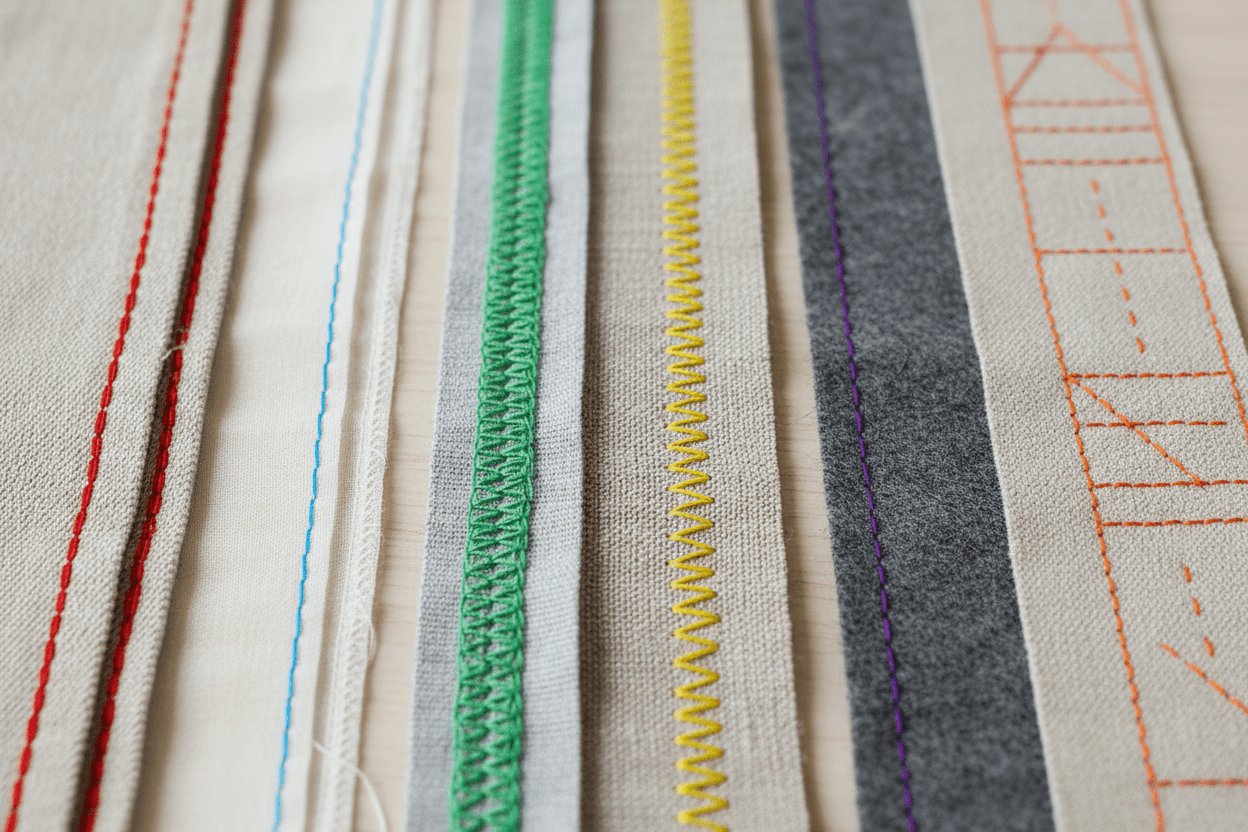
This is the most common method for creating neat finishes inside a garment. Overlocking involves sewing the edge of the fabric using an overlocker or the zigzag stitch on your sewing machine, to keep the fibers in place and reinforce the seam.
Different techniques with overlocking
There are different finishing techniques in sewing that can be combined with overlocking to improve a garment's strength and appearance. Among the most common are the open seam, where the seam allowances are pressed to each side, and the enclosed seam, which encloses the edges for a neater finish. The choice of finish depends on the fabric used, the desired level of strength, and the final look you want to achieve.

Open seam
An open seam consists of separating the seam allowances on each side, then pressing them flat to achieve a neat, discreet finish.
To create this finish, it is recommended to start by overcasting each fabric piece separately to prevent fraying. Once the edges are protected, sew the joining seam, then press the seam allowances open.
It is often used on garments such as shirts or jackets, as it provides a flat, neat and comfortable finish. This technique is simple and very common in sewing.
Closed seam
The closed seam consists of folding the seam allowances to the same side after joining the fabric pieces.
To create this technique, first join the different pieces, then overlock the layers together to hold them securely.
More durable than an open seam, a closed seam effectively reinforces certain areas of the garment.
It is particularly recommended for garments subject to stress or requiring great durability.
Overlock-free technique
Some techniques allow you to finish seams without overlocking. They are often used for cleaner or decorative finishes.
These methods are particularly useful for fine fabrics or elegant garments.

French seam
The French seam is a very neat finish that completely encloses the fabric edges inside the seam.
To create it, first join the fabric pieces wrong sides together, then turn the piece right side out before sewing a second time right sides together. This technique completely hides the fabric edges inside the seam for a neat, durable finish.
It is ideal for fine fabrics such as silk or viscose, as it prevents visible threads and provides a high-end finish.
It is a slightly longer technique to complete, but it produces a particularly neat and professional result.

Flat-felled seam
A flat-felled seam is a strong and durable finish. It consists of folding the seam allowances over and sewing them down to hold them in place.
It is often found on jeans or durable garments.
It provides a neat finish and reinforces the garment's strength.
Finishing techniques: the key to a neat and durable result
Finishing techniques are essential for creating something that is both neat, sturdy, and comfortable to wear. At Verotex, we offer quality fabrics suited to all finishing techniques: easy-to-work-with cotton, durable jeans for strong seams, and fluid fabrics for more delicate results. Well-chosen materials make sewing easier and help you achieve neat finishes from your very first projects.
Whether you use simple overcasting or more advanced techniques such as French seams, you will find fabrics at Verotex suited to all your projects. When chosen well, fabric helps improve the garment's structure and achieve a neat and professional result.
Conclusion
Finishing techniques are essential for achieving a neat and durable result in sewing. Each technique has its advantages and suits a particular type of fabric or project.
Overcasting is ideal for beginners, while techniques such as French seams or flat-felled seams offer more professional finishes.
By choosing the right method, you improve the quality and longevity of your creations.
FAQ - What are the different sewing finishes?
Which finish for beginners?
Overcasting is the simplest technique.
Which finish for lightweight fabric?
A French seam is ideal for a neat finish.
Which finish for jeans?
A flat-felled seam is the most suitable.
Can you sew without finishing the edges?
Yes, with techniques such as a French seam.
Why finish seams?
To prevent the fabric from fraying and improve the finish.


Leave a comment
This site is protected by hCaptcha and the hCaptcha Privacy Policy and Terms of Service apply.