












Table of Contents:
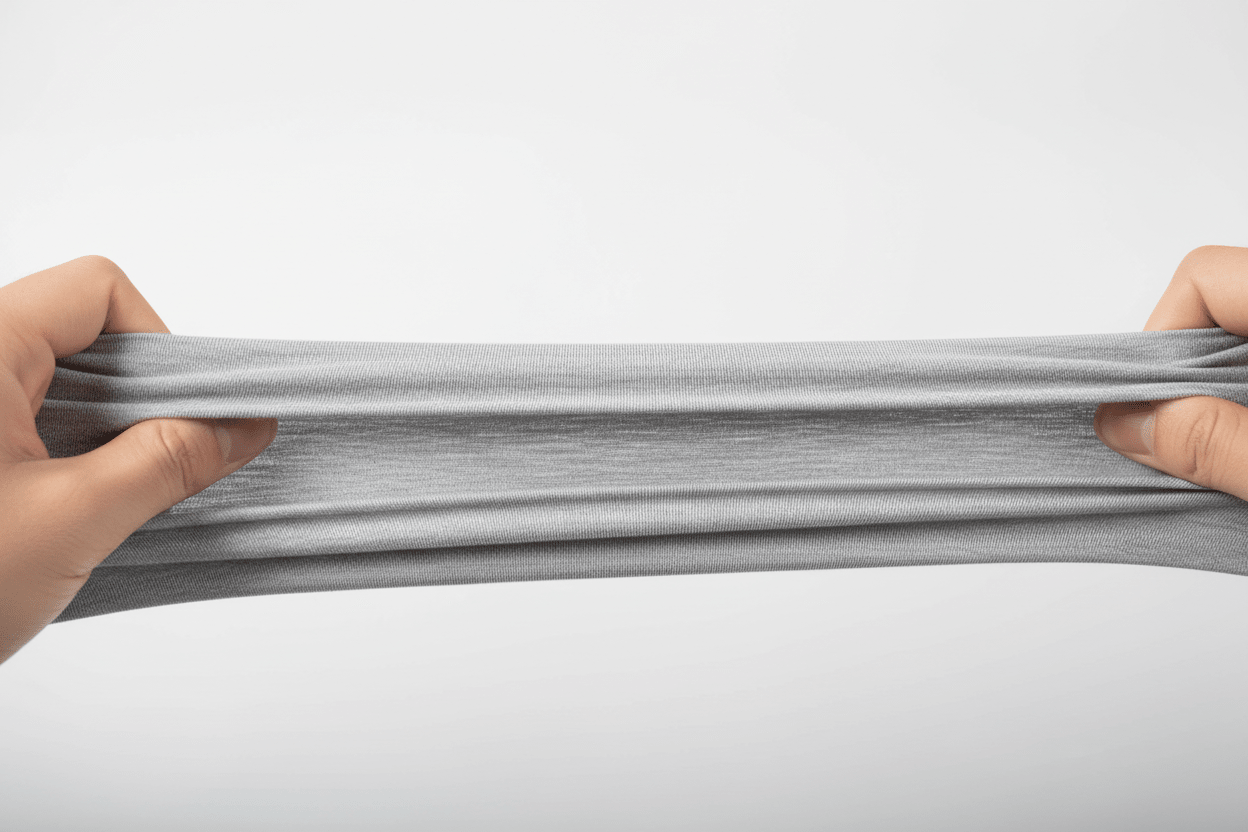
How to sew stretch fabrics? Stretch fabrics such as jersey or Lycra are very comfortable to wear, but can be difficult to sew. They tend to stretch out of shape, ripple or produce uneven stitches if the technique is not suitable.
To successfully sew this type of fabric, it is essential to use the right equipment and adopt the right settings. Unlike conventional fabrics, stretch fabrics require a flexible stitch that follows the movement of the textile.
In this article, you will discover how to sew stretch fabrics easily, the essential tools, the techniques to know and the mistakes to avoid.
What are the main stretch fabrics?
Before learning how to sew stretch fabrics, it is important to recognize the different types of stretch fabric.
The most common stretch fabrics:
- Jersey: the most commonly used, soft and comfortable, it is used for T-shirts, dresses or everyday clothing. It is relatively easy to sew, making it a good choice for beginners.
- Lycra / elastane: very stretchy. It is often used for sportswear, swimsuits or leggings. Its high elasticity requires greater precision.
- French terry (sweatshirt fleece): thicker, ideal for sweatshirts
- Rib knit (ribbing): very stretchy, used for cuffs and collars

To work with these materials more easily, it is recommended to choose quality fabrics. Verotex offers stable jerseys and knits, making sewing easier and limiting distortion.
Why are stretch fabrics difficult to sew?

Stretch fabrics have several distinctive characteristics.
They stretch easily, which can distort the pieces during sewing. They can also ripple if the tension is not properly adjusted. Their flexibility can sometimes make them difficult to keep under the presser foot.
These characteristics therefore require a different approach, with appropriate settings and techniques.
How do you cut stretch fabric?
Cutting is an often-underestimated but essential step.
Before cutting, it is important to leave the fabric lying completely flat without pulling it. Any tension can distort the dimensions.
It is recommended to pin the fabric correctly with the pattern or use weights to hold it in place. This helps prevent shifting and cutting errors.
Precision at this stage determines the success of the project.
Essential equipment for sewing stretchy fabrics
To succeed, it is important to have the right equipment.
- stretch or jersey needle
- quality sewing thread
- suitable sewing machine
- presser foot
- fine pins or clips
A reliable machine makes it easier to manage the fabric’s elasticity. Models such as the Juki DX5 or DX7 offer even stitches suited to stretchy materials, making sewing much easier.
Jersey and stretchy fabrics can also be sewn with an overlocker, a machine particularly suited to these materials. It produces strong seams and neater finishes while preserving the fabric’s elasticity.
Which needle should you use for stretchy fabrics?
Choosing the right needle is essential to prevent skipped stitches.

Which needle should you choose?
- stretch needle → ideal for very stretchy fabrics
- jersey needle → suitable for standard stretchy fabrics
Recommended size:
- 70-80 → lightweight fabrics
- 80-90 → medium-weight fabrics
Which stitch should you use to sew stretchy fabric?
The stitch must be able to stretch with the fabric.
Recommended stitches:
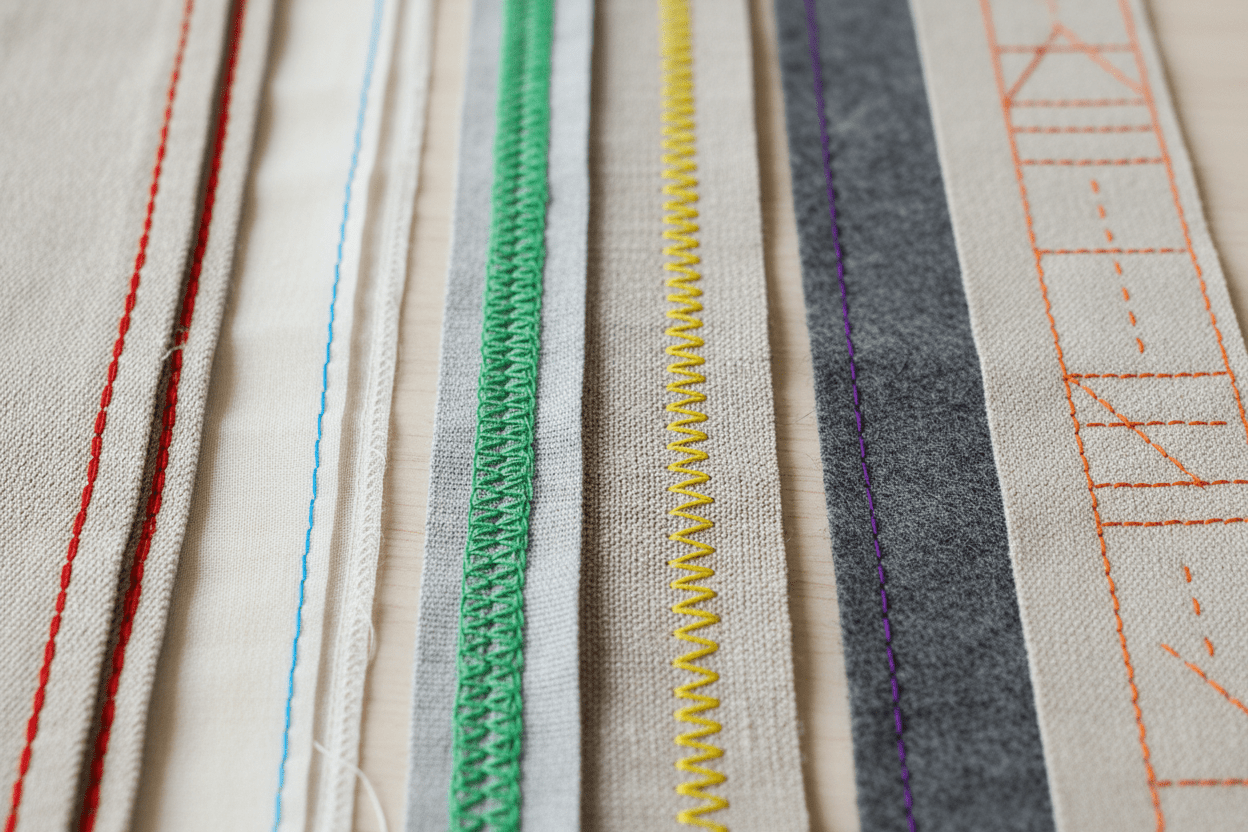
- zigzag stitch
- stretch stitch
- The 4-thread stitch on your overlocker
- overlock stitch (overlocker)
How to sew stretchy fabrics step by step?
Sewing stretchy fabric requires gentleness and precision. The goal is to preserve the fabric’s elasticity without distorting it.
Steps without an overlocker
- Prepare the fabric: wash it if necessary and iron it lightly to remove wrinkles without stretching it
- Choose the right materials: install a stretch or jersey needle and use quality thread
- Adjust your machine: select a zigzag or stretch stitch so that the seam can follow the fabric’s elasticity
- Test on a scrap: check that the stitch is flexible and does not break when you stretch the fabric
- Position the fabric correctly: place it flat under the presser foot without stretching it
- Sew slowly: guide the fabric with your hands, but do not pull it to prevent it from becoming wavy
- Keep the fabric stable : use clips or fine pins to prevent it from shifting
- Press lightly after sewing : this helps relax the fabric and achieve a neater finish
Steps with an overlocker
-
Prepare the fabric: wash it if necessary and press it lightly without stretching it to stabilize the material
- Choose the right equipment: use quality threads for a durable seam
- Adjust the overlocker: adjust the thread tension and differential feed to prevent the fabric from puckering or relaxing
- Test on a scrap: check that the seam is flexible and even, and does not break when stretched
- Position the fabric correctly: lay it flat and guide it towards the knife without forcing it
- Sew at a steady speed: let the machine feed the fabric naturally without pulling or pushing. Use the differential feed if necessary: increase it for fabrics that relax, such as jersey, to prevent rippling
- Keep the fabric stable: guide it precisely to achieve a clean cut and neat seam
- Check the finish: the overlocker cuts and overcasts at the same time, creating a neat, stretchy seam
- Press lightly after sewing: this helps set the seam and improve the final appearance
How can you prevent fabric from puckering?
Puckering is a common sewing problem, especially with stretch fabrics.
Solutions:
- reduce presser foot pressure
- stabilize with lightweight interfacing
- do not pull the fabric
Table: settings for stretch fabrics
| Item | Recommendation |
|---|---|
| Needle | stretch or jersey |
| Thread | polyester |
| Stitch | zigzag or stretch |
| Speed | slow |
| Foot | dual feed or standard |
This table helps you better understand how to sew stretch fabrics.
Conclusion
Knowing how to sew stretch fabrics is essential for working with jersey or lycra without difficulty. With the right equipment, settings and a little practice, it is entirely possible to achieve neat, durable seams.
By taking the time to prepare your fabric properly and adapt your technique, you can avoid distortion and successfully complete all your stretch-fabric projects.
FAQ on how to sew stretch fabrics
Which needle should you use for stretch fabric?
A stretch or jersey needle is recommended.
Can you use a straight stitch?
No, it may break.
Why is my fabric puckering?
Often due to incorrect settings or excessive tension.
Do you need an overlocker?
It is not mandatory but gives a neater finish.


Leave a comment
This site is protected by hCaptcha and the hCaptcha Privacy Policy and Terms of Service apply.