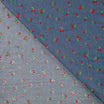
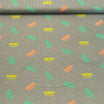
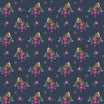
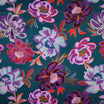
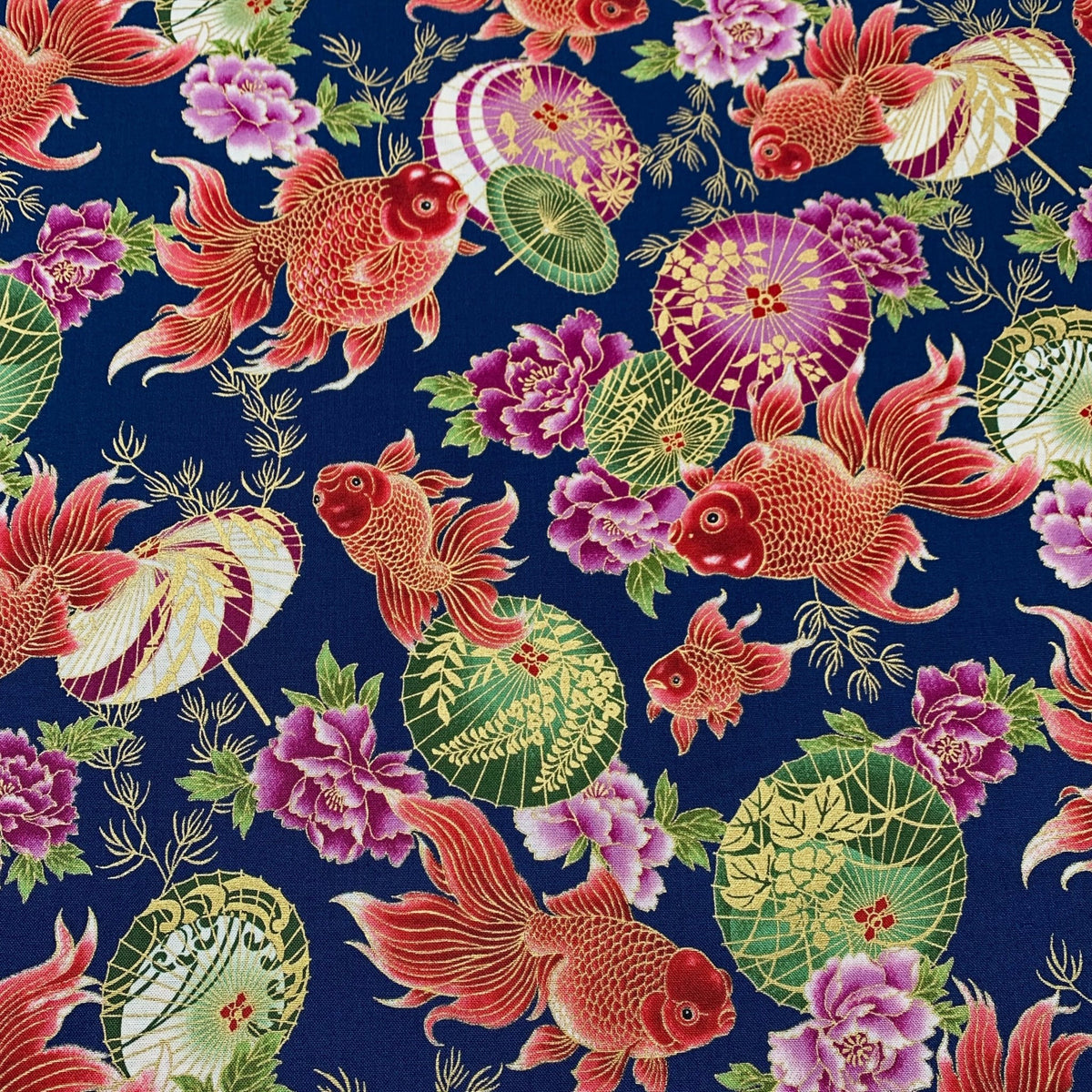
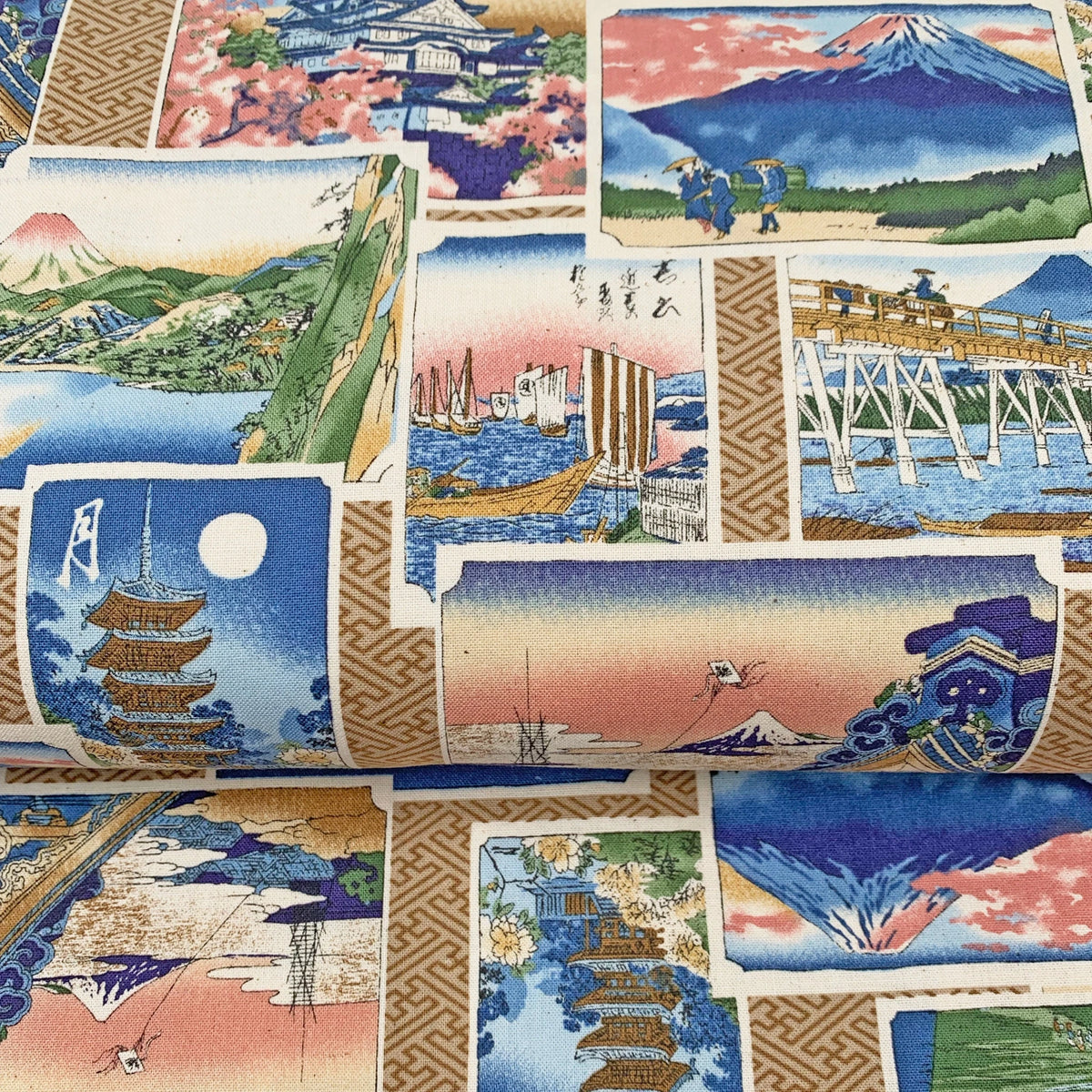
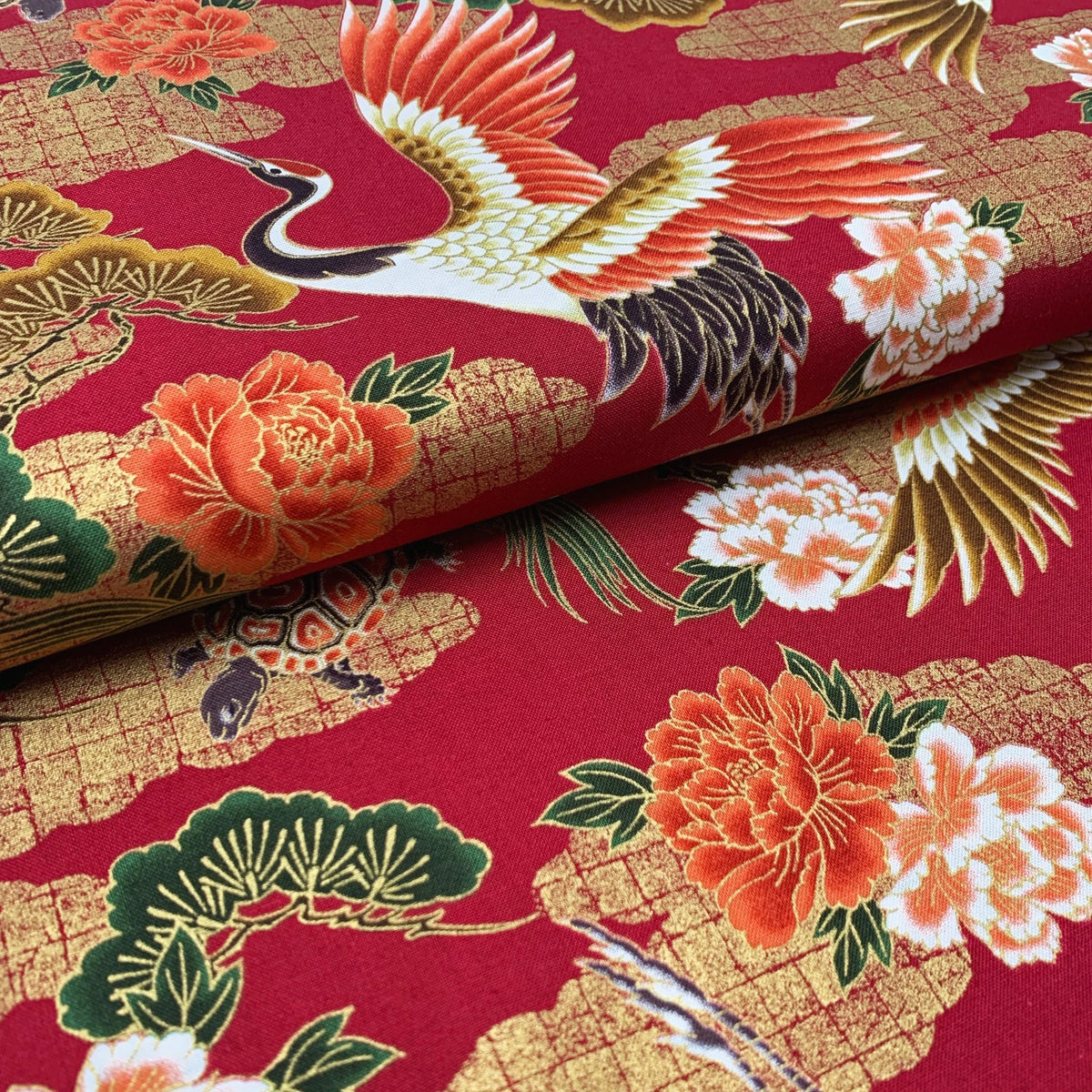
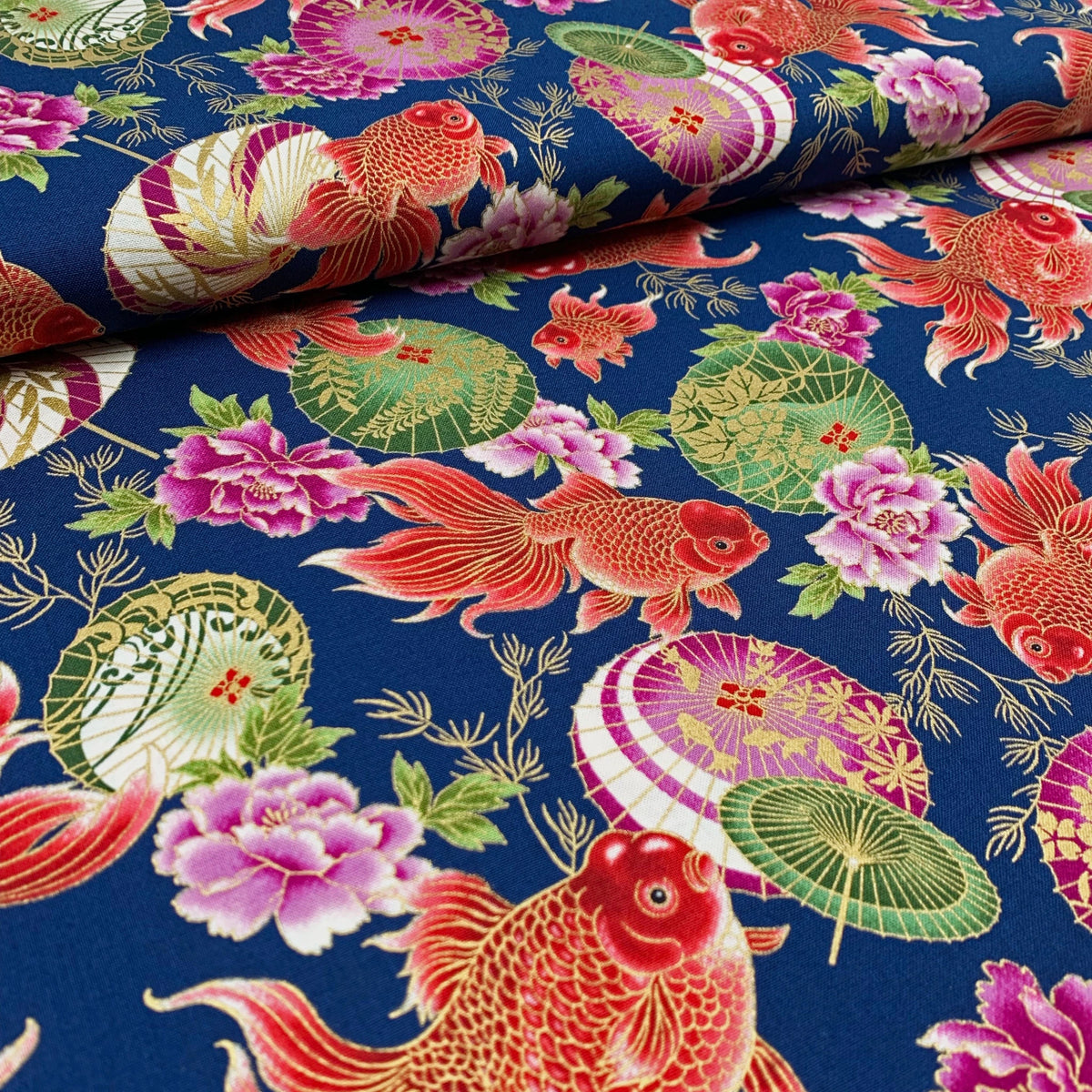
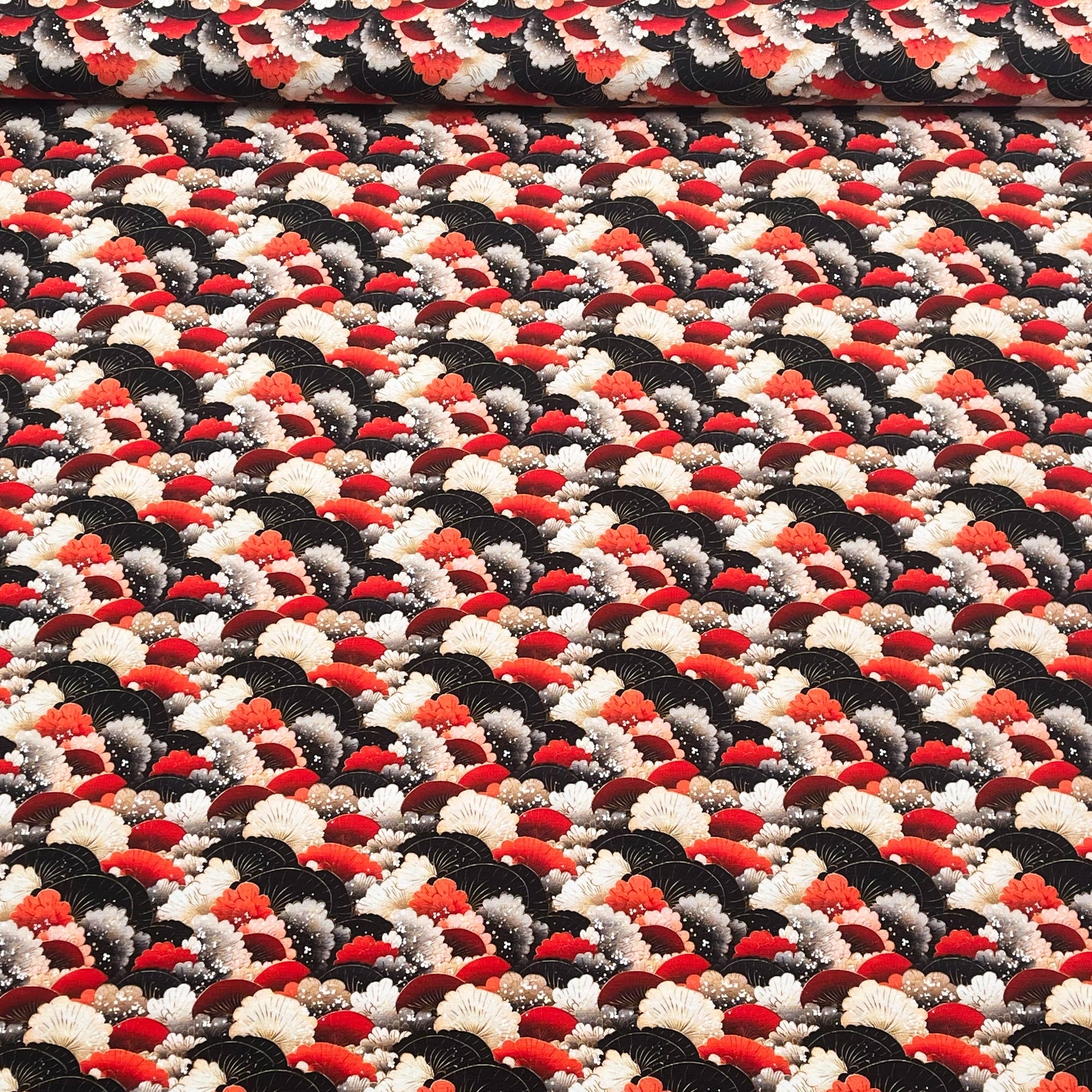
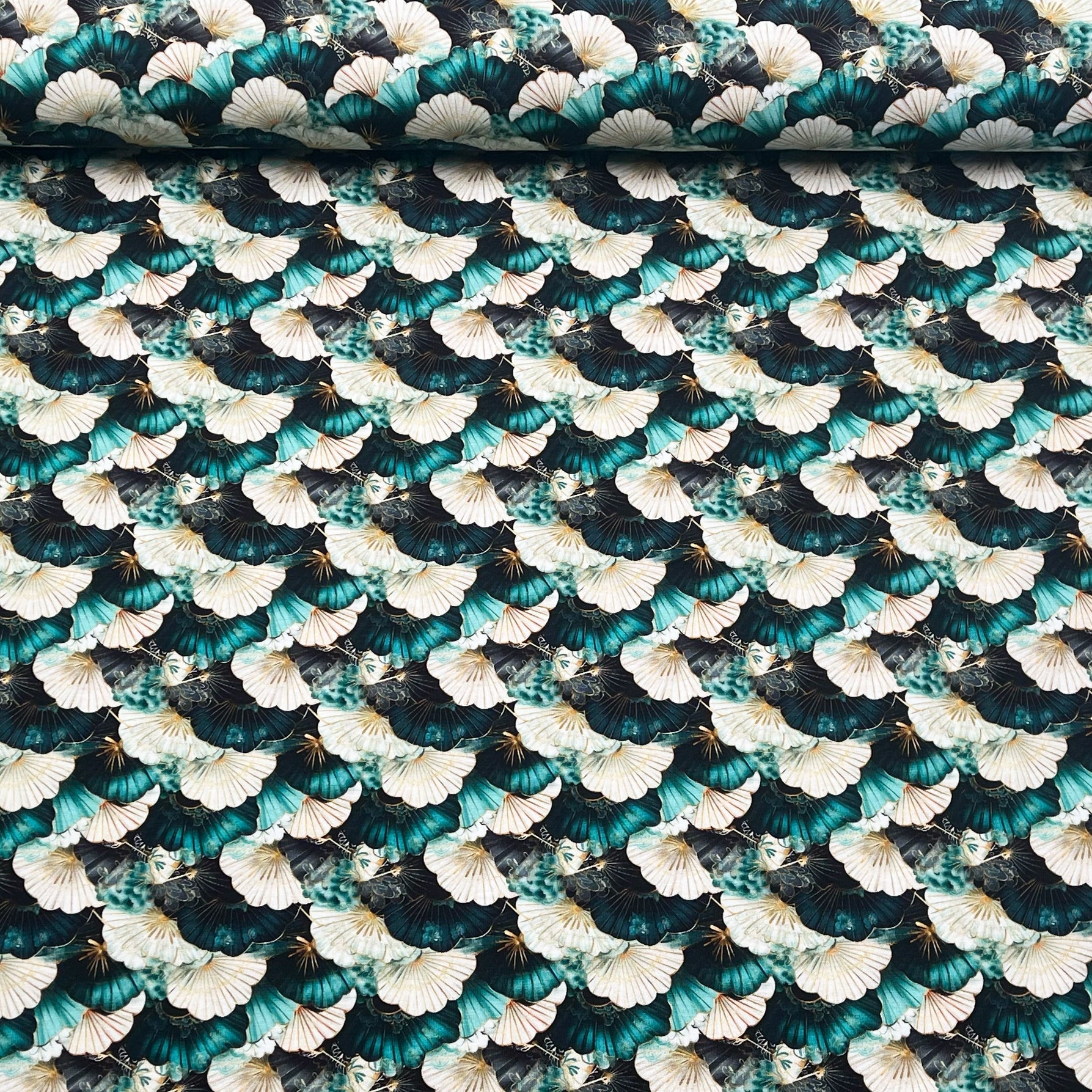
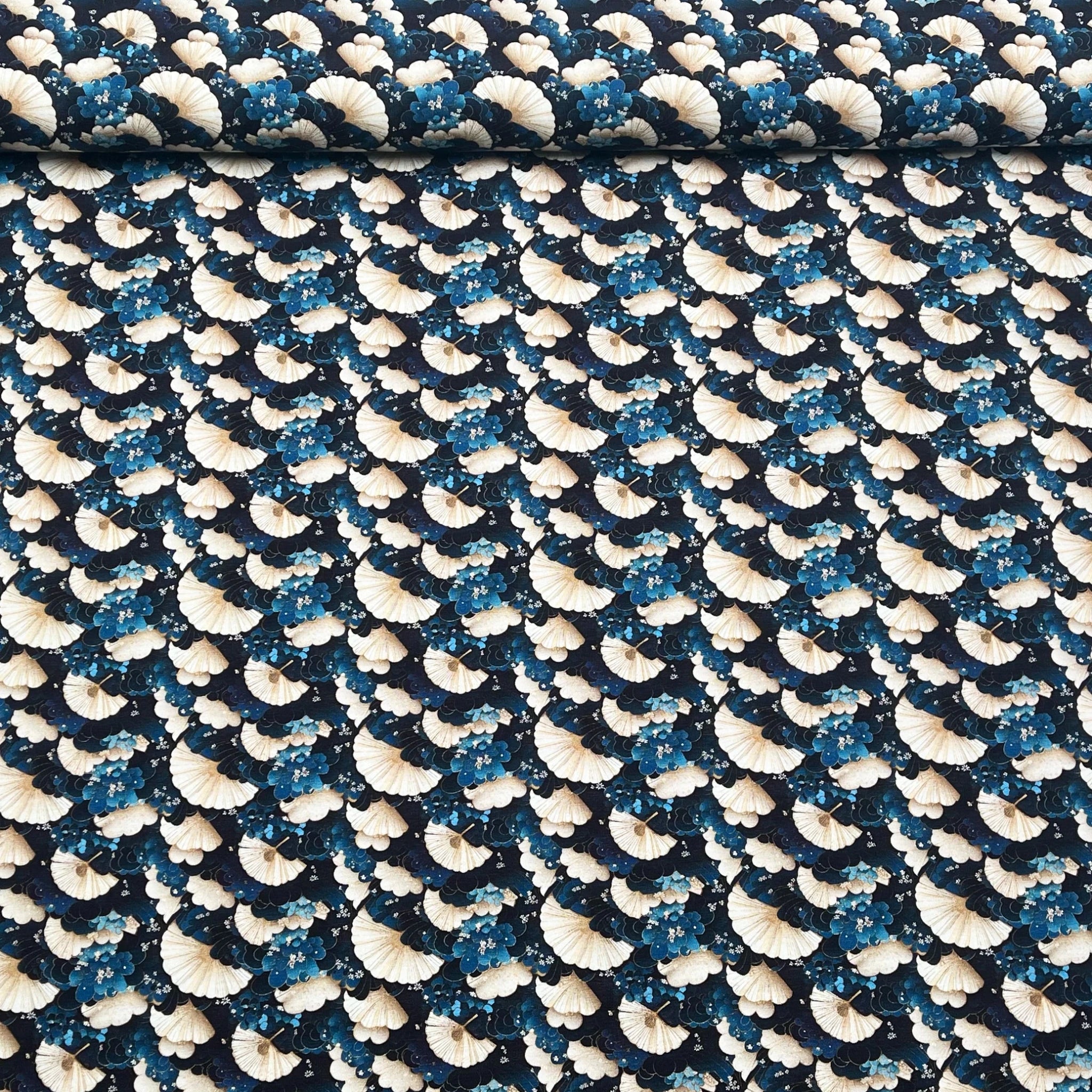
Koi carp, cranes and tortoises, fans, seigaiha waves, lucky cats. Japanese fabrics evoke a whole world of imagery. At Verotex, you can find them by the metre, cut to the exact length you need. Order online, or see them in person at our shop in Grez-Doiceau.
Japanese patterns and their meaning
Each design carries a meaning. Most revolve around luck, longevity or the passing of the seasons.
-
Sakura (cherry blossom): ephemeral beauty, the quintessential spring pattern.
-
Koi (carp): perseverance and success, a graphic print that is very popular in home décor.
-
Crane and tortoise: longevity and good fortune, a traditional pair found on ceremonial fabrics.
-
Seigaiha (blue waves): a repeated geometric pattern, symbolising calm and lasting good fortune.
-
Maneki-neko: the lucky cat, perfect for pouches, cases and children's creations.
-
Fans and landscapes: elegant patterns that are easy to pair with a plain fabric.
Which materials for which projects
Two materials in this collection. They are not sewn in the same way.
Cotton poplin is fine and smooth, with a dense weave. It lies flat and is easy to sew. It is the fabric used for shirts, blouses, dresses and skirts. It is also suitable for patchwork.
Jersey is soft and stretchy. It contains a little elastane. It is best suited to T-shirts and children's clothing. For a structured, close-fitting garment, also take a look at our plain two-way stretch fabrics.
| Material |
Composition |
Fabric width |
Weight |
What for |
| Cotton poplin |
100% cotton |
115 or 140 cm |
110 g/m² |
Shirts, dresses, skirts, pouches, cushions, furoshiki, patchwork |
| Jersey |
95% cotton, 5% elastane |
150 cm |
200 g/m² |
T-shirts, children's clothing |
The fabric width varies from one print to another. It is indicated on each product page. Check it before calculating the length you need.
Sewing ideas
The Japanese pattern can be understood at a glance. It therefore works very well on small pieces.
For accessories and home décor: pouch, small bag, bag or tote bag, bandana, cushion cover, tablecloth, table runner, washable wipe, reusable paper towel.
For clothing: shirt, blouse, summer dress, wrap skirt, lightweight trousers, pyjamas, indoor kimono.
Also consider furoshiki, the Japanese fabric square used to wrap a gift. Hem a 50 x 50 cm square, and it's ready.
Sewing and caring for Japanese printed cotton
For poplin, a universal or size 80 Microtex needle is sufficient. Polyester or cotton thread is suitable. These are stable, non-stretch cotton fabrics, very pleasant for beginners.
For jersey, which is stretchy, use a needle suitable for knit fabrics.
Prewash the fabric before cutting to allow for shrinkage. Then wash at 30 °C and iron on a cool setting. Complete care instructions are provided on each product page. Find matching thread and fasteners in our haberdashery.
A tip for large designs: cut in a single layer, with the pattern placed right side up. This lets you see where the design will fall. Add twenty to thirty centimetres to the pattern yardage so you can choose the placement.
Before ordering
Are these fabrics made in Japan?
These are fabrics with Japanese-inspired designs. We select them for the quality of the cotton and the fineness of the printing. The exact origin is specified on each product page.
How much should I plan for?
Allow 50 cm for a pouch or two small bags. Around 1.20 m for a shirt. For a dress, the yardage depends on the fabric width selected: check the product page before ordering.
Can they be used for patchwork?
Yes, poplins are very well suited to it. The same weight, the same stability. They pair easily with solid colours.
What about children's clothing?
Yes. Poplins are 100% cotton, soft and easy to care for. Printed jerseys are well suited to T-shirts.
Can I get several metres in one continuous piece?
Yes. Indicate the total quantity you need and the fabric will be cut as one continuous piece, without a join in the middle. This is important when the design is large and needs to be repositioned.
A question about a print or yardage? Write to us, we're happy to help.