















Table of Contents:
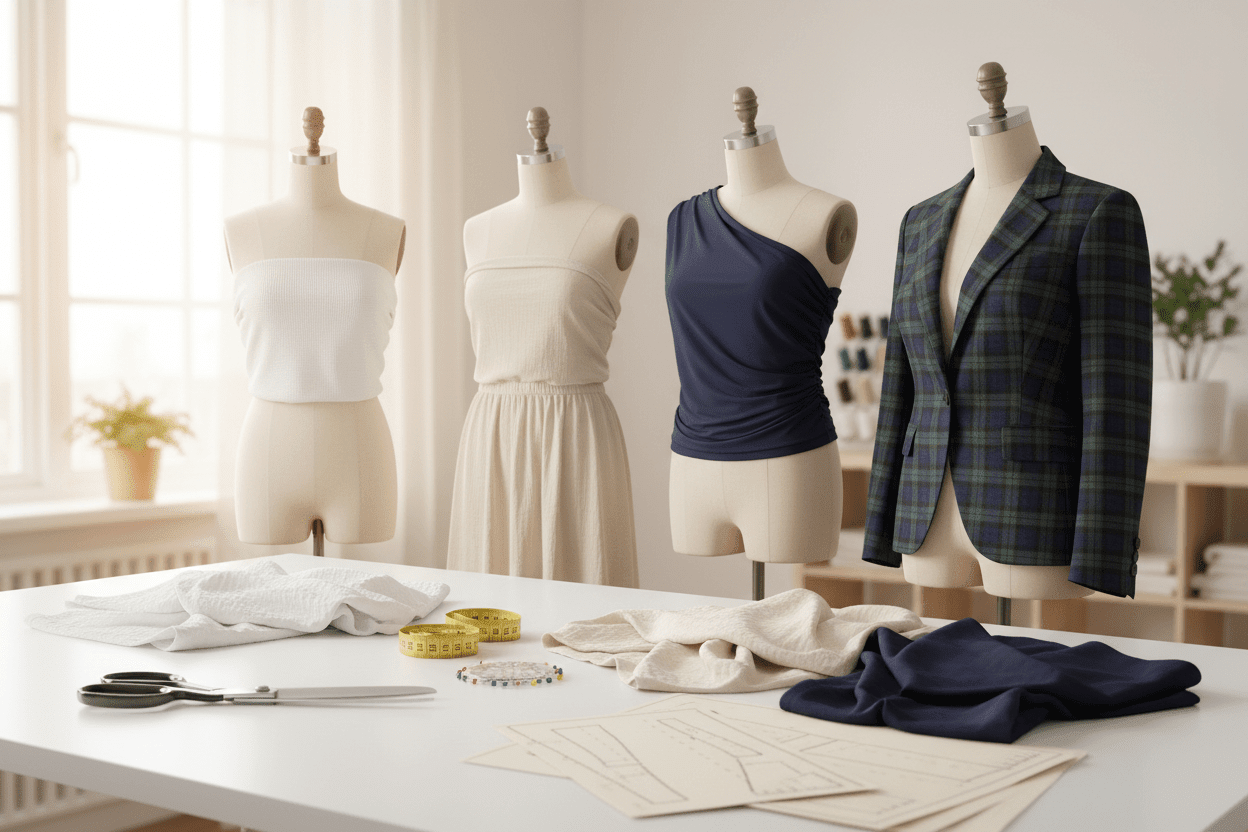
This is a key issue as soon as you want to improve the fit and drape of your clothes. The dress form is a valuable tool for working in three dimensions, visualizing proportions, and making precise alterations without constantly trying on the garments. You just need to know how to use a dress form correctly and especially how to adjust a dress form to your own body shape.
Adjustable dress forms, like those available at Lewenstein, offer great flexibility today. They allow you to adjust the bust, waist, and hips using dials, making them accessible to many sewists, even beginners. However, incorrect dress form adjustment can distort fittings and give a false reading of the garment.
In this article, you will discover how to use and adjust a dress form step by step: taking measurements, essential settings, best practices for fitting a garment on a dress form, and limitations to be aware of. The goal is to help you fully utilize your adjustable dress form to gain precision, improve your working comfort, and achieve better-fitted garments, project after project.
Why use a dress form in sewing?
Using a dress form allows you to work on a garment in three dimensions, which is hard to perceive when flat. Understanding how to use and adjust a dress form helps anticipate drape issues and gain precision from the early stages.
The benefits of a dress form for adjusting a garment
The dress form offers a global and objective view of the garment in progress. It makes gradual adjustments easier without having to try the garment on repeatedly.
- Three-dimensional view of the garment
- Better overall drape
- Precise and localized adjustments
- Saves time during alterations
Dress form vs trying on clothes yourself
Trying on clothes yourself remains essential, but it is limited by the lack of perspective. The dress form, on the other hand, allows you to observe lines, balance, and proportions without constraints.
Which dress form to choose based on your body shape?
Before you can use a dress form effectively, you need to choose the right model. The type of dress form directly affects the quality of possible adjustments.
Adjustable vs. fixed dress forms: what are the differences?
Adjustable dress forms are the most versatile because they adapt to different body shapes. Fixed forms offer great precision but only for one size.
- Adjustable dress form: adaptable and versatile

- Fixed dress form: very precise for a given body shape

- Foam dress form: easy to pin and modify
How to choose the right size dress form?
The dress form’s size should be as close as possible to your measurements, even if it’s adjustable. A form too different from your body shape will be harder to adjust correctly.
How to adjust a dress form to your measurements?
Properly adjusting the dress form is essential. Poor adjustment skews the entire garment analysis and can lead to fitting errors.
Taking your measurements to adjust a dress form
Measurements must be precise and taken under good conditions (standing, without tightening).
- Bust circumference
- Natural waist circumference
- Hip circumference (widest point)
- Torso/waist height

Step-by-step guide to adjusting a dress form
Adjustments are made gradually, area by area, regularly checking symmetry.
| Area | Action | Practical tip |
|---|---|---|
| Bust | Adjust the dials | Make small adjustments step by step |
| Size | Adjust the dials on each side | Check left/right symmetry and the horizontal alignment of the waistline |
| Hips | Adjust the width | Compare front and side views |

How to use a dress form to adjust a garment?
Once adjusted, the dress form becomes a true analysis tool. Knowing how to use and adjust a dress form allows you to correct a garment even before the final fitting.
Pinning and adjusting a garment on a dress form
Pinning should be done without excessive tension to preserve the fabric’s natural drape.
- Position the garment on the grainline
- Pin gradually
- Observe the seam lines and wrinkles

Correcting fit issues using the dress form
The dress form makes it easy to identify excess or lack of fabric. Wrinkles often indicate an imbalance in volume or length.
The limits of an adjustable dress form
Even when well adjusted, a dress form does not fully replace a human body. Knowing its limits helps you use it better.
What the dress form cannot reproduce
A dress form remains static and symmetrical, unlike the human body.
- Personal Posture
- Natural Asymmetries
- Mobility and Movement
How to Compensate for Differences Between Dress Form and Real Body
For more realism, you can add padding or mark certain key lines.
Bonus for How to Use and Adjust a Sewing Dress Form
This section gathers practical tips to optimize daily use of the dress form.
Sewing Tips for a More Realistic Dress Form
A few simple adjustments make the dress form more true to your shape.
- Adding batting or foam
- Marking the waistline
- Marking vertical and horizontal axes

Adapting an Adjustable Dress Form to a Non-Standard Body Shape
Adjustable dress forms, like those offered by Lewenstein, can be customized to fit non-standard body shapes, provided you add volume in the right places.
Conclusion: Getting the Most Out of Your Sewing Dress Form
Knowing how to use and adjust a sewing dress form greatly improves the quality of sewn garments. Well adjusted, the dress form becomes a valuable tool to analyze drape, correct volumes, and anticipate adjustments before the final fitting. Used alongside trying garments on yourself, it saves time, increases precision, and improves working comfort, no matter your sewing level.
FAQ on How to Use and Adjust a Sewing Dress Form
Can you use a dress form even if it’s not perfectly fitted?
Yes, but the closer the dress form matches your body shape, the more reliable the adjustments will be.
Is an adjustable dress form really accurate?
It’s accurate for the main volumes but sometimes needs additional adjustments.
Can you adjust pants on a dress form?
Yes, it’s possible to adjust pants on a dress form to work on overall balance, volume, and length, but it’s limited. A sewing dress form doesn’t have an inseam, which prevents properly fitting the crotch and accurately reproducing the real fit.
In practice, adjusting pants on a dress form is possible but tricky: you can use pins and a tape measure to check lines and proportions, but fitting is less precise than on the body. For a reliable result, it’s always best to try the pants on yourself to properly adjust the crotch, seat, and comfort.
Is a dress form useful when you’re just starting out in sewing?
Yes, it helps to visualize the garment and understand how it drapes.

Leave a comment
This site is protected by hCaptcha and the hCaptcha Privacy Policy and Terms of Service apply.