










Table of Contents:
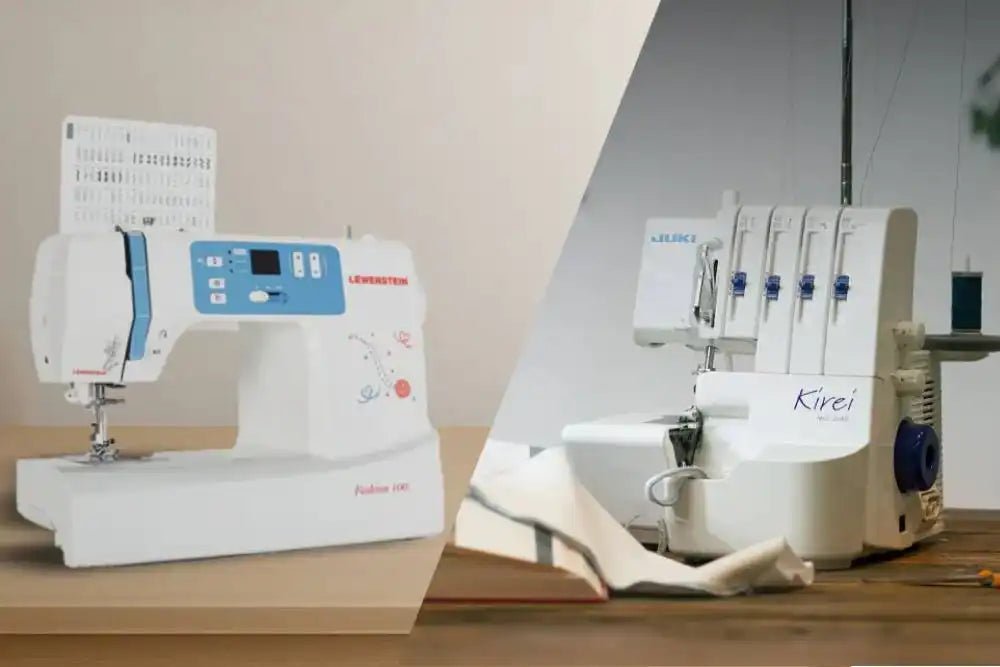
Often confused by beginner sewers, the difference between sewing machine and serger lies in their distinct functions within textile making. The sewing machine is essential for assembly and creating decorative stitches, while the overlocker excels in edge finishing and assembly of stretch fabrics with strong and neat seams. Understanding their specific functions is essential to optimize your sewing projects, improve the quality of your finishes, and choose the most suitable tool for each task.
Sewing machine vs overlocker: understanding the main differences
The sewing machine assembles fabric pieces, while the overlocker cuts, assembles, and overcasts in one action. The result is different: the first gives a flat seam, while the second leaves a rolled hem edge. Understanding the difference between sewing machine and overlocker helps choose the equipment best suited to your sewing needs, depending on whether you prioritize precision or finishing.
However, the overlocker does not replace the sewing machine for assembly. Its role is to provide professional finishes thanks to its multiple threads. Conversely, the sewing machine allows more precision for details. The key to optimize your creations lies in mastering the difference between sewing machine and overlocker, as each brings complementary value to a project.
Whether you are looking for a new sewing machine or a high-performance overlocker, Verotex has the model you need. Browse our selection today!
|
Comparison of stitches achievable by a sewing machine and an overlocker |
||
|
Type of stitch |
Sewing machine |
Overlocker |
|
Straight stitch |
Basic assembly, adjustable according to |
Not available on an overlocker |
|
Zigzag |
Overcasting, elastic sewing, decorative appliqués |
Not available on an overlocker |
|
Invisible |
Discreet hems |
Replaced by rolled or narrow edge |
|
Buttonhole |
Creating buttonholes |
Not available on an overlocker |
|
Decorative (scallop, embroidery) |
More than 30 variants possible depending on the models |
Limited to functional finishes |
|
Elastic overlock |
Specific stitches for stretch fabrics |
Standard 3/4-thread stitch |
|
Overlock |
Not available on a sewing machine |
Sewing, overcasting and |
|
Flatlock |
Impossible without specific accessory |
Ideal flatlock stitching |
|
Sewing speed |
Up to 1000 stitches/min for electric models |
Up to 7000 rpm |
Types of stitches achievable with each equipment
The sewing machine offers varied stitches: assembling, stretch, hems. Models like Janome or Juki offer up to 30 different stitches for decorative or technical applications. To make the most of these possibilities, it is important to understand the difference between a sewing machine and a serger, as each device meets specific sewing needs.
To fully benefit from these features, it is essential toensure proper threading, because a thread looping problem on the sewing machine can compromise stitch quality and disrupt work.
The serger, meanwhile, specializes in 3, 4, or 5-thread overlock stitches. The overlock stitch sews, trims, and finishes in one pass, the rolled edge creates fine hems on silk or muslin, and the flatlock stitch makes flat seams for sportswear.
The difference between a sewing machine and a serger is also reflected in the finish: where the sewing machine focuses on versatility, the serger excels in clean and anti-fraying finishes.

Thread system and drive mechanisms
The serger uses 3 to 5 threads simultaneously for strong stitching, and the choice of thread affects tension and durability. Threading a serger is more complex than on a standard sewing machine, but it is essential for stretch fabrics. Understanding the difference between a sewing machine and a serger helps grasp these technical specifics and optimize the use of each device.
Unlike the traditional sewing machine, the serger uses a bobbin-free system. This operation simplifies sewing. It avoids common inconveniences related to bobbin issues. This reduces the risk of irregular stitches or unexpected stops.
To use a serger properly, follow these instructions:
- Adjust the differential feed to prevent stretching or puckering of stretch fabrics
- Use the upper and lower knives to cut the excess fabric and achieve a clean edge
- Form overlock stitches durable and decorative
- Adjust the thread spools according to configurations (3, 4, or 5 threads) for strong seams
- Choose specific needles depending on the fabrics (jersey, stretch, denim) for a high-performance overlocker
The overlocker's feed system combines front/back feed dogs with differential speed. This is an efficient system that ensures precise control on delicate fabrics. The difference between a Sewing machine and an overlocker is especially evident in this mechanism, which prevents puckering on lycra or gathering on silk, a key advantage of the overlocker. Recent innovations from Elna or Juki include automatic mechanisms to simplify adjustment according to the fabric.
Need a robust Sewing machine or a overlocker versatile? Knowing how to identify the difference between a Sewing machine and an overlocker will help you choose the equipment that best suits your sewing projects. Visit Verotex and find the equipment that perfectly matches your needs and budget.

Which projects to make with each machine?
The Sewing machine relies on its versatility for fabric assembly. It is perfect for beginners who want to sew simple accessories, basic clothing, or home decor items, and even try embroidery on various fabrics.
Yet, it does not does not replace the overlocker when it comes to overlocking edges or working with delicate fabrics. Understanding the difference between a Sewing machine and an overlocker helps you choose the right machine for each stage of your sewing projects.
Is an overlocker really essential for your sewing projects? The answer is yes. Here are some situations that explain the need to use such a machine:
- Essential overlocker projects: assembling sportswear in jersey or stretch fabric.
- Fabrics impossible without an overlocker: fine fabrics like silk or elastic materials.
- Finishes impossible otherwise: rolled hem on muslin, flat seam for dancewear.
- Unmatched time savings: overlock and sew simultaneously without turning the fabric.
- Professional assembly: strong and aesthetic seams on quality garments or accessories.
The combination of the sewing machine with the serger offers the best result. With the sewing machine, you perform thetechnical assembly and with the serger, you ensure finishing on the edges. This duo works wonderfully with Juki models or Janome.
Mastering the difference between sewing machine and serger guarantees perfect finishes. This mastery saves you valuable time. It is especially useful for complex projects like a jersey dress or sportswear.
Want to improve your sewing projects? Discover the different machine models sewing machines and sergers available at Verotex.

Choose your machine well according to your needs
To choose your sewing equipment well, it is essential to understand the difference between sewing machine and serger, as each meets specific needs. Taking into account your level, the complexity of planned projects, and the learning curve, you can determine the device best suited to your current skills and future growth. Here are the essential criteria for making the right choice
Essential criteria for making the right choice
Prioritize your sewing projects to guide your choice. Use a sewing machine to make accessories or simple garments. Choose a serger to sew stretch fabrics or get professional finishes.
Learning and skills: assess the learning curve
The sewing machine is tamed in a few hours, but the the serger requires more patience: allow 1 to 2 weeks to master threading and thread tensions. YouTube tutorials help you get started, but for perfect mastery, nothing beats online course.
Grasping the difference between a sewing machine and a serger will help you better manage these learning stages and optimize your results. The sewing machine remains your versatile ally for various projects, while the serger transforms your finishes into professional feats. Understand their strengths, assess your fabric and project needs, and take the step towards a winning combination.


Leave a comment
This site is protected by hCaptcha and the hCaptcha Privacy Policy and Terms of Service apply.