
























Table of Contents:
Mastering sewing machine tension is important for every sewer, whether a beginner or experienced. Incorrect tension can be a source of frustration when working on a sewing project, resulting in loose stitches, unwanted gathering or even thread breakage.
Learn here how to adjust your sewing machine's tension perfectly and discover the different types of settings available. We will also provide you with practical tips for achieving flawless seams every time.
Understanding sewing machine tension
Mastering sewing machine tension is essential for achieving neat, even seams. This setting, which is often misunderstood, nevertheless plays a central role in the proper functioning of the machine. Let us discover what tension is, how it affects thread balance, how to identify signs of an incorrect setting, and which factors can influence this delicate but fundamental parameter.

Definition and role of tension
Sewing machine tension is the force exerted on the thread while sewing. It must balance the upper thread and the bobbin thread to produce even stitches.
The tension system uses discs and a spring to control thread resistance. A good balance between the upper and lower threads produces strong, attractive stitches.
How does tension balance work?
A stitch forms when the two threads interweave in the middle of the fabric. The balance depends on the adjustment of the dial and the bobbin thread tension.
|
Characteristics of balanced vs. unbalanced tension on a sewing machine |
|||
|
Type of tension |
Visual characteristics |
Practical consequences |
|
|
Balanced tension |
Even and stable stitches |
Balance between upper thread and bobbin thread, |
|
|
Upper tension too loose |
Loops of thread on the underside, |
Stitches that do not hold, risk of tearing, |
|
|
Upper tension too high |
Upper thread almost invisible |
Tight and fragile stitches, |
|
|
Bobbin tension incorrectly adjusted |
Loops underneath the fabric, knots or |
Thread breaking frequently, |
|
Imbalances cause visible defects and affect the seam's strength. If the tension is too loose, it creates loops, while excessive tension causes puckering or breaks the thread.
To learn how to use your sewing machine properly, attend Verotex sewing classes. In no time, you will know all about how a sewing machine works.
Recognizing tension problems
In addition to causing puckering, excessive tension also creates tight stitches and holes. The upper thread sinks into the fabric, causing it to wrinkle.
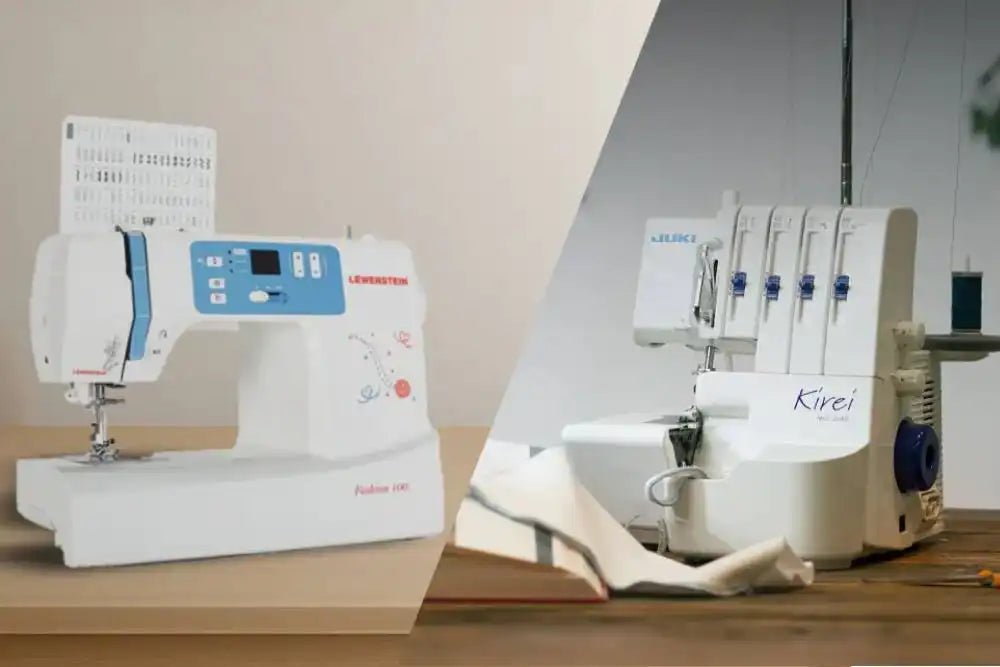
Low tension leaves loops underneath the fabric. At the same time, the bobbin thread remains straight, the stitches lack strength, and the seam gives way easily. It is also essential to understand the difference between a sewing machine and an overlocker, as each reacts differently to tension problems and requires appropriate adjustments.
Factors that influence tension
Several factors affect tension: the type of thread, the fabric thickness, and the needle size. These parameters determine the necessary adjustments:
- Choose a suitable thread for the fabric to prevent puckering or excessive tension
- Adjust the tension according to the fabric thickness (thin fabric = low tension, thick fabric = high tension)
- Check the needle: a blunt or unsuitable needle disrupts the balance between the thread and the fabric.
- Check the threading of the tension discs and make sure the bobbin is in good condition
Special threads and unusual fabrics require adjustments. Polyester is suitable for most fabrics, lightweight fabrics require lower tension, while thick materials need higher tension.

Tension settings for perfect sewing
To achieve even stitches and flawless sewing, it is crucial to set the sewing machine tension correctly. Proper adjustment of both the upper thread and bobbin thread ensures a perfect balance between the threads. Here's how to adapt the tension to your needs, taking into account the different fabric types and the specific settings for each sewing situation.
Adjusting the upper thread tension
Use the dial to adjust the upper thread tension. Thread the machine correctly, then turn the dial to adjust it. Then, test the stitching on a sample to check that you are getting neat stitches.
The numbers on the dial indicate the force applied to the thread. The higher the number, the stronger the tension. An incorrect setting can cause a sewing machine thread looping problem, often caused by tension that is too low or incorrect thread insertion.
Adjusting the bobbin thread tension
Check the bobbin tension by suspending it by the thread. To adjust it, turn the screw with a screwdriver. A good balance prevents loops or uneven stitches.
To adjust the bobbin case, use a fine screwdriver and turn it slightly. Turn right to tighten and left to loosen. An incorrect setting can cause a sewing machine bobbin problem, directly affecting the quality and strength of the stitches. Remember to test after each adjustment.
Optimal tension by fabric type
Refer to the fabric's thickness when choosing your sewing machine's tension. Thin fabrics require lower tension, while thick fabrics need a firmer setting for even stitches.
|
Guide to the recommended tension settings by fabric type and stitch type |
||
|
Fabric type |
Upper thread tension |
Recommended stitch type |
|
Lightweight fabrics (voile, silk) |
2 to 3 |
Straight stitch, narrow zigzag stitch |
|
Medium-weight fabrics (cotton, linen) |
3 to 4 |
Straight stitch, standard zigzag |
|
Thick fabrics (denim, fleece) |
5 to 6 |
Reinforced straight stitch, overlock stitch |
|
Stretch fabrics (jersey, lycra) |
2 to 3 |
Stretch stitch or zigzag |
To sew multiple layers, use an intermediate tension and test on a sample before the final project. Also adjust the presser foot for even fabric feed.
Troubleshooting common tension issues
Incorrect sewing machine tension can cause a series of problems: thread loops, irregular stitches, thread breakage, and unwanted puckering. Although these problems are common, their causes are often easy to identify and correct. Find out how to spot these malfunctions, understand their origin, and apply the right settings to achieve smooth, neat, and perfectly controlled sewing.
Thread forming loops
Loops form underneath the fabric when the upper thread tension is too low and the bobbin thread is not held firmly enough.
To eliminate these loops, increase the upper thread tension using the dial. Also check that the thread is correctly threaded through all the machine's guides.
Using a sewing machine will hold no more secrets for you once you have completed Verotex's comprehensive sewing courses.
Irregular or skipped stitches
Irregular or skipped stitches are often caused by unbalanced tension, a defective needle, or incorrect threading. To avoid the problem:
- Check the needle: replace it if it is blunt or damaged
- Re-thread completely to eliminate friction that affects thread tension
- Gradually adjust the upper thread tension according to the fabric and stitch
- Test on a sample before sewing the final project to validate the settings
Test different settings to achieve even stitches. Tension suited to the fabric prevents skipped stitches and unwanted puckering.
Thread that breaks frequently
Thread that breaks frequently is caused by tension that is too high, an unsuitable needle, or poor-quality thread.
To prevent breakage, slightly reduce the tension. Also check the thread path, replace the needle, and use thread suitable for the fabric.
Unwanted puckering on the fabric
Unintentional puckering occurs when the tension of the upper thread or bobbin thread is too high, pulling the fabric in on itself.
To avoid this kind of problem and eliminate puckering, reduce the sewing machine tension. Also check that the presser foot applies even pressure across the entire surface of the fabric.

Maintaining and adjusting tension settings
Over time, sewing machine tension can become misadjusted due to wear or lack of maintenance. To ensure consistent performance and avoid recurring problems, regular cleaning of the tension system and periodic checking of the settings are essential.
Here is how to properly maintain the tension components, identify signs of wear, and understand why professional servicing can be crucial to preserving the quality of your seams.
Cleaning and maintaining the tension system
Clean your sewing machine's tension discs regularly. As often as possible, pass a cloth soaked in a specific cleaner between the discs to remove dirt and residue affecting thread tension.
Regular maintenance of the tension components
Before and after using your sewing machine, check the thread guides, bobbin case, and tension discs. Monthly cleaning prevents tension problems caused by dirt accumulating in the mechanical system. Remember that having your sewing machine serviced by a professional ensures optimal long-term operation.
Periodic checking of the settings
Test the tension regularly. A sewing sample reveals imbalances between the upper thread and bobbin thread before starting an important project.
Signs of a wear-related tension problem
Tension that varies for no apparent reason or persistent puckering despite adjustments indicates a wear-related problem. In this case, the tension discs or mechanism may require replacement or professional adjustment.
The importance of professional servicing
If the problems persist despite cleaning and adjustments, consult a Verotex professional. A complete service restores the precision of the tension system for even, durable stitches.
Contact our technician if you notice the following problems:
- The machine has unusual vibrations while sewing
- The tension settings change by themselves after use
- The thread breaks frequently despite the correct settings
- The seams remain uneven on all fabrics
Mastering sewing machine tension ensures neat and durable seams. Adjust the dial according to the fabric, check the balance between the upper thread and bobbin thread, and always test on a sample. Optimal tension prevents puckering or loops, for flawless creations from the very first attempt.


Leave a comment
This site is protected by hCaptcha and the hCaptcha Privacy Policy and Terms of Service apply.