











Table of Contents:
Introduction
Coverstitch and overlocker, these two formidable yet intimidating machines raise many questions among sewing enthusiasts and beginners alike. Should you invest in an overlocker or a Coverstitch machine? What are they really used for? Are they redundant, or are they complementary in a modern sewing studio? If you are wondering about the difference between an overlocker and a Coverstitch machine, you have come to the right place.
In this comprehensive article, we will clearly explain the role of each machine, their specific functions, the stitches they create, and their advantages depending on your skill level or projects. Whether you are looking to sew stretchy fabrics with precision, achieve professional finishes, or understand which sewing equipment best suits your needs, this guide will support you step by step.
Thanks to a comparison table, buying advice, and practical recommendations, you will finally know whether you need a Coverstitch machine, an overlocker, or... both!
Get ready to discover an essential pair of machines for enhancing your textile creations.
What is the difference between a Coverstitch machine and an overlocker?
Before deciding which one to choose, it is important to understand what a Coverstitch and overlocker does. These two machines have very distinct roles in sewing, and confusing them can lead to an unsuitable purchase. Here is how they clearly differ.
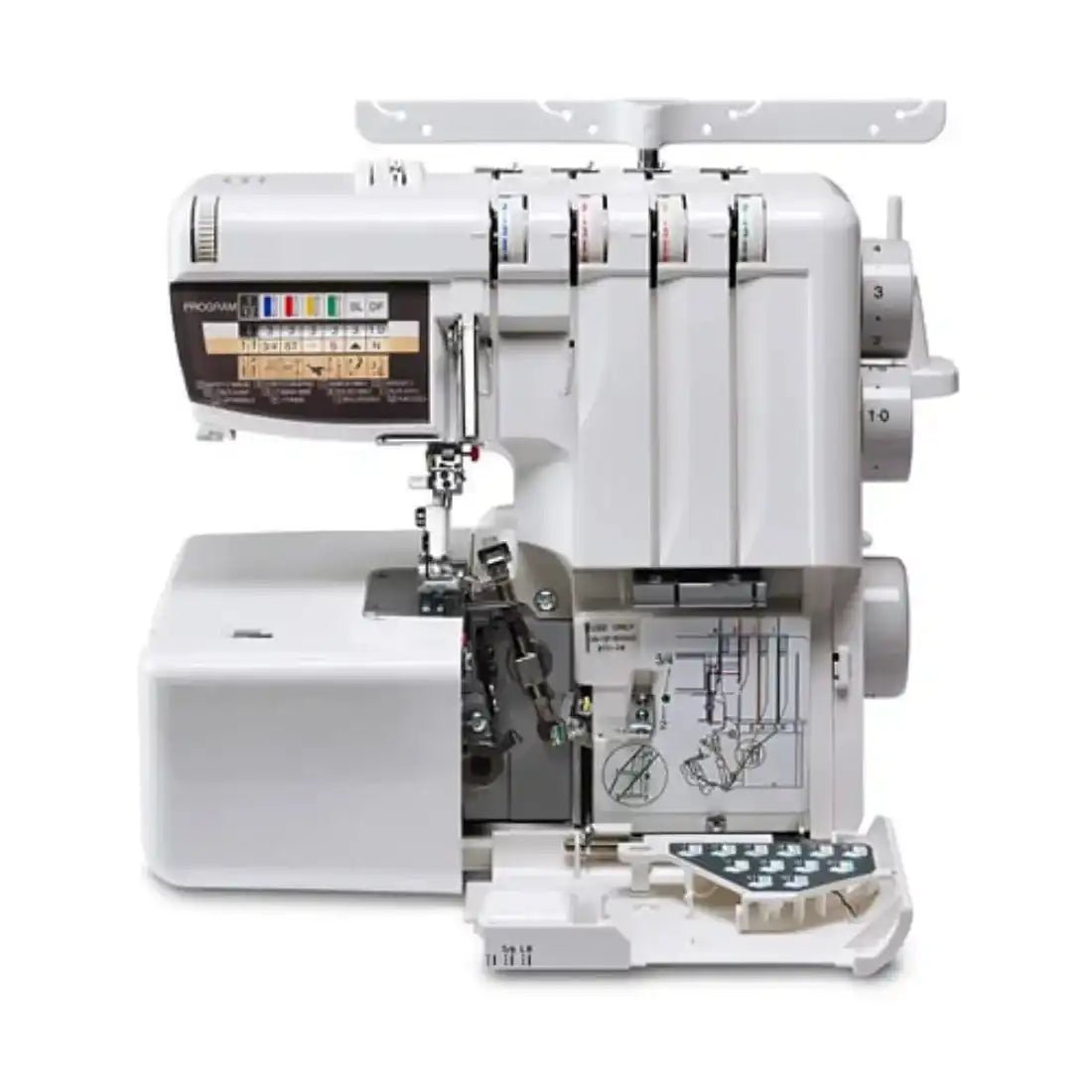
What is an overlocker used for?
The overlocker is designed to join fabrics while cutting away excess material and creating a neat finish on the edges. It is ideal for stretchy fabrics or those that fray easily. Widely used for clothing, it provides a professional and durable finish.
It uses 3 to 5 threads and 2 needles to create an overlock stitch, which is very strong and often used for the internal seams of garments. It is fast, efficient, and essential for anyone who wants to sew neatly.
- Sews, cuts, and overcasts in a single pass
- Essential for stretch fabrics and jersey

What is a Coverstitch machine used for?
The Coverstitch machine or coverlock does not assemble fabrics. Its role is to create professional hems, particularly on T-shirts, leggings, or sportswear. It creates a coverstitch visible on the right side and loops on the wrong side.
It uses 2 to 3 needles and 3 to 4 threads, and allows you to sew elastic hems without rippling. The Coverstitch machine is therefore perfect for finishing edges, but does not replace an overlocker.
- Specialized in flat and elastic hems
- Perfect finishing on knit, jersey, and Lycra
The main differences to remember
Here is a clear summary of the key differences between these two machines:
| Function | Overlock machine | Coverstitch |
|---|---|---|
| Main use | Seam assembly + edge finishing | Hem finishing |
| Number of threads | 3 to 5 | 3 to 4 |
| Stitches produced | Overlock | Coverstitch |
| Does it cut the fabric? | Yes | No |
| Type of stitch | Internal edges | Visible hems |
Coverstitch machine and overlocker: do they complement each other?
People often think they have to choose between the two, but in reality, these are two machines with very different uses that are perfectly complementary, especially for stretch or sportswear sewing.
Common features of both machines
Although they do not perform the same task, the overlocker and Coverstitch machine share several useful features worth knowing.
- Fast machines designed for professional finishing
- Suitable for stretch or delicate fabrics
- Requires precise threading and suitable adjustments
Practical ways they complement each other in sewing
For sewing, ideally you should have both machines to benefit from a complete workflow: the overlocker allows you to assemble pieces neatly, while the Coverstitch machine finishes the garment with a soft, neat hem.
- The overlocker ensures the strength of internal seams
- The Coverstitch machine elegantly finishes visible edges
- Together, they make it possible to create professional garments from start to finish

Should you invest in a Coverstitch machine or an overlocker?
The choice between a coverstitch and overlock machine depends on your experience, budget, and the types of fabric you use. Each machine has its advantages, but they are not interchangeable. Here is how to guide your decision.
For sewing beginners
If you are new to sewing and want to improve your finishes, the overlock machine is the first worthwhile investment. It allows you to join pieces quickly with a neat finish. You can add a coverstitch machine later, once you have mastered the basics.
- Prioritize the overlock machine for its versatility
- Easy to get started after a short learning period
For regular or professional sewers
If you frequently sew jersey or Lycra garments, having both machines is an undeniable advantage. The coverstitch machine then becomes essential for achieving a flawless, stretchy hem.
- Double investment for a professional result
- Time and quality savings on all finishes
Are there combination machines?
Yes, some brands offer combination machines combining overlock and coverstitch functions (also called combi or 5-thread machines). They are practical but often more complex to adjust and less efficient than two separate machines.
Comparison table of functions and uses
Here is a summary table to better visualize the differences between a coverstitch and overlock machine:
| Criterion | Overlock machine | Coverstitch |
|---|---|---|
| Main function | Edge finishing, joining | Hems, coverstitch stitches |
| Number of threads | 3 to 5 | 2 to 4 |
| Stitch type | Overlock | Coverstitch |
| Recommended fabric | Stretch, woven | Knit, stretch |
| Typical use | Edges, fast sewing | T-shirt hems, stretch finishes |

How do you use a coverstitch or overlock machine correctly?
Mastering these machines requires a little practice. Here are some simple tips to get started and avoid common mistakes.
Best practices with an overlock machine
- Adjust the tensions correctly according to the fabric
- Use quality threads to prevent jams
- Test the settings on a scrap piece before starting the project
Best practices with a coverstitch machine
- Choose the right needles according to the fabric thickness
- Maintain constant pressure on the fabric
- Check the result on the wrong side after each seam
Bonus for coverstitch and overlock machines: our selection of models
To help you make the right choice, here is a selection of reliable machines, available from specialist retailers or online.
Recommended coverstitch machines
- Janome CoverPro 3000: easy to use, very precise
- Juki MCS-1800: robust, perfect for experienced seamstresses
Recommended overlockers
- Juki MO-2000QVP: automatic threading, very intuitive
- Janome Airthread 2000D: excellent value for money

FAQ about coverstitch machines and overlockers
Which machine should you buy first?
The overlocker is generally more versatile and recommended as a first purchase.
Can a coverstitch machine replace an overlocker?
No, their functions are different: the coverstitch machine neither cuts nor assembles fabrics.
Is a combination machine a good idea?
It can be convenient for saving space, but it is often more complex to adjust.
What stitch does a coverstitch machine produce?
The coverstitch, ideal for visible hems on knit garments.
Do you need to be an expert to use these machines?
No, but a short adjustment period is necessary, especially for threading and adjusting the settings.
Conclusion
Choosing between a coverstitch machine and an overlocker is not a matter of preference, but of need. The overlocker is perfect for assembling fabrics and neatly finishing edges, while the coverstitch machine is ideal for stretch hems and visible finishes. These two machines complement each other wonderfully in a workshop, especially if you regularly work with jersey, knit fabric, or any other stretch fabric.
If you are a beginner, opt for an overlocker. If you are looking for professional-quality finishes, adding a coverstitch machine would be an excellent investment. Take the time to identify your projects, your budget, and your sewing skill level. You will then be better equipped to make the right choice and get the most out of your sewing equipment.


Leave a comment
This site is protected by hCaptcha and the hCaptcha Privacy Policy and Terms of Service apply.