
























Table of Contents:
It’s an essential question as soon as you want a garment that truly fits well. Even when following instructions carefully, a pattern can be too wide, too tight, or poorly proportioned for your body shape. Understanding how to alter a sewing pattern then allows you to adapt an existing design without starting from scratch and achieve a much more flattering result.
Some brands, like Atelier Nouvelle Couture, offer inclusive patterns, designed to fit a wide variety of body shapes. These patterns greatly reduce the necessary adjustments, especially in length: for pants, several leg lengths are directly provided, which avoids having to alter the height. This is a real convenience, especially for beginner sewists.
However, even with inclusive patterns, it’s quite possible to find yourself between two sizes, or with different measurements between bust, waist, and hips. In these cases, knowing how to adjust a sewing pattern remains essential.
In this article, you will discover how to alter a sewing pattern easily: adjusting a pattern that’s too large or too small, adapting a pattern to your body shape, and correcting the most common adjustments, step by step and stress-free.
Why is altering a sewing pattern often essential?
Even with a well-designed pattern, it’s rare for a garment to fit perfectly without adjustments. Understanding how to alter a sewing pattern allows you to adapt a standard design to a real body shape, with its unique features and proportions.
Commercial pattern and real body shape: why it doesn’t fit right
Patterns are designed based on standard measurements, while real bodies show many variations. Differences in height, fuller bust, more pronounced hips: these discrepancies explain why a pattern might seem to “fit poorly.”
Altering a pattern is therefore not a mistake, but a logical step to achieve a comfortable and flattering garment.
The most common problems on an unaltered pattern
Without adjustment, some flaws occur very often:
- Garment too loose or too tight
- Excess fabric at the waist
- Pulling at the bust
- Length not suited to the figure
Identifying these signs helps you know how to adjust a sewing pattern precisely.
Before altering a pattern: essential checks
Before making any changes, it is essential to take the time to analyze the pattern. This step prevents correcting in the wrong place and making unnecessary adjustments.
Read and understand the pattern before making any changes
A pattern contains many useful details: lengthening lines, seam allowances, ease included. Ignoring them can lead to errors that are hard to fix later.
Carefully reading the pattern is a solid foundation for altering a sewing pattern effectively.
Taking your measurements and comparing them to the size chart
Personal measurements are the key to any successful alteration.
- Bust circumference
- Waist circumference
- Hip circumference
- Height or back length
Comparing these measurements to the pattern chart helps anticipate necessary adjustments, especially if you fall between two sizes.

How to alter a pattern that is too large or too small?
Size adjustments are among the most common alterations when looking for how to modify a sewing pattern. Good news: they are often accessible to beginners.
Adjusting a sewing pattern in width
Adjusting a pattern in width is one of the most common alterations when learning how to modify a sewing pattern. This adjustment allows you to enlarge or reduce a design without changing its overall structure or style.
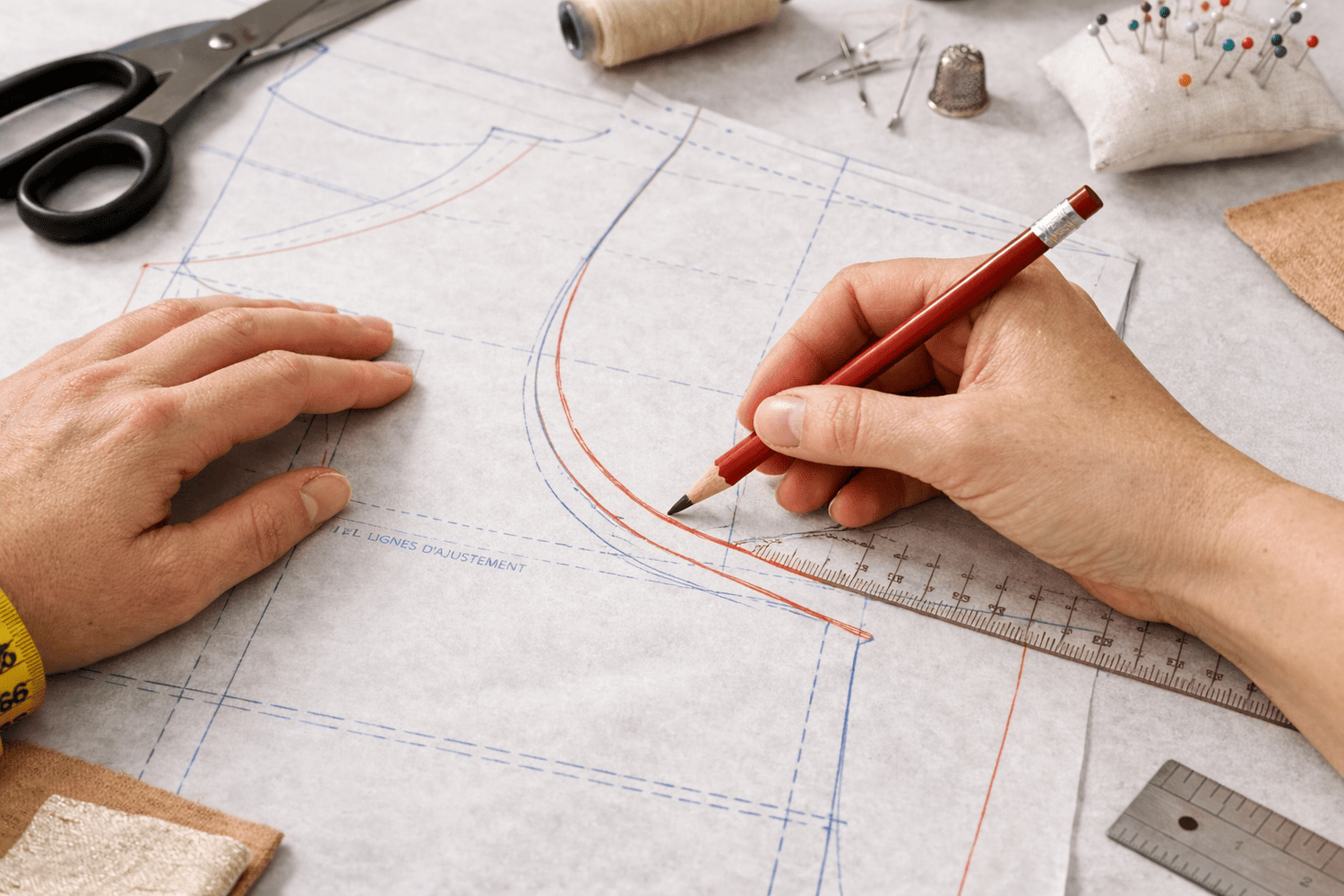
To enlarge a pattern, the most reliable method is to draw a line parallel to the underarm, corresponding to the amount of enlargement needed. Practically, you measure the difference between your measurements and those of the pattern, then transfer this value onto the pattern by drawing a consistent parallel line along the side seam, under the arm. This technique allows you to add ease evenly without shifting the armholes or unbalancing the garment.

This approach is especially suitable for tops, dresses, and jackets. It ensures a clean and gradual fit while preserving the original model’s proportions.
⚠️ Be sure to maintain proportions with any sleeves or other details.
Altering a pattern between two sizes
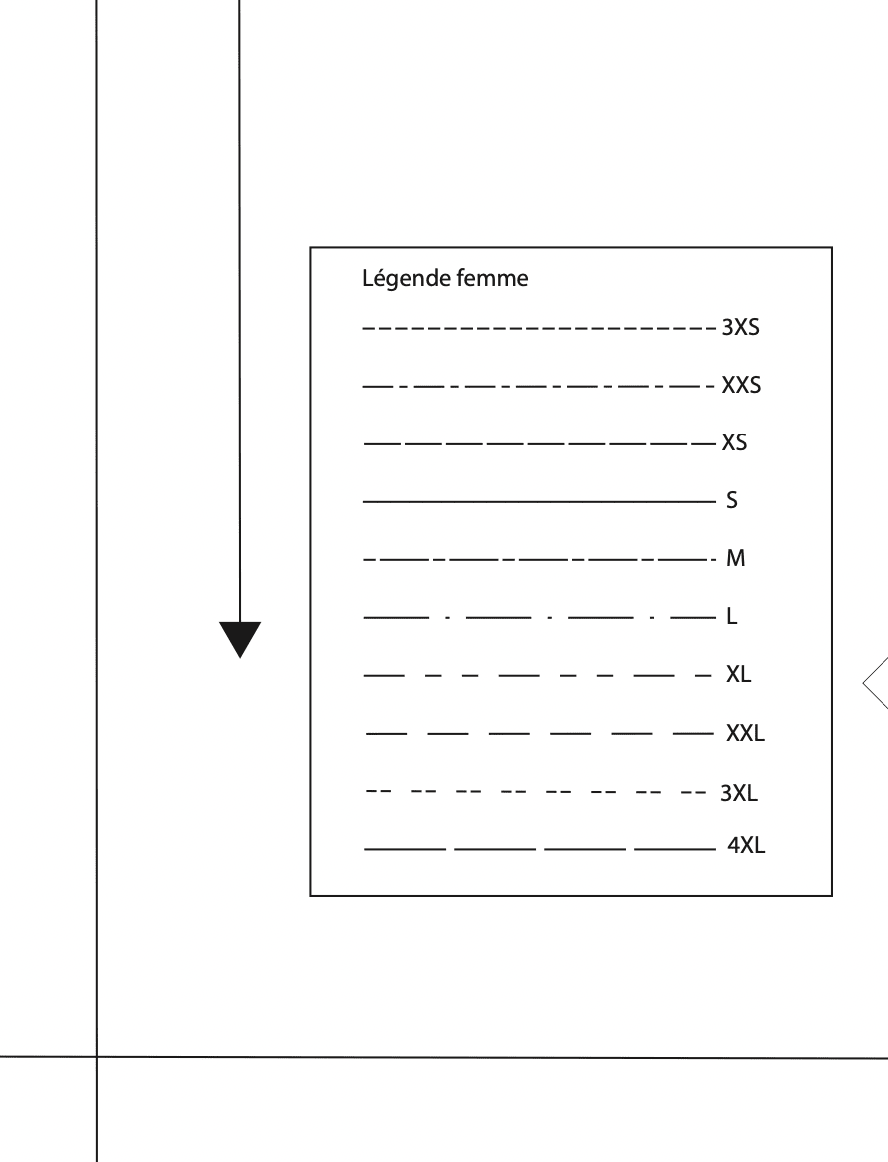
Being between two sizes is very common, even with inclusive patterns. The solution is to grade between sizes by connecting the corresponding lines.
| Situation | Solution | Level |
|---|---|---|
| Pattern too wide | Reduce the sides | Beginner |
| Pattern too narrow | Adding ease | Beginner |
| Between two sizes | Gradual grading | Intermediate |
How to lengthen or shorten a sewing pattern correctly
Length strongly influences the comfort and appearance of a garment. Changing this dimension should be done methodically.
Where to alter the length on a pattern?
Patterns generally include lines intended for lengthening or shortening. These lines help maintain the garment’s balance.
Even though some brands like Atelier Nouvelle Couture offer multiple built-in lengths (especially for pants), understanding this technique remains useful.

Mistakes to avoid when changing the length
Some mistakes are common:
- Altering only the hem
- Cutting without following the intended lines
- Unbalancing the top and bottom of the garment
These mistakes can be avoided by mastering how to alter a sewing pattern as a whole.
How to lengthen or shorten a sewing pattern in practice
To properly adjust the length of a pattern, it is essential to make changes in the right place, depending on the type of garment and its cut. A poorly placed alteration can unbalance the proportions and affect the drape of the design.
👉 For pants, two options are possible:
- Add or remove length from the hem when the cut is straight or wide. This method is simple and works perfectly for loosely structured pants.
- Alter the length at the knees (on the designated lines) when the pants are fitted, tapered, or have darts. This helps maintain balance between the thigh, knee, and lower leg.
👉 For blouses, tops, and dresses, the logic is similar:
- Adjust the hem if the cut is straight or loose.
- Make adjustments at the waist or shaped area when the model is fitted. This helps maintain the position of the waist, bust, and hips.
In all cases, it is recommended to distribute the alteration evenly and check the result on a muslin before cutting the final fabric.
Adapting a pattern to your body shape (bust, waist, hips)
Beyond the overall size, some areas require specific adjustments for a harmonious drape.
Adjusting a pattern for a larger or smaller bust
Bust adjustment is one of the most common. It helps avoid tension, horizontal wrinkles, or excess fabric around the bust.
A good fit immediately improves the comfort and appearance of the garment.
Adjusting a pattern for pronounced hips or waist
When the difference between the waist and hips is significant, a standard pattern may lack comfort or create unsightly wrinkles. Adjusting this area is essential to achieve a well-fitted and comfortable garment, and is an integral part of learning how to alter a sewing pattern.
In practice, shaping can be done in two main ways, depending on the garment style and the desired look:
- Take in at the underarm, gradually adjusting the side seams between the bust and hips. This method is ideal for simple or fitted garments without visible darts.
- Add shaping darts, especially at the waist, to better hug the curves. Darts allow for precise fitting while respecting the model's lines, especially on blouses, dresses, or structured jackets.
The choice between these two solutions depends on the pattern design and the desired effect. In any case, it is recommended to test the fit on a muslin to validate the comfort and balance of the garment.
Bonus for How to Alter a Sewing Pattern?
This section gathers practical advice from experience, useful for securing your sewing projects.
Test your alterations with a test garment
The test garment (or calico) allows you to validate adjustments before cutting the final fabric. It is highly recommended for fitted garments or when several modifications have been made.
This is an ideal step to confirm that you master how to alter a sewing pattern without risk.
Sewing tips for stress-free pattern alteration
Experienced sewists follow a few simple principles:
- Alter only one thing at a time
- Note every change
- Keep the original pattern intact
- Intentionally adding wider seam allowances
It is especially advised to allow about 2 cm of seam allowance at the underarm. This extra margin allows, once the garment is sewn, to take in or let out the garment slightly if needed. It’s a valuable safeguard for adjusting comfort, particularly on tops, dresses, and jackets.

Conclusion: successfully altering a sewing pattern
Knowing how to alter a sewing pattern is an essential skill for sewing clothes that truly fit your body. By taking the time to analyze the pattern, compare measurements, and test adjustments, it becomes possible to transform a standard pattern into a custom-fit model. With method, trials, and a few sewing tips, pattern alteration becomes a real asset for gaining comfort, confidence, and quality finishing.
FAQ on How to Alter a Sewing Pattern?
Can you alter a pattern without cutting it?
Yes, by using tissue paper or adding paper strips.
Should you always make a test garment before sewing?
It is highly recommended for fitted garments or those with complex cuts.
Is it difficult to alter a pattern when you’re a beginner?
No, simple adjustments are accessible with a clear method.
Can you alter a pattern that has already been sewn?
Yes, within the limits of the available seam allowances.

Leave a comment
This site is protected by hCaptcha and the hCaptcha Privacy Policy and Terms of Service apply.