




















Table of Contents:
A sewing machine is much more than just a tool; it’s a true creative partner. To keep it working with the precision of day one, regular sewing machine maintenance is essential. Neglecting this can cause jams, uneven stitches, or even costly breakdowns.
Fortunately, taking care of your sewing machine isn’t complicated! We’ll guide you through simple but effective steps to ensure the maximum durability of your precious sewing companion. Get ready to give your machine the attention it deserves for years of smooth creations.
Preparation and disassembly for maintenance
Before any intervention, unplug your sewing machine to avoid accidental startup. Consult the user manual for precautions specific to your model. These simple steps ensure safe sewing machine maintenance.
To remove the needle, loosen the fixing screw in the raised position using the supplied wrench and always remove the presser foot and bobbin. These steps effectively prepare your sewing machine for deep cleaning.
For successful maintenance, prepare a kit including:
- Cleaning kits including up to 14 pieces for complete sewing machine maintenance
- A special oil in a precision bottle to lubricate and oil your sewing machine effectively
- A soft brush and an air blower to reach difficult areas without damaging the mechanism
- Synthetic grease for the gears and feed dogs of heavy-duty machines
These tools make disassembly and precise maintenance easier. Organize your workspace to avoid losing parts and take photos during disassembly to remember the order. This method ensures smooth and safe reassembly of your machine.
To access the bobbin case, remove the needle plate and the side cover, then check the rotary hook mechanism, often overlooked but essential for making a bobbin with the JUKI HZL-53E sewing machine correctly.

Cleaning residue and lint
To remove dust and lint, use a soft brush or a gentle bristle brush. Avoid rubbing that could damage parts. This tool easily reaches corners without harming the mechanism. Careful maintenance is essential, especially if you use a Juki sewing machine, known for its precision.
Focus on the bobbin case and under the needle plate. These areas collect fibers and cut threads. Regular cleaning prevents jams, which also keeps your stitches neat and even.
|
Recommended cleaning frequency for the sewing machine based on usage |
||
|
Usage situation |
Type of cleaning |
Recommended frequency |
|
Regular use (10-20 hours of use) |
Complete machine cleaning |
Every 2 to 3 months |
|
Occasional use |
Complete machine cleaning |
Once a year |
|
Practice recommended by professionals |
Regular cleaning |
3 to 4 times a year |
|
Heavy use (several hours per week) |
Cleaning the bobbin housing |
Weekly |
|
Monthly or less frequent use |
Cleaning the bobbin housing |
Monthly or 2 to 3 times a year |
|
After a thread jam |
Thorough cleaning of the bobbin case |
Immediately after the incident |
When cleaning the feed dogs, unplug the machine and use a fine brush or toothpick to remove fibers. These areas move the fabric. Their good condition ensures consistent stitching.
For hard-to-reach corners, compressed air is handy and effectively complements your cleaning. However, use it sparingly to avoid blowing particles around. Keep it away from electronic components and delicate parts.
Don’t let a temperamental sewing machine slow down your creativity! Contact Verotex today for professional maintenance or quick repair and enjoy sewing without worries again.
Lubrication of friction points
Minimal lubrication prevents wear on moving parts while ensuring quiet and smooth operation. Modern machines are often self-lubricating, but older models require regular maintenance to maintain their efficiency. To extend the life of your device, proper sewing machine care remains essential, regardless of its age.
If you own a JUKI HZL-DX3 sewing machine, be sure to follow the manufacturer’s recommendations for optimal lubrication.
The needle shafts, hook mechanism, and feed dogs deserve special attention, as these areas experience constant friction. Targeted lubrication prevents jams and premature wear.
Choose a special sewing machine oil like petroleum jelly type and avoid household products or thick oils at all costs. Apply only one or two drops on each critical point and spread gently without overdoing it.
For proper lubrication of your sewing machine:
- Avoid over-lubrication which attracts dust and residue
- Never use household oils, spray oils, or silicone-based oils
- Protect plastic components and only oil the metal parts
- After applying, run the machine slowly to distribute the oil
- Always wipe off excess to avoid stains on your projects
After lubrication, sew a few test stitches on scrap fabric to remove excess oil and check proper operation. A well-maintained machine delivers smooth, consistent stitches.

Needle replacement and adjustment
How often should you replace a needle? Generally, plan to change it every 8 to 10 hours of sewing. However, if you notice skipped stitches, broken threads, or a dull needle, it’s time to act. Many sewists replace their needle every 2 or 3 projects, as this is part of good sewing machine care, especially for a Juki machine that requires precision and care.
The type of needle determines the quality of your stitches. For silk, choose a fine Microtex point (60-70). Denim requires a more robust model (90-100). Indeed, each fabric has its ideal counterpart. A poor match can damage the thread or fabric and complicate your daily sewing machine maintenance.
Here’s how to change a needle safely:
- Turn off the machine
- Raise the needle
- Loosen the screw with a screwdriver
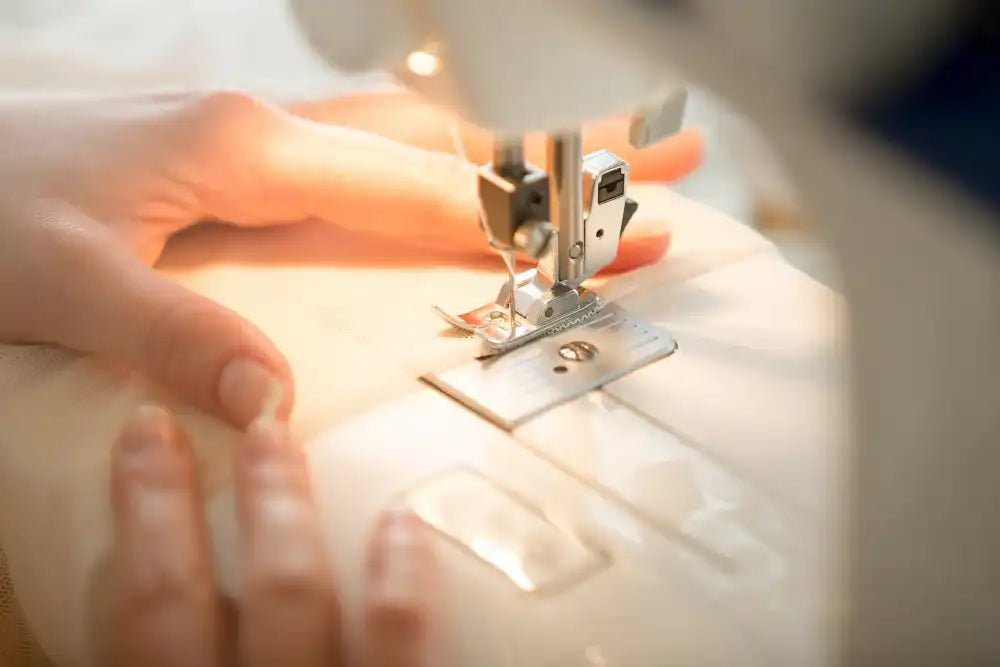
- Insert the new needle with the flat side at the back all the way in, then tighten firmly.
This method protects your machine from potential damage.
A worn or unsuitable needle causes uneven stitches, broken threads, or even fabric tears. In particular, a needle point that is too sharp on stretchy fabric can leave marks or holes. Conversely, a needle that is too fine for thick fabric creates unnecessary tension.
Using compliant bobbin cases
Bobbin cases suited to your model protect the machine and improve sewing. Incompatible ones cause jams, uneven stitches, or unbalanced tension. To avoid these issues, follow the manufacturer’s specifications: this is a basic principle for good sewing machine maintenance, especially if you use a Juki flatbed sewing machine for precise work.
For successful winding, place the thread on the spindle and pass it through the thread guide before engaging the mechanism. Once filled, insert the bobbin, checking the thread direction. These steps prevent snags.
Clean the bobbin case after several hours of use or after each jam, and don’t forget to remove lint with a fine brush. A clean system maintains consistent tension, preventing stitch defects or thread breakage, which directly contributes to effective and lasting sewing machine maintenance.
Thread tangling under the fabric often indicates a poorly installed bobbin. To prevent this, check that the bobbin is correctly seated in the case and that the thread passes through the correct channels. Readjust to restore smooth operation.

Adjusting thread tension
Thread tension results from the balance between the upper thread and the bobbin thread. This adjustment directly affects stitch quality. Indeed, an imbalance causes loops, puckering, or even thread breakage. Understand this mechanism to achieve precise seams: properly managing tension is part of good sewing machine maintenance.
For lightweight fabrics, slightly reduce the tension, usually between 2 and 3. For thicker fabrics like denim, increase it to 4 or 5. Decorative stitches sometimes require specific adjustments.
Before sewing your project, test on a scrap piece and check the thread balance on both sides of the fabric. Also observe the fabric’s appearance to ensure there are no wrinkles or distortions. This preventive test avoids costly fixes and contributes to effective daily sewing machine maintenance.
If loops appear under the fabric, tighten the upper thread tension. Conversely, if the bobbin thread forms visible loops on top, adjust it instead. Gradual adjustment helps achieve the perfect balance.
Want to master your sewing machine from A to Z and extend its lifespan? Sign up now for Verotex sewing classes and learn the secrets of how it works and how to maintain it!
Dust protection
Dust accumulates in the mechanisms and shortens the lifespan of your sewing machine. To protect it effectively, use a nylon or PVC cover. Universal models fit most machines. This daily protection is part of good sewing machine maintenance and prevents sensitive parts from clogging.
Discover now the selection of maintenance equipment at Verotex and give your machine everything it needs to last.
Taking care of your sewing machine is more than just a technical task: it’s an investment in seamless creations.
Whether you want to start sewing with a machine or improve your skills, you need to combine regular cleaning, targeted lubrication, and needle replacement. These steps give you the best chance to successfully maintain your sewing machine.
Proper maintenance prevents breakdowns. It also optimizes the quality of your stitches. A well-maintained machine is a reliable partner for long-term projects, where every seam remains a pleasure without surprises.

Leave a comment
This site is protected by hCaptcha and the hCaptcha Privacy Policy and Terms of Service apply.