






























Table of Contents:
Introduction
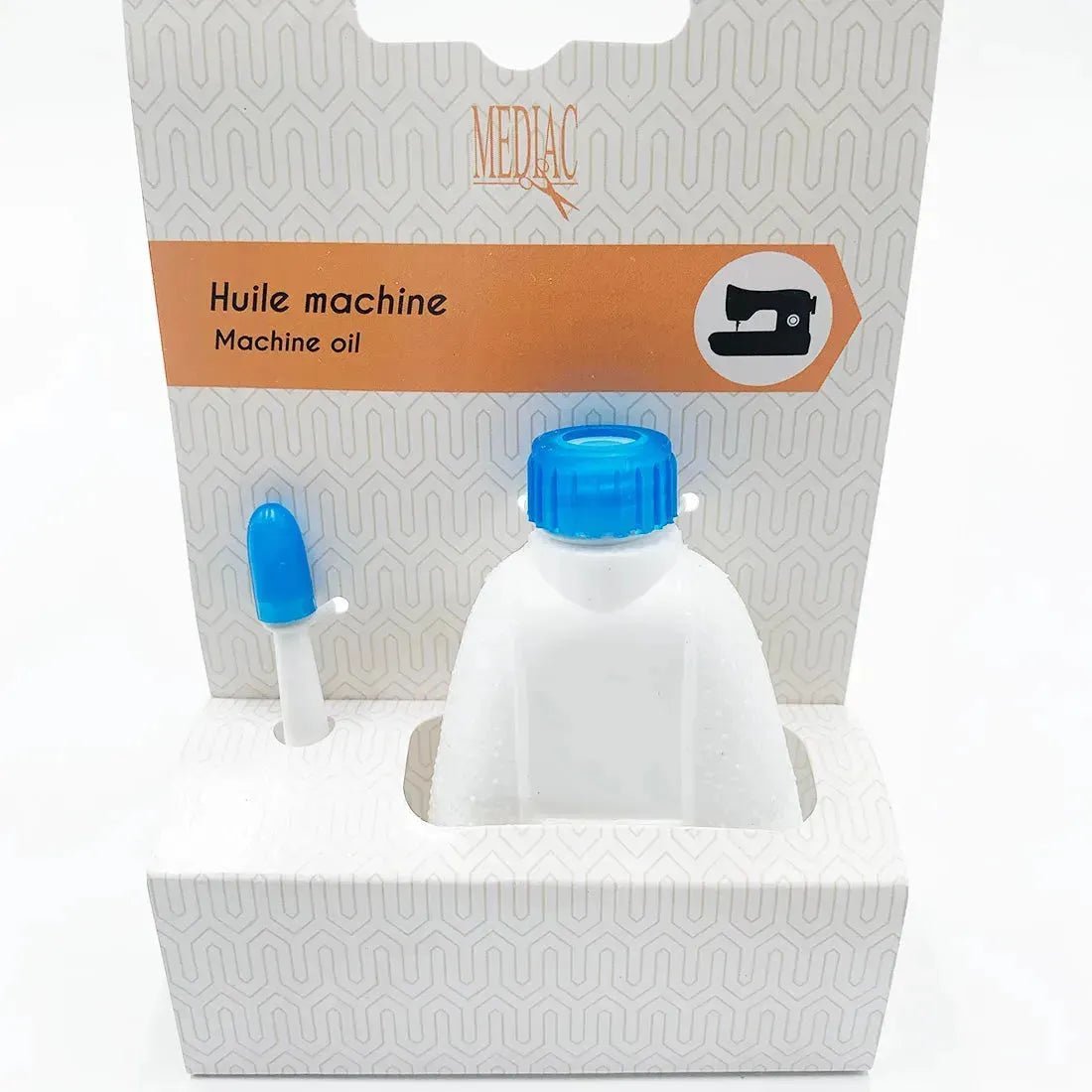
Sewing machine oil: if you’re wondering which oil to use, how to apply it, or how often to oil your machine, you’re in the right place. Sewing machine maintenance starts above all with regular lubrication, essential to preserve your machine’s performance, whether household or industrial. Yet many sewers neglect this simple step, resulting in premature wear, unusual noises, or uneven stitches.
In this article, we explain why using good sewing machine oil is essential and which mistakes to avoid. You will also find a step-by-step guide to properly oiling your machine, advice tailored to each type of model, as well as a selection of recommended products for effective and safe lubrication.
Why use sewing machine oil?
Sewing machine oil plays a fundamental role in the proper functioning of your equipment. It prevents premature wear, reduces friction between metal parts, and ensures smooth and quiet sewing, even after years of use.

Here are the main benefits of regular lubrication:
- Reduction of mechanical noises caused by friction
- Prevention of rust and internal jams
- Extended lifespan of your machine
- Improved quality of sewing stitches
- Better comfort of use, even with intensive use
Which oil to choose based on your type of sewing machine?
Not all oils are the same. There are different types of sewing machine oil depending on your model, its use (household or industrial), and the manufacturer's recommendations. Here’s how to make the right choice.
White oil or mineral oil: what are the differences?
White oils are the most common for household machines. They are odorless, colorless, and do not stain fabrics. Textile mineral oils, on the other hand, are designed for industrial machines that run continuously. They lubricate longer but are greasier.
Which oil for industrial or home sewing machines?
Our special sewing oil is essential to preserve the mechanism, whether it’s an electronic, mechanical, or professional model. Here is a chart to guide you:
How to oil your sewing machine step by step?
Even with the best sewing machine oil, if applied incorrectly, the effects will be limited. Here is a practical guide to lubricate your machine safely

- Unplug your machine to work safely
- Clean dust and residues with a dry brush
- Locate the areas to oil: often around the hook, needle shaft, or under the plate
- Apply only 1 to 2 drops, no excess
- Run the machine empty for a few moments to distribute the oil
- Wipe off excess to avoid fabric stains
How often should you oil your sewing machine?
Maintenance frequency depends on several factors: the type of machine, usage intensity, and the materials sewn. Proper sewing machine lubrication ensures lasting performance.
Signs it’s time to oil your machine
- Metallic noises or squeaks
- Irregular stitches or unstable tensions
- Mechanical jams or slowdowns
- Machine overheating abnormally
Special cases: old or very modern machines
Vintage machines need to be oiled more regularly because they don’t have modern wear-resistant coatings. Conversely, some recent electronic machines require little lubrication, but only with a special light oil recommended by the brand.
Sewing machine oil: mistakes to absolutely avoid
Using the wrong oil or incorrect technique can permanently damage your machine. Here’s what to absolutely avoid.

- Never use cooking oil or WD-40
- Do not apply oil on electronic parts or the motor
- Do not use oil that is too viscous
- Do not over-oil: excess attracts dust
- Do not lubricate a new machine without reading the manual
FAQ about sewing machine oil
Can you use any oil for a sewing machine?
No, you must use a specific oil, usually white or mineral, designed for fine metal parts.
How often should you oil your sewing machine?
On average every 3 months, depending on the type of machine and intensity of use.
Which oil to choose for an industrial machine?
A fluid textile mineral oil, specially designed for intensive use, is recommended.
How do I know where to put oil in my machine?
Check the manufacturer’s manual or identify the moving parts around the hook, needle, and bobbin case.
Can you oil an electronic machine?
Yes, but only with a special light oil and only on mechanical parts, never on electronic components.
Conclusion
Choosing the right sewing machine oil is essential to maintain the smoothness, precision, and longevity of your equipment. By opting for a suitable white oil or a textile mineral oil depending on the model, and following proper maintenance steps, you can avoid many malfunctions. It’s not enough to have a good machine: you also need to take care of it regularly with the right lubricant. Don’t wait for noises or jams to appear before acting: a few well-placed drops are enough to extend your machine’s life. Remember to check the manufacturer’s recommendations and adjust the lubrication frequency to your usage. Your machine will reward you a hundredfold with every successful stitch.


Leave a comment
This site is protected by hCaptcha and the hCaptcha Privacy Policy and Terms of Service apply.