












Table of Contents:
Is your domestic machine struggling with thick fabrics or large volumes? It’s time for you to switch to an industrial sewing machine if you want to boost your creativity without sacrificing quality.
In this article, we break down the reliable models (Juki, Janome, Elna), the pitfalls to avoid, and tips to combine production speed with budget control. You’ll finally know which gem to choose to turn your workshop into a highly efficient sewing factory.
Understand your industrial sewing needs
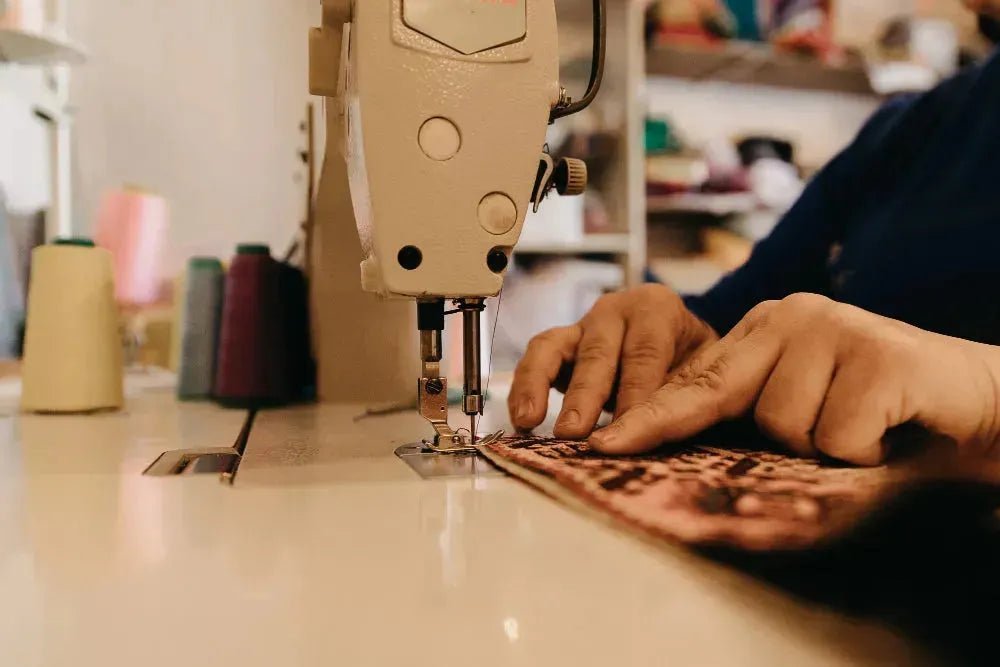
To succeed in industrial sewing, it is essential to precisely identify your needs: types of materials (lightweight, heavy, technical textiles) and production volumes (small batches or high throughput). These criteria guide the choice of equipment, whether it’s a suitable industrial sewing machine, a flatbed stitcher, an overlocker, a free-arm machine, or even an automated model. A good match between your requirements and the equipment ensures productivity, quality, and durability.
Identify materials and production volumes
Rigid jeans or thick leather require specialized needles and powerful motors. Conversely, soft jersey demands an industrial overlocker for clean finishes. Each fabric sets its rules, and only a well-chosen industrial sewing machine can guarantee smooth work tailored to these demands.
Need to produce 500 units per week? A 5,000 stitches/minute machine becomes your ally. But beware: high speed requires precise thread tension and a reinforced drive system to avoid repeated jams. The pace imposes its technical constraints.
Still hesitating to make the leap to an industrial or semi-industrial machine like the JUKI TL-2200QVP Mini? Here are the unmistakable signs:
- Intensive production with over 1000 pieces per month: your domestic machine is struggling
- Frequent needle breakage on thick leather or jeans: need for real mechanical power
- Seam distortion on stretch fabrics: the industrial overlocker becomes essential
- Permanent thread tension settings: professional systems ensure stability
- Daily sewing hours over 4h: only an industrial machine can go the distance
If 3 of these points resonate with your daily routine, an upgrade is necessary!

The different types of machines available
The flatbed sewing machine remains the reliable choice for workshops. Perfect for assembling shirts or curtains, it handles straight seams by the meter without flinching. Its strength? Unmatched versatility.
|
Comparison of industrial sewing machine types and their key features |
|
|
Machine type |
Main use |
|
Flatbed sewing machine |
Standard garments, fine to medium fabrics |
|
Industrial overlocker |
Clean finishes (jersey, knit) |
|
Triple feed |
Leather, thick jeans, multiple layers |
|
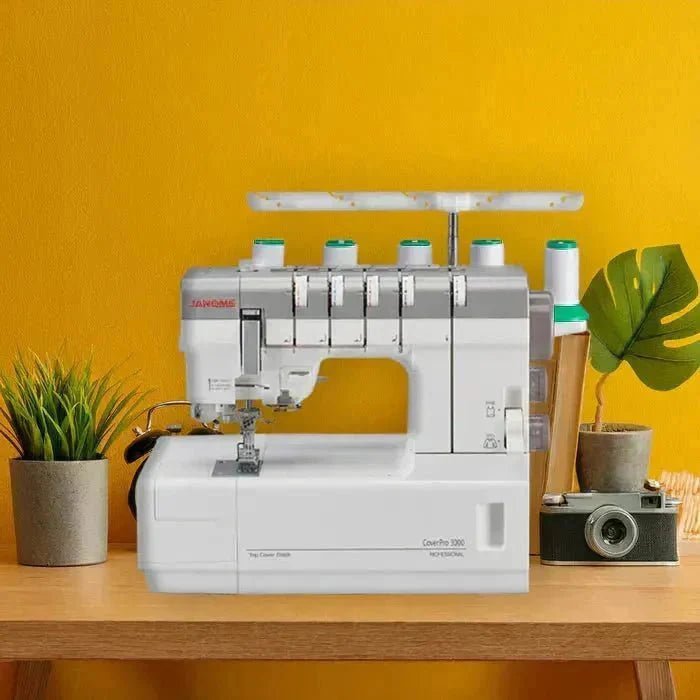
Coverstitch machine |
Elastic hems (technical garments) |
For demanding technical fabrics like thick leather, triple feed works wonders. The feed dog, presser foot, and needle synchronizedly pass through multiple layers without shifting. It’s the secret weapon of professional leatherworkers, provided it’s paired with an industrial sewing machine designed for precision and power.
Take a look at our online store to discover the best industrial machines of the moment. You can contact us anytime to order or get any information about our products and services.
Important criteria for an informed choice
Before starting an industrial sewing project, it’s essential to clearly identify your needs. This includes the type of materials to work with, the expected production volumes, and the choice of a suitable industrial sewing machine. Each factor directly affects performance, quality, and profitability. Here are the basics to make the right choices from the start.
Power vs precision: the keys to performance
An oversized motor wastes energy, while an underpowered model overheats. For an industrial sewing machine, you need to find the sweet spot between endurance and agility, depending on your use and the materials worked.
Thread tension makes all the difference between professional sewing and rough DIY. Dynamic spring systems maintain perfect consistency even at 5,000 stitches/min. You’ll have the assurance of flawless results on all thicknesses.

Test your future machine like a pro with these essential checks:
- Stitch stability on 10 layers of denim: reveals true driving power
- Smoothness of tight curves: shows guiding precision
- Relative silence at 4500 rpm: a sign of well-oiled mechanics
- Express presser foot change: guaranteed time saver
- Compatibility with different types of presser foot: essential to adapt to every project
- Intuitive access to the rotary hook: eases troubleshooting
- Micrometric thread tension adjustment: absolute precision
- Motor heat after 30 minutes of testing: durability alert
Your intuition counts as much as these technical tests!
Budget and long-term profitability
The initial purchase price is just the tip of the iceberg. Maintenance costs and electricity consumption weigh heavily in the balance.
|
Average price guide by leading brands |
|
|
Brand |
Key advantage |
|
Juki |
Absolute industrial reliability |
|
Elna |
Extreme durability |
|
Janome |
Intuitive ergonomics |
The electronically servo-controlled motors reduce energy costs by 30% compared to mechanical models. Also consider the refurbished second-hand market for spare parts, offering up to 60% savings on consumables.
Leading brands and models on the market: Juki and Janome
Juki DDL machines stand out for their reliability in intensive production, handling up to 5,000 stitches/min without flinching. Their secret? A monobloc frame and synchronized drives for 12-hour days without overheating. Ideal for any industrial sewing machine used continuously. Visit our store to discover a wide range of machines from this Japanese brand.
At Janome, the built-in oil bath works wonders. By immersing the gears in a high-performance lubricant, these models gain 40% more lifespan compared to traditional systems. They are perfect for workshops where the machine runs 24/7.
Boost your productivity with these key accessories:
- Professional needle set with Janome
- Triple feed foot with reinforced claws: non-slip on technical fabrics
- Laser guide for parallel seams: guaranteed millimeter precision
- Juki DDL automatic bobbin winder: time saver for long runs
- Cleaning kit with metal brush: quick hook maintenance
The best creations from these two brands are all available in our Verotex online store.

Optimize daily use: preventive maintenance for longevity
Oil your gears every 10 hours of use and dust off the hooks after each heavy session. Careful maintenance doubles the lifespan of your industrial sewing machine – think of it as a mechanical spa treatment!
A metallic clicking or irregular stitches? It’s the rotary hook sounding the alarm. Inspect it monthly with a flashlight: deep scratches or rough spots require immediate replacement to prevent total breakdown.
Avoid these common mistakes that prematurely ruin machines:
- Skipping daily oiling: dry friction destroys the gears
- Using domestic needles on leather: guaranteed needle holder breakage
- Manually forcing the handwheel when it jams: guaranteed jamming in the hook
If you use a sewing machine for thick fabrics, be even more rigorous: these models endure greater mechanical stress and require impeccable maintenance. Store your machine away from moisture under a dust cover during long breaks. A helpful tip is to place a silica gel packet in the bobbin compartment to absorb micro-droplets.
As you’ve seen: choosing your industrial sewing machine means first aligning materials, volumes, and budget. Whether it’s a Juki for speed or a Janome for durability, test the models in-store and consider the overall cost. Tomorrow, your workshop will run at full productivity. Now all that’s left is to take action.
Trust quality online stores like Verotex to have a wide selection of the best brands and top models of industrial sewing machines.

Leave a comment
This site is protected by hCaptcha and the hCaptcha Privacy Policy and Terms of Service apply.