










Table of Contents:
Your domestic sewing machine struggles to handle thick fabrics or repetitive projects ? It’s time for you to switch to a semi-professional sewing machine that is much more powerful and better suited for more complex sewing projects. Combining power and precision, this type of sewing machine is available at affordable prices, which won’t empty your wallet.
Here, we explain why these models attract demanding sewing enthusiasts, how they outperform classic machines, and what criteria (speed, triple feed, stitch types) choose according to your needs.
Definition and characteristics of semi-professional sewing machines
The semi-professional sewing machine establishes itself as the ideal compromise between domestic and industrial models. Designed to meet the needs of demanding sewists, it combines robustness, versatility, and performance.
But what exactly is a semi-professional sewing machine? Discover its key features and why it represents an advantageous solution for those seeking power and precision without the constraints of industrial machines.
What is a semi-professional sewing machine?
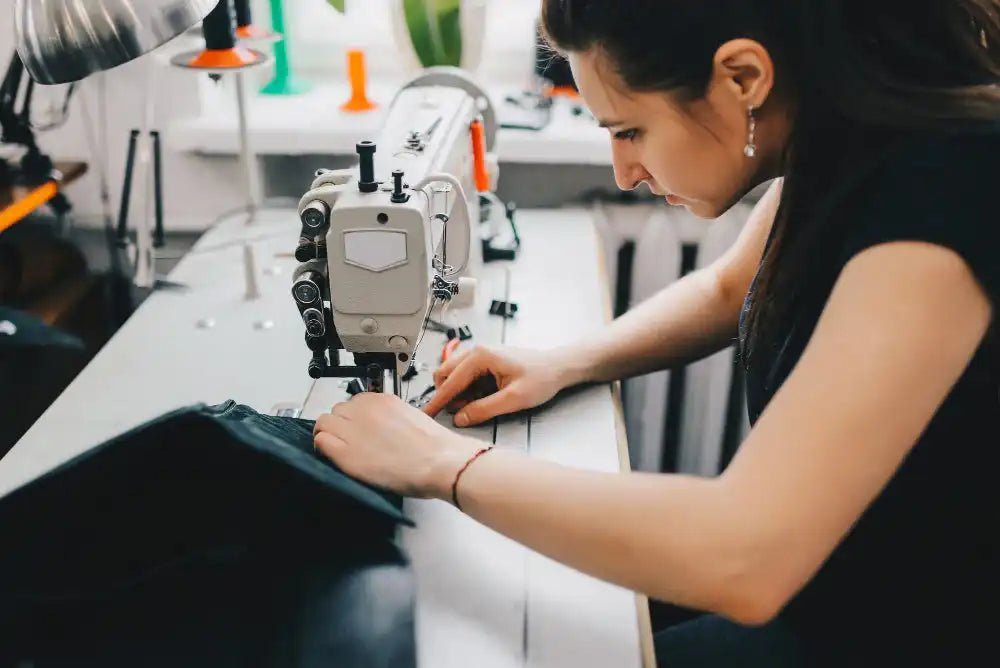
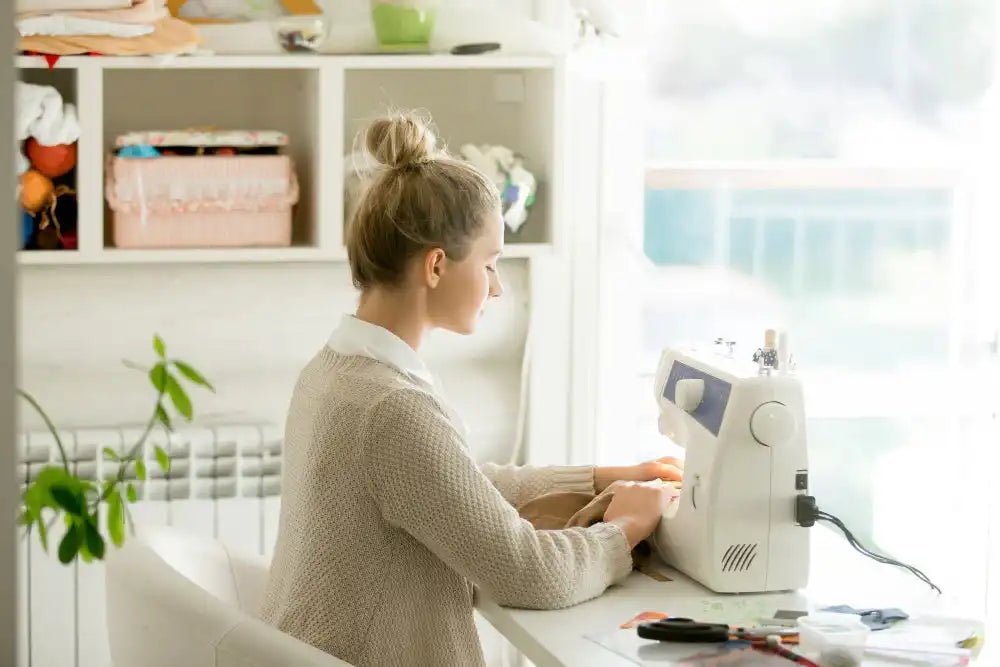
A semi-professional sewing machine sits between domestic and industrial models. It combines power, speed, and reliability to handle demanding projects without the constraints of an industrial machine.
Semi-professional sewing machines stand out for their robustness and their ability to chain stitches without overheating. Most include a triple feed and a powerful motor to stabilize fabrics and a powerful motor to pierce through layers. In recent years, brands have also enhanced connectivity, electronic embroidery stitches, and thread guides. The Juki TL-2200VP-Mini illustrates this technological progress.
Discover the ideal sewing machine for your creative projects! Visit Verotex now.

A high-performance alternative to domestic and industrial machines
Compared to domestic models, semi-professional machines offer higher speed and better handling of thick fabrics like denim. They are designed for those who goes beyond occasional projects, without reaching industrial volumes. Their price remains affordable compared to professional machines.
The semi-professional sewing machine adapts to thick fabrics like leather or technical fabrics, but also delicate fabrics like silk. It is suitable for custom-made clothing, leather accessories, upholstery, or complex textile creations. This versatility makes them ideal for independent designers or seamstresses.
Power, speed, and stitch precision
Motor power and sewing speed determine the capabilities of a semi-professional sewing machine. For speed, choose a model reaching 1,200 to 1,800 stitches per minute if you work on demanding projects.
Adjust the speed of your machine according to the fabric. Reduce to 500-800 stitches/min for leather or thick fabrics, gradually increasing up to 1,500 stitches/min for lighter materials. For complex details, a moderate speed prevents mistakes. Always test on a fabric scrap before starting.
The triple feed is a system that combines a presser foot, fabric pull-back, and feed dog movement. This trio ensures smooth feeding of thick or multi-layered fabrics. Ideal for leather bags or upholstery, this system distributes pressure to avoid distortions.
Semi-professional machines offer variety of suitable stitches for all your sewing projects:
- Straight stitch : basic stitch, ideal for precisely joining thick or light fabrics
- Zigzag : essential for stretch fabrics, finishing, and textile appliqués
- Reinforced stretch stitches : designed for stretch garments, preventing seam breaks
- Decorative stitches : to customize your creations with decorative patterns, perfect on floral fabrics or other fancy textiles.
These options allow you to adapt to all fabric types and sewing projects.
The triple feed makes sewing thick fabrics easier by synchronizing three mechanisms: the presser foot, feed dogs, and fabric pull-back. Unlike single feed, which only uses the feed dogs, this system prevents slipping on leather or fleece. As a result, you get even stitches even on various thicknesses.
The best semi-professional sewing machine brands
Choosing a sewing machine a quality semi-professional machine is essential to combine performance and durability. Among the most reputable brands, Juki is established as an essential reference in the market. Other brands like Janome, Brother, or Singer also offer reliable and high-performance models. Here are the best semi-professional sewing machine brands and what sets them apart to help you make the right choice based on your sewing needs.
Juki, market leader
Juki dominates the semi-professional sewing machine marketThis Japanese brand offers models that stand out for their durability and precision with thick fabrics.
Whether you are an advanced hobbyist or a professional, investing in a semi-professional sewing machine Juki guarantees quality work. The brand also stands out with its intuitive models, suited for varied projects, with a range featuring accessible electronic options.
Among them, the Juki hzl dx7 machine perfectly illustrates this blend of power and versatility, offering ideal comfort for demanding sewers. Juki also offers combined models sewing and embroidery machine, perfect for creators looking to expand their textile possibilities.
Machines from this brand stand out for their power and are ideal for technical fabrics. Their machines like the TL-2200VP-Mini combine reliability and performance for demanding sewers.

Janome and other popular brands
Janome and Elna complement the offer with accessible yet efficient machines. Ideal for a first investment, each semi-professional sewing machine from these brands combines ease of use and reliability. Janome offers balanced models for aspiring creators, while Elna appeals with its modern and intuitive designs.
These mid-range brands like Janome and Elna offer attractive value-for-money ratios. Their customer service is generally responsive, with spare parts available. Machines from these brands are ideal for starting without breaking the bank or for specific projects that are not intensive in technical sewing.
Maintenance and optimization of your semi-professional machine
To ensure the longevity and performance of your semi-professional sewing machine, regular maintenance and some adjustments are essential. Whether you are an enthusiast or an experienced tailor, properly maintaining your machine and adjusting its settings according to the fabrics used will help you optimize every stitch. Discover our practical tips to preserve your machine and make the most of its features daily.
Tips for regular maintenance
Regularly clean the arm, bobbin, and needle clamp to avoid jams. A light vacuum and a drop of specific oil extend the lifespan. An annual service is enough for moderate use, more often in case of intensive use.
Also remember to schedule a sewing machine service with a professional to detect wear on parts early and prevent breakdowns.
Here are some common problems you may encounter with a semi-professional sewing machine and the appropriate solutions:
- Thread that often breaks. Solution: Check the thread, needles, and tension. A quality French sewing thread and a new needle solve 90% of cases.
- Irregular stitches. Solution: Adjust thread tension or clean the bobbin case. Dirt caught inside disrupts the thread.
- Machine making noise. Solution: Lubricate moving parts or consult a professional if the noise persists.
Adjust settings according to fabrics
For lightweight fabrics like silk, use a microfiber needle (60/8), reduce presser foot pressure, and choose a fine thread. For stretch fabrics, favor a stretch needle and a narrow zigzag stitch. If you sew leather, a walking foot and a reinforced (90/14) prevent slipping.

Practical tips
Before investing in a semi-professional sewing machine, it’s crucial to clearly define your budget and know the most relevant selection criteria. Between power, durability, and features, every detail counts. To help you, discover our practical advice, including essential accessories and additional options to prioritize, to choose a machine suited to your needs and advanced sewing projects.
Budget and key selection criteria
Semi-professional models range from 400 to 1,200 euros depending on options. For occasional use, choose an entry-level model. Regular sewists will opt for a higher investment, ensuring reliability and speed in the long run.
Your budget depends on your needs : a semi-professional sewing machine for embroidery will require electronic stitches and a long arm. For leather, prioritize triple feed and a reinforced needle. Options like automatic tension or LED lighting also make daily use easier.
Essential accessories and additional options
Specialized presser feet turn your semi-professional sewing machine into a versatile tool. The presser foot for invisible zippers or overlocking opens up new possibilities, while reinforced needles make working with technical fabrics easier.
Semi-professional sewing machines combine power and versatility to master all your projects. Whether you sew leather or delicate fabrics, their triple feed and adjustable speed ensure clean finishes. Elna, Juki, or Janome offer reliable models to grow with no limits. Looking for powerful and reliable sewing machines? Verotex helps you find what you’re looking for.

Leave a comment
This site is protected by hCaptcha and the hCaptcha Privacy Policy and Terms of Service apply.