



























Why do the needles on my sewing machine break?
Why do your sewing machine needles keep breaking? This article helps you understand the most common causes of needle breakage and how to effectively fix them. Needle selection, machine settings, common mistakes, and maintenance: each point is explained clearly and accessibly. You will find practical advice, fabric-to-needle compatibility reminders, and a prevention checklist to sew more confidently and avoid repeated breakages.
Check in this order
Stop as soon as the problem disappears.
If you are asking yourself this question after repeatedly replacing a broken sewing machine needle, you are not alone. Sewing machine needle breakage is a common problem that affects both beginners and experienced sewers. In most cases, this issue is neither random nor caused by a serious machine defect, but by a specific, identifiable cause.
When looking into why your sewing machine needles break, the goal is clear: quickly understand the source of the problem and prevent it from happening again. Choosing the wrong needle, incorrect sewing machine settings, unsuitable fabric, or common sewing machine errors are among the most frequent reasons. A needle that is incorrectly installed or used in unsuitable conditions is subjected to excessive strain… until it breaks.
In this article, we will analyze in detail why your sewing machine needles break, identify the most common causes, and offer simple, effective solutions. You will learn how to prevent breakage, choose your equipment more effectively, and sew with greater peace of mind, whatever fabric you use.
Why do my sewing machine needles break?
Needle breakage is never random. When a needle breaks, it means that it is under excessive or unsuitable strain. Understanding the overall causes makes it possible to take effective action without unnecessary trial and error.
In most cases, a broken sewing machine needle is caused by choosing the wrong equipment, incorrect settings, or improper handling.
Most common causes of needle breakage
- Poor needle choice
- Incorrectly installed needle
- Incorrect sewing machine settings
- Handling errors
- Unsuitable or improperly prepared fabric
Incorrect needle choice or installation
Choosing and installing the needle play a central role in preventing breakage. A needle that is unsuitable for the fabric or incorrectly positioned is constantly under strain.
A sewing machine needle breakage very often occurs within the first few seconds of sewing when the needle is unsuitable.
Which needle should you use for each fabric?
Each fabric requires a specific needle to penetrate the material without forcing or deviating.

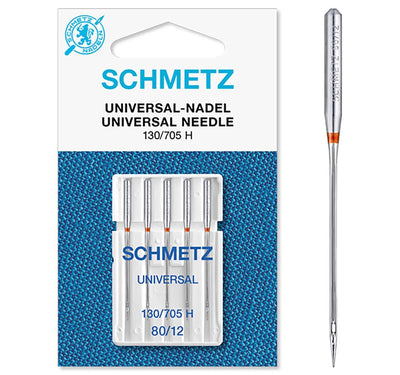
- Universal needle for standard fabrics
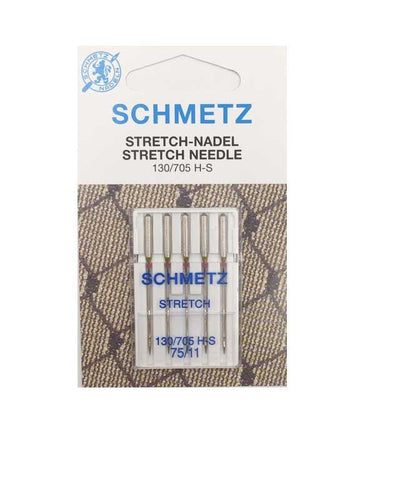
- Stretch needle or jersey needle for stretch fabrics
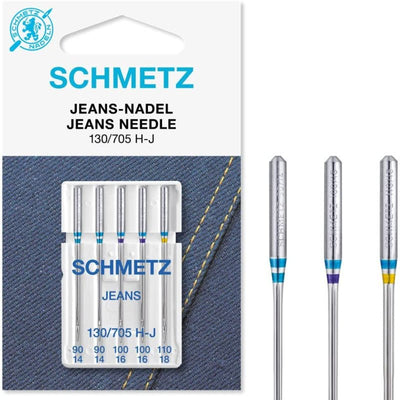
- Jeans needle for thick fabrics
- Microtex needle for fine and delicate fabrics
To learn more: how to choose a needle for your sewing machine.
Incorrect settings: a common cause of breakage
Even with a suitable needle, incorrect settings can cause it to break quickly. The machine then places excessive mechanical stress on the needle.
An incorrect sewing machine setting is one of the most underestimated causes of breakage.
Which settings cause needles to break?
Certain settings must be adjusted carefully according to the fabric and thread used.
- Thread tension too high
- Excessive sewing speed
- Incorrect presser foot pressure
- Stitch unsuitable for the fabric
- Machine maintenance or cleaning required
Common mistakes that cause needles to break
The sewist's actions have a direct impact on the lifespan of needles. Even a perfectly adjusted machine cannot compensate for certain bad habits.
These common sewing machine mistakes are responsible for many avoidable breakages.
Actions to avoid at all costs
- Pulling or pushing the fabric while sewing
- Sewing too quickly over thick layers

- Continue sewing with a bent or blunt needle
- Change direction without stopping the machine
Maintenance and mechanics: when the machine is at fault
When needles always break in the same place despite proper settings, the machine itself may be at fault. Misaligned or worn mechanics can cause impacts that are invisible to the naked eye.
A recurring sewing machine needle problem is a warning sign.
When should I have my sewing machine checked?
Certain signs indicate that a professional inspection is necessary.
- Needles that break systematically
- Unusual noises during sewing
- Persistent irregular stitches
- Old or heavily used machine
Bonus: Why do my sewing machine needles break?
Anticipating breakage remains the best strategy. A few simple checks before sewing can prevent most problems.
This preventive approach provides reassurance and saves time.
Quick pre-sewing checklist
- Check the needle’s condition and installation
- Match the needle to the fabric
- Test the settings on a scrap piece
- Reduce speed on thick areas
Conclusion
Wondering why my sewing machine needles break is normal when encountering this problem. In most cases, breakage is caused by choosing the wrong needle, an unsuitable setting, or incorrect handling. These causes are easy to identify and correct.
By taking the time to match the needle to the fabric, adjust the machine correctly, and use proper techniques, it is entirely possible to sew reliably without breakage. If in doubt, having the machine checked by a professional remains the safest solution.
FAQ: Why do my sewing machine needles break?
Why does my needle break especially when sewing thick fabrics?
Thick fabrics require a suitable needle and a reduced speed to avoid excessive strain.
Is a universal needle enough for sewing everything?
No, each type of fabric requires a specific needle to prevent breakage.
How often should sewing machine needles be changed?
As soon as they become blunt or when changing to a significantly different fabric.
Can I continue sewing after a needle breaks?
It is best to stop and check the machine to avoid damaging the hook or needle plate.
Is it due to none of these causes?
So the problem is mechanical, and it can’t be fixed casually. Our technicians get your machine back in working order, regardless of the brand.
- Quote consultation, no obligation
- All brands, even machines not purchased from us
- Adjustment, thorough cleaning, and lubrication
What you need to have on hand
The resources that solve most of these problems.
What if the machine has reached the end of its useful life?
Here are models that we set up and maintain ourselves, and for which we provide after-sales service.