



























Table of Contents:
The sewing machine bobbins are small but crucial components, yet a sewing machine bobbin problem can quickly cause major malfunctions. Whether tangled threads, irregular stitches or frequent jams, bobbin-related problems are a common source of frustration for sewers of all levels.
Fortunately, most of these issues have simple solutions. This article explores common bobbin problems and guides you through adjustments and techniques that will help you get back to smooth, trouble-free sewing.
Understanding the bobbin and its crucial role in your sewing machine
The sewing machine bobbin is a small spool which stores the lower thread. It works together with the upper thread to create strong stitches. A sewing machine bobbin problem often occurs when the tension is not adjusted precisely, resulting in tangled threads, irregular stitches or even a complete machine jam. In short, the bobbin is the hidden core of your sewing projects.
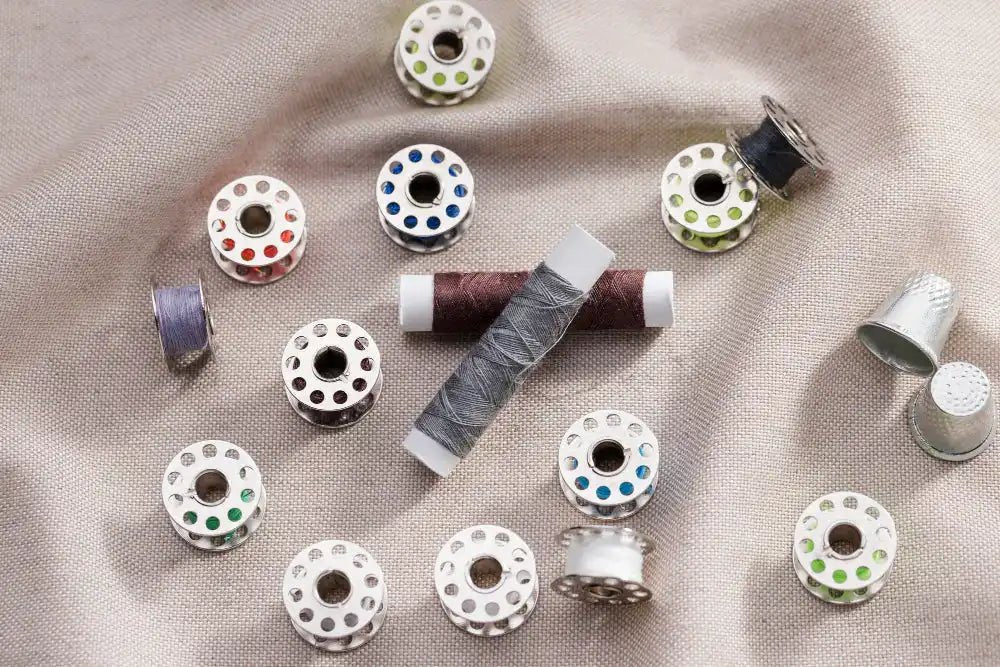
Do you use a Juki machine, Janome or Elna? Be aware that bobbins are available in metal or plastic. Each model has its preferences, and an incompatible bobbin can cause disordered sewing machine bobbin problems or damage the case.
In addition, choosing the wrong sewing machine thread (too thick, too rigid or of poor quality) can worsen these malfunctions and interfere with smooth sewing.
It is therefore best to check compatibility before buying a product. Metal withstands wear better, while plastic is suitable for lightweight models. Your choice affects the quality of your sewing projects.
Some problems require the intervention of a professional; do not hesitate to contact Verotex for a fast and effective repair of your sewing machine, overlocker or coverstitch machine.

Main symptoms and causes of sewing machine bobbin problems | ||
Symptom |
Likely cause |
Impact on stitching |
Thread tangled under the fabric |
Bobbin tension problem |
Unsightly thread loops and poorly formed stitches |
Irregular or skipped stitches |
Bobbin inserted incorrectly or incorrect tension |
Weak stitching and uneven appearance |
Machine jam |
Defective or dirty bobbin case |
Unable to continue sewing |
Thread jam |
Tension problem or unsuitable bobbin |
Sudden machine stoppage and jammed threads |
Accumulation of lint |
Insufficient cleaning of the bobbin compartment |
Progressive malfunction and deteriorating sewing quality |
Frequent thread breakage |
Excessive tension or poor-quality thread |
Frequent interruptions and frustration |
Persistent uneven stitches |
Incorrectly installed bobbin case or unsuitable bobbin |
Uneven work and necessary alterations |
Machine slipping or straining |
Misaligned bobbin or damaged bobbin case |
Risk of damaging the machine or fabric |
If you notice tangled threads under the fabric, skipped stitches or unusual mechanical noises, this is a sign that a sewing machine bobbin problem is developing. You must resolve this problem quickly to avoid the need for costly repairs.
Ignoring these signs can lead to serious damage. Your sewing machine's mechanism may be affected by a dirty bobbin case or an incorrectly adjusted bobbin. Without action, parts wear out prematurely. You must regularly maintain the bobbin case to protect your equipment from repeated breakdowns.
Effective solutions to common bobbin problems
Encountering a sewing machine bobbin problem can quickly interrupt your work and cause frustration. Whether it is incorrectly adjusted thread tension, a jam, incorrect installation or a dirty case, these issues are common but can always be fixed. Discover our effective solutions for adjusting the tension, freeing tangled threads, choosing the right bobbin and maintaining your machine for smooth, trouble-free sewing.
Bobbin thread tension problems: how to adjust them
Balanced tension between the bobbin thread and the upper thread is the key to a perfect stitch. A sewing machine bobbin problem often occurs when this tension is incorrectly adjusted: if it is too loose, the lower thread forms loops underneath the fabric; if it is too tight, it breaks or distorts the fabric. Adjusting this tension requires a little dexterity, but it is within your reach!
- Locate the tension screw on the bobbin case of your Singer, Brother or Pfaff sewing machine.
- Use a small screwdriver to adjust the tension: tighten or loosen it.
- Test on a scrap of fabric to check whether the bobbin thread tension is balanced with the upper thread.
- Consult your sewing machine manual to learn the recommended settings according to the type of thread and needle used.
- Clean the bobbin case regularly to prevent lint buildup from disrupting the tension.
Check your adjustment by sewing on a fabric sample similar to your project. The bobbin thread should wind smoothly with the upper thread, without forming a loop or creating a stitch that is too tight. Pay close attention to the adjustment, as an incorrect setting can quickly become a sewing machine bobbin problem.
Accurate adjustment is even more important if you use a semi-professional sewing machine. This machine's performance requires optimal adjustment. This adjustment ensures even stitches on all types of fabric, whether nylon, tartan or cotton.
Request a quick quote from Verotex for effective servicing if your sewing machine is out of adjustment. Our qualified technicians are ready to bring your creative tools back to life.

Thread jams and tangles: how to unblock the situation
Thread stuck in the bobbin case is a common sewing machine bobbin problem, often caused by incorrect tension or excessive dirt. Lint buildup slows the thread feed, while poor-quality thread frays easily.
To avoid damaging the mechanism, gently remove the stuck threads by taking out the bobbin, cleaning the bobbin case and using a soft brush. Also check that the thread slides freely through the guides, especially on certain specific models. Finally, test a stitch on a scrap piece before resuming your project.
Improperly installed or incompatible bobbin: finding the right solution
A plastic bobbin in a machine that requires metal? An inverted assembly? These mistakes often cause sewing machine bobbin problems, resulting in skipped stitches or blockages. An unsuitable bobbin puts strain on the mechanism and affects the quality of your seams. A regular sewing machine service can detect this type of incompatibility before it permanently damages your equipment.
Insert the bobbin according to the direction indicated on the case (usually marked with an arrow). For specific models, such as Janome, make sure it rotates freely without excessive play. A bobbin that is too loose or too tight disrupts thread feeding.
Cleaning and maintaining the bobbin case
A dirty bobbin case is a common cause of sewing machine bobbin problems, as it slows the bobbin's rotation and causes jams. To prevent this, clean it after every project, especially if you use fuzzy fabrics. Regular maintenance preserves the lifespan of your sewing machine.
Equip yourself with a fine brush, soft cloth and dry air to remove residue. Avoid harsh products or sharp tools that could damage your sewing machine. For models with a horizontal bobbin case, open it completely to access the corners. Store your machine in a clean place to limit buildup.
Comparison of bobbin types (metal vs. plastic) and their compatibility with the main sewing machine brands | |||
Bobbin type |
Advantages |
Disadvantages |
Compatibility |
Metal bobbins |
Greater durability, |
Higher weight, |
All machines that accept metal bobbins (Singer, Pfaff, Brother) |
Plastic bobbins |
Lightweight, quiet, |
Wear out faster, |
Recent Juki and Janome models |
Universal bobbins |
Good economical alternative, |
Risk of approximate adjustment, |
Occasional use, |
Are you hesitating between plastic and metal bobbins? Prioritize compatibility with your model to avoid any sewing machine bobbin problem caused by incorrect tension or unexpected breakages. Before choosing a model, check the user manual to find out which sizes are recommended.
Metal withstands heavy use and is perfect for long seams or thick fabrics. It is also better suited to high sewing machine power, which puts more pressure on the components.
Plastic, on the other hand, is quieter and suitable for light work. Be careful with universal bobbins: although practical for keeping in stock, they can cause a sewing machine bobbin problem and affect quality. Your choice will influence the overall price of your supplies and how long they last before replacement.

Prevent future sewing machine bobbin problems
To avoid any sewing machine bobbin problem, regular maintenance of the bobbin area is essential. Adopting a simple and effective routine helps prevent malfunctions. In addition, choosing the right thread and mastering correct threading are key steps to ensure optimal operation of your machine. Here is how these good habits protect your equipment over the long term.
Regular maintenance of the bobbin area: a simple and effective routine
You can avoid many inconveniences by anticipating any sewing machine bobbin problem through regular maintenance of the bobbin case. Indeed, the accumulation of lint disrupts the thread flow and may damage replacement parts.
The safest way to avoid this problem is to regularly clean the area around the bobbin to minimize the risk of jams or uneven stitches. This extends the lifespan of your sewing machine.
Plan a monthly routine: use a fine brush to remove residue, a dry cloth to dust, and compressed air to reach difficult corners. Storing your machine in a dry place helps prevent sewing machine bobbin problems and ensures smooth bobbin operation.
Does your machine need servicing? Simply contact the Verotex professionals.
Thread selection and correct threading
Choosing the right thread helps avoid many inconveniences, including any sewing machine bobbin problem. Thread that is too thick puts strain on the tension, while thread that is too fragile breaks easily or causes jams. Choose quality thread suited to the type of fabric and your sewing machine.
Thread the bobbin correctly by following the diagram in the user manual. Thread guided incorrectly through the bobbin case can cause a sewing machine bobbin problem, such as skipped stitches or unexpected thread breakage. Always remember to test a sample before sewing to check the tension. For even stitches and a successful project, install the bobbin correctly and use the appropriate thread.
Both plastic and metal bobbins keep your sewing machine running. Remember three things: regularly clean the bobbin case, adjust the bobbin thread tension, and choose models compatible with your machine. A little care prevents jams, tangled threads, and skipped stitches. Your next project deserves a properly adjusted bobbin!


Leave a comment
This site is protected by hCaptcha and the hCaptcha Privacy Policy and Terms of Service apply.