














Table of Contents:
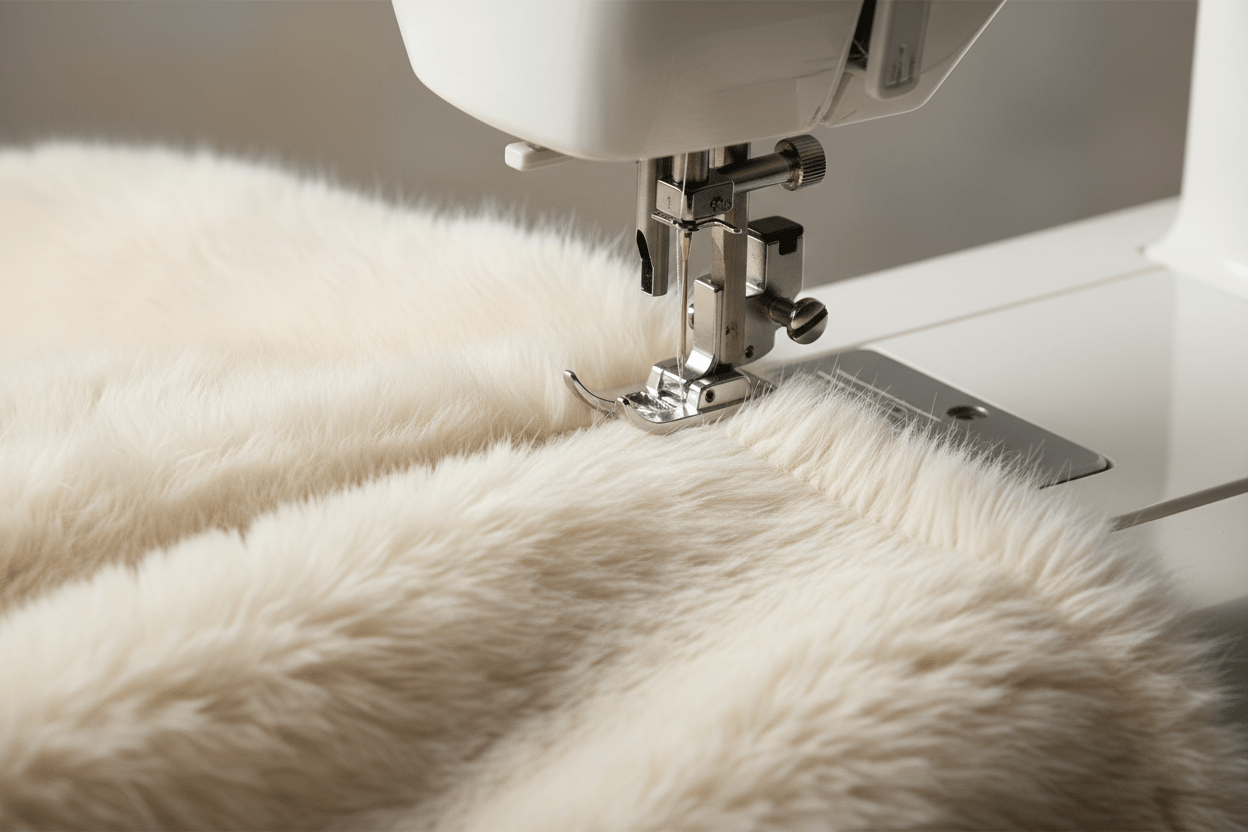
How to sew faux fur? This is a common question for anyone wanting to start making clothes or accessories with this fabric that is both aesthetic and technical. Sewing faux fur can seem intimidating at first: thick material, fur to manage, delicate cutting… Yet, with the right methods and a few synthetic fur sewing tips fur, it is entirely possible to achieve a clean and professional result.
This complete guide will show you how to cut, assemble, and sew your projects, what materials to use, and how to avoid common mistakes, so you can create with confidence.
What is faux fur?

Faux fur is a synthetic textile that imitates animal fur. It is characterized by:
- The density and volume of its fur
- The soft texture but sometimes difficult to handle
- The need to respect the direction of the fur for a natural look
The faux fur fabrics available at Verotex offer different fur lengths and qualities, making it easier to choose according to the project (decor, clothing, accessories).
What to make with faux fur
This versatile fabric allows for many creative projects:
- Coats and jackets
- Accessories: capes, snoods, hats
- Decoration: cushions, throws, stuffed animals
How to sew faux fur?

Sewing faux fur requires taking into account the thickness of the fabric and the direction of the fur to achieve a neat result. Even if the fabric is thick and slippery, a few simple techniques make sewing easier.
- Respect the direction of the fur: always cut and assemble pieces in the same direction for a uniform and natural look.
- Pin or use clips: prefer sewing clips or pin only on the wrong side to avoid damaging the fur.
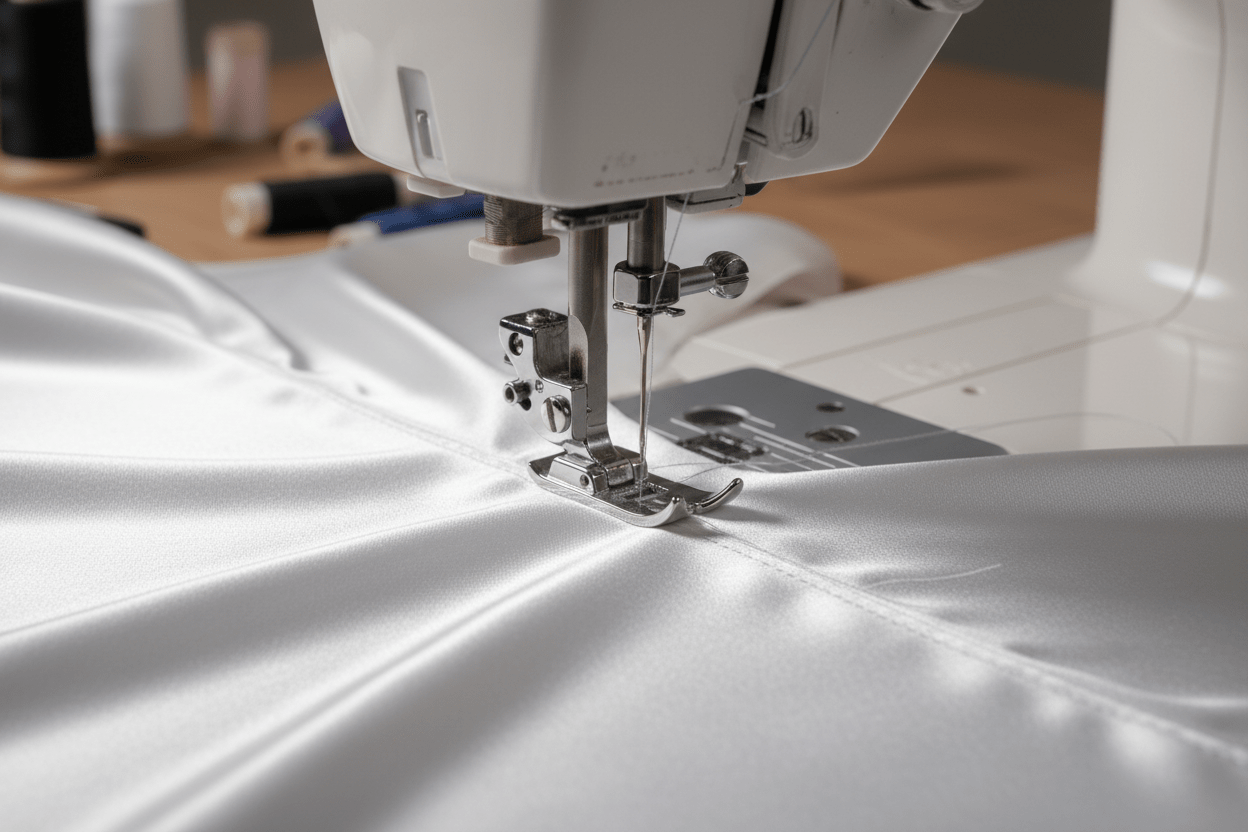
- Use a long stitch on the machine: a stitch that is too tight can trap the fur, so adjust the stitch length and sew slowly for more evenness.
A reliable machine like a Juki allows better handling of thicknesses and achieves even stitching, especially over multiple layers.
Necessary equipment for sewing faux fur
Good equipment simplifies sewing and prevents mistakes:
- Machine needle for thick fabric
- Strong polyester thread
- Presser foot suitable for slippery fabrics
- Scissors or rotary cutter for cutting
- Brush or comb to detangle the fur
Using good equipment greatly improves the quality of the result, especially with a bulky fabric like faux fur.
How to cut faux fur?

Cutting is crucial. Cutting on the wrong side and precisely prevents damaging the fur:
- Cut on the wrong side to protect the fur
- Trace the pattern only on the wrong side
- Use a rotary cutter for large pieces
- Have a vacuum cleaner nearby: cutting faux fur releases a lot of fibers, so it is advisable to vacuum as you go to keep your workspace clean
Thick fabrics like those offered by Verotex work better with precise and gradual cutting.
Which needle and thread to choose?
To easily sew faux fur:
- Needle for heavy fabrics, size 90-100
- Strong and durable polyester thread
- Long stitch and adjusted tension on the machine
Should you use a lining?

Yes, it is highly recommended.
The lining allows:
- to improve comfort
- to stabilize the garment
- to achieve a cleaner finish
Choose a fluid fabric (viscose, polyester) with an appropriate weight.
Common mistakes to avoid with faux fur
For a successful project, avoid:
- Not respecting the direction of the fur
- Using an inappropriate needle
- Cutting like a regular fabric
- Neglecting the finishing touches
-
Leaving the fur caught in the seam
How to care for faux fur?
Maintenance ensures a durable and beautiful fabric:
- Avoid harsh washing or tumble drying
- Store flat or hanging to preserve shape
- Do not iron as it damages the fur
- To eliminate odors, you can use cold. Place your piece in an airtight bag and then put it in the freezer for a few hours.
What finishing to use for sewing faux fur?
For a professional finish:
- Stabilize edges with fusible tape
- Always respect the direction of the fur for all pieces
Summary table of techniques
| Step | Best practice | Mistake to avoid |
|---|---|---|
| Cutting | Cutting on the wrong side with a cutter | Cutting the fur |
| Sewing | Long stitch + thick needle | Too tight stitch |
| Finishing | Brushing the seams | Leaving the fur caught |
| Assembly | Respecting the direction of the fur | Mixing directions |
Conclusion
Sewing faux fur requires some technique but quickly becomes accessible with the right gestures. By respecting the direction of the fur, using appropriate tools, and taking the time to prepare each step, it is possible to achieve a clean and durable finish.
Choosing a quality fabric, like those offered by Verotex, along with a high-performance machine like a Juki, greatly facilitates sewing this type of material. Starting with simple projects and using suitable patterns like those from Atelier Nouvelle Couture will help you progress effectively.
With practice, faux fur becomes a very pleasant fabric to work with, ideal for creating unique, warm, and stylish pieces.
FAQ on How to Sew Faux Fur
Can faux fur be sewn by machine?
Yes, provided you use a needle suitable for thick fabrics and correctly adjust the stitch length.
Which needle to choose for faux fur?
A heavy-duty needle, size 90-100, allows easy sewing without damaging the fabric.
How to prevent faux fur from shedding?
Always cut on the wrong side, brush regularly, and handle the fabric gently.
Should faux fur be overlocked?
No, it does not fray like a classic fabric; brushing and respecting the direction of the fur are enough.
What projects are suitable for starting with faux fur?
Start with simple accessories like cushions, throws, or capes before moving on to more complex garments.

Leave a comment
This site is protected by hCaptcha and the hCaptcha Privacy Policy and Terms of Service apply.