





Table of Contents:
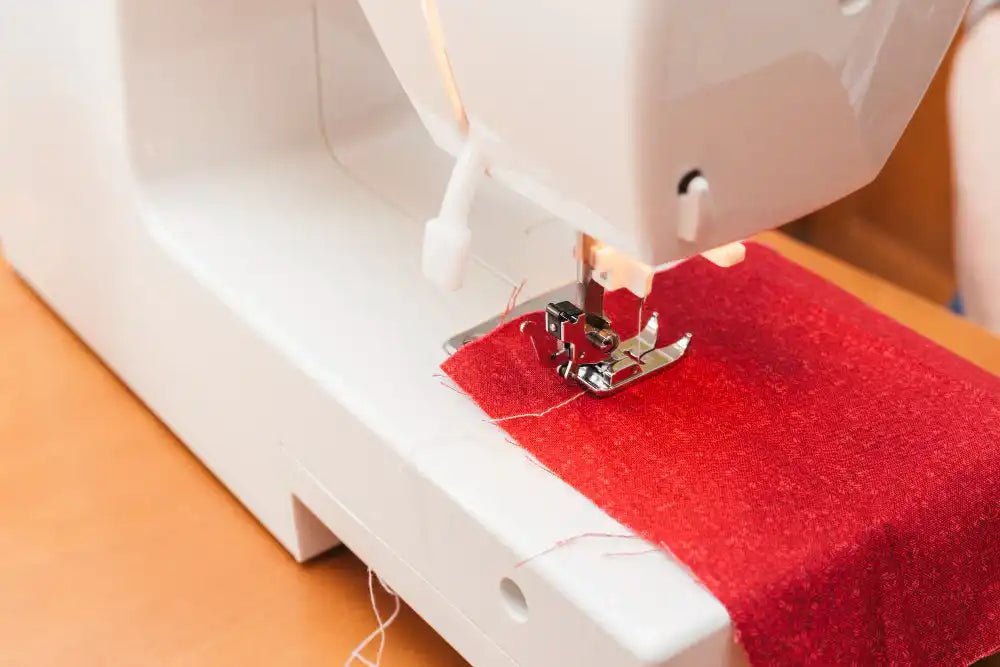
Tired of skipped stitches, fraying fabrics, or broken needles? The secret to impeccable sewing often lies in one crucial but frequently overlooked detail: the choice of needle! Wondering which needle to use for which fabric? Forget the headache, because this article will transform the way you sew.
Together, we will explore the world of machine needles, showing you how each type is designed to tame a specific fabric, from the most delicate silks to the most robust jeans. Get ready to say goodbye to sewing hassles and hello to perfect creations!
The universal needle for versatile sewing
The universal needle is suitable for most sewing tasks. Its standard flat shank fits domestic sewing machines, and its slightly rounded point passes through the fibers without breaking them, ensuring gentle penetration to prevent fabric damage.
It is suitable for woven fabrics such as cotton, linen, and some lightweight denims. It can be used to sew synthetic materials such as polyester. Each size adjusts to the material's thickness for smooth, even stitching.
If you are wondering which needle to use for which fabric, the universal needle is an excellent base for a wide variety of projects. Easily find all types of needles needed for your sewing project at Verotex.
This table compares universal needle sizes (NM) according to fabric type and provides practical recommendations for optimal sewing.
Needle size (NM) |
Fabric type |
Features and recommendations |
NM 60-70 |
Very fine fabrics (batiste, chiffon, crepe, organza, silk, voile) |
Protects delicate fibers and prevents excessive perforation. |
NM 70-90 |
Light to medium fabrics (cotton, poplin, taffeta, lace, nylon, chiffon, seersucker) |
Perfect balance between precision and strength. |
NM 80-100 |
Medium to thick fabrics (jacquard, loden, flannel, double-faced, gabardine) |
Suitable for projects requiring |
NM 90-120 |
Thick and rigid fabrics (sailcloth, canvas, oilcloth, coat fabrics) |
Reinforced structure for passing through |
NM 100-130 |
Very thick or layered fabrics (carpets, blankets, workwear) |
Extreme strength for demanding projects. |
The slightly rounded point slips between the fibers without damaging them. In addition, it prevents holes or pulled stitches, especially in knitted fabrics. This design enables smooth sewing on cotton, canvas, or poplin.
Choose a specific needle for very thick, fine, or stretch fabrics, as the universal 80/12 needle wears out after 8 to 10 hours of use. Irregular stitches or fraying threads indicate that it is time to replace it.
At Verotex, you will find all types of needles and fabrics for successful sewing.

The Jersey/Stretch needle for stretch fabrics
The Jersey needle has a slightly rounded point, while theStretch needle features an ultra-rounded point and a reinforced shaft. Their specific design allows you to sew without damaging stretch fabrics, sliding between the stitches rather than piercing them.
The ballpoint gently separates the fibers without piercing them, preserving the material's elasticity. This technology prevents deformation and skipped stitches. It is perfectly suited to fabrics with an elastic weave, ensuring a professional result.
When starting with stretch materials, it is not always easy to know which needle to use for each fabric. That is why it is essential to understand the specific features of each model in order to avoid sewing mistakes.
The Jersey needle is well suited to fabrics made of:
Cotton for lightweight and comfortable fabrics such as T-shirts
Lycra/Spandex for sportswear and swimwear requiring elasticity
Stretch polyester for projects requiring durability and quick drying
Ribbing for elastic finishes on sweatshirts and sportswear
The Stretch needle stands out with its shorter eye and deeper scarf than the Jersey needle. Choose this needle for highly elastic fabrics such as Lycra, and choose the Jersey needle for classic knits such as stretch cotton.
By understanding which needle to use for each fabric, you will avoid skipped stitches, broken threads, and tears. Likewise, with it, you achieve even stitching without snags. A suitable needle reduces friction on the fabric, limiting deformation after washing or stretching.
The Denim/Jeans needle for thick materials
TheDenim/Jeans needle features a reinforced shaft and a very sharp point, and its metal structure resists high pressure. It passes through tightly woven fabrics without deviation, reduces breakage even on challenging thicknesses.
This type of needle tackles denim, upholstery fabrics, or canvas bags without weakening. Its robust design withstands repeated friction and maintains even stitching on dense materials without damaging the machine.
When working with such varied materials, it is essential to know which needle is suited to which fabric, in order to avoid common issues such as skipped stitches or needle breakage.
Several fabric thicknesses find their ideal match with this needle. Besides denim, it works with corduroy, oilcloth, thick gabardine, or faux leather, adapting its strength to every challenge.
Sizes 90, 100, and 110 cover most needs. The 90 handles lightweight denim, the 100 is suitable for thick fabrics, and the 110 is ideal for complex layering.
In addition, the 90 glides through denim shirts, the 100 handles jackets and trousers, and the 110 takes on heavy-duty work. Each size meets a specific level of demand precise.
The Denim/Jeans needle excels at topstitching that requires passing through several layers. Its durable steel withstands reinforced seams without deflection, ensuring an even thread on critical areas.

The leather needle for non-woven materials
The sharp point of the leather needle pierces dense materials without damaging them. It is designed for genuine leather and faux leather. Its specific shape prevents breaking the fibers, preserving the material's integrity while facilitating smooth penetration.
This type of needle is suitable for thick leather as well as suede or flexible faux leather. However, it is poorly suited to woven or knitted fabrics, which it could cut. Its rigidity and hardened steel resist friction without deflection.
When starting out in leatherwork, it is essential to understand which needle is suited to which fabric, in order to choose the right tool and avoid damaging sensitive materials.
It guarantees neat seams on leather, without irregular holes or broken threads, and its precise point slips between the layers without tearing them. You get professional finishes on your leather goods projects or leather accessories.
Use it with care. Above all, avoid ordinary fabrics and set the stitch length to 3-3.5 mm to limit tearing. A suitable needle prevents damage to the machine and material, ensuring trouble-free work.
The Microtex needle for fine and delicate fabrics
TheMicrotex needle features an extra-fine point and a narrow shaft for penetrating tightly woven fabrics. Its precise design prevents tearing the fibers. It stands out for its ability to sew the most delicate materials without visible damage, ensuring even stitches.
It excels with silk, voile, organza, chiffon, and taffeta. If you work with these materials, choose sizes 60 to 80/12. Each size corresponds to thespecific fabric thickness, ensuring smooth passage without unwanted marks.
Its sharp point ensures neat, even stitches on fine fabrics. Thanks to this point, visible holes and broken threads are avoided. The stitching remains discreet, preserving the integrity of the fabric while maintaining optimal strength.
On silk, the Microtex outperforms the universal needle. Its fine point passes through the fibers without pushing them aside. You avoid pulled threads or snags, unlike the standard needle, which damages delicate materials.

The embroidery needle for decorative threads
The widened eye of the embroidery needle accommodates thick or multiple threads, and its polished surface reduces friction to prevent damage to the fibers. This specific opening makes threading easier metallic, novelty or embroidery threads, adapting its size to special materials.
Decorative threads such as shiny rayon or matte cotton are perfectly suited to this needle. Standard threads are less suitable, especially for embroidery. The wide eye accommodates thick threads (Nm 40) with sizes 100-110, while standard threads (Nm 100) use size 90.
This needle promotes complex patterns and decorative topstitching, particularly with metallic threads. Its slightly rounded point glides without tearing the fabric. Sizes 60 to 110 cover projects with varying precision requirements.
Set the thread tension between 2 and 6 for optimal hold and adjust it if the bobbin thread appears on the right side. Test by lifting the bobbin by its thread: it should descend smoothly.
Change the needle every 8 to 10 hours of sewing and never force the fabric with the presser foot lowered. A suitable needle prevents breakage, particularly on thick fabrics requiring precise sizes.
The Topstitch needle for decorative topstitching
The Topstitch needle stands out with its elongated eye (2 mm) and slightly rounded point. Designed for decorative topstitching, it allows you to use thick or multiple threads. Its sturdy structure ensures smooth passage even through thick fabrics or multidirectional projects.
It is used for quilting, patchwork or decorative effects with metallic threads. A titanium version lasts up to 80 hours of sewing. This needle reduces breakage and skipped stitches while protecting the fabric, making it ideal for neat, durable finishes.
Understanding which needle is right for each fabric changes everything: it is the key to neat, precise sewing. By choosing your universal, Jersey, Jeans or Microtex needles wisely, you optimize every project.


Leave a comment
This site is protected by hCaptcha and the hCaptcha Privacy Policy and Terms of Service apply.