































Table of Contents:
In the vast world of sewing, pattern making is a fundamental skill that opens the doors to infinite creativity. But what exactly is pattern making, and why is it so essential for dressmakers and tailors? In this article, we will dive into the very definition of pattern making!
What is pattern making in sewing? Definition, method, and techniques
In the rich and creative universe of sewing, pattern making is a central skill in the creation process. More than just drawing lines, it involves transforming an idea into a concrete prototype by creating an accurate pattern based on body measurements. Pattern making plays an essential role in the history of sewing and continues to evolve with modern tools and new practices. It allows the creation of unique, fitted garments tailored to each silhouette, whether for a dress, skirt, top, collar, or sleeve.
Definition of pattern making in sewing
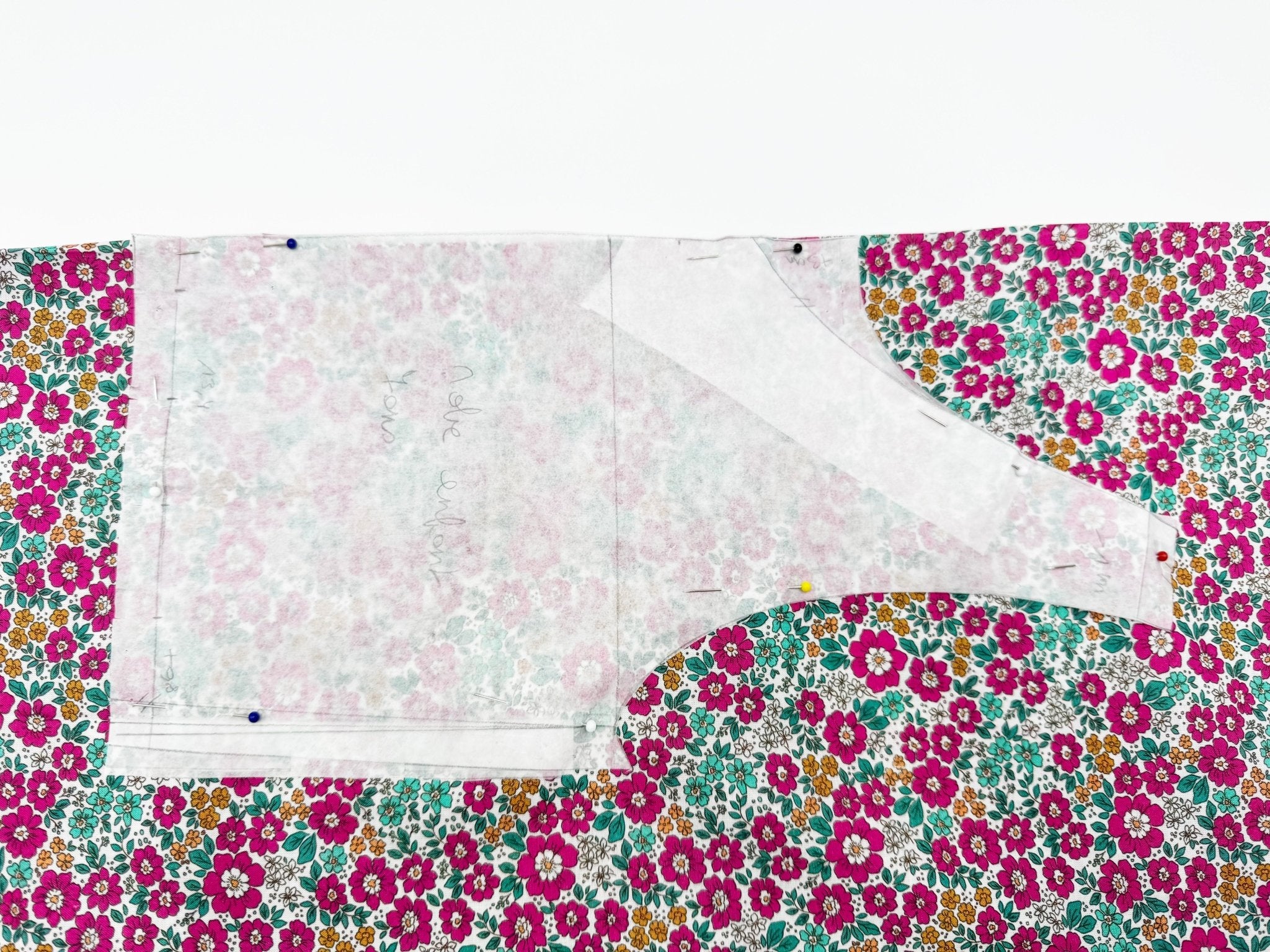
Pattern making is the process of creating a pattern from precise measurements. This pattern serves as the base on which the different pieces of the garment will be cut. The pattern can be made by hand or with the help of digital pattern making software. It is important not to confuse the pattern and pattern making: the pattern is the physical template made of paper or cardboard, while pattern making refers to all the steps necessary to create this model. This process includes taking measurements, drafting, adjustments, grading, and the addition or omission of seam allowances.
A bit of history: pattern making through the centuries
Pattern making is part of an ancient tradition dating back to 19th-century haute couture. Initially used by designers in fashion houses, it later spread to enthusiasts through the publication of specialized books. In France, pattern making took on a cultural dimension, with secular, sports, or religious patronages such as those of the Saint community or the gymnastics and sports federation of patronages. Today, pattern making is recognized as a discipline in its own right, combining art, technique, culture, and professional software.
How to create a pattern?
To create a pattern, you first need to take body measurements: bust circumference, waist circumference, hip circumference, torso length, bust dart, center back. From this data, you can create a basic toile or a basic block, depending on the chosen method. Paper pattern making, or flat pattern cutting, involves drawing the garment lines on paper or cardboard. Simple tools such as a ruler, pencil, scissors, and sometimes a template are used. Draping, on the other hand, is a more intuitive technique that involves working directly on a dress form by shaping the fabric to fit the body's contours. The resulting pattern is then transferred to paper. It is also possible to use digital pattern making software to create a file ready to be printed or sent to a cutting service.
Why is pattern making important?
Pattern making allows the design of a garment faithful to the imagined model while respecting morphological constraints. It ensures the prototype fits well, the volumes are properly distributed, and the body's proportions are respected. It is also the stage that allows checking seam allowances, structuring the garment, and planning assembly elements. In haute couture, ready-to-wear, or home sewing, pattern making is an essential skill. It also enables resizing a pattern, adapting a model, adding ease, or reworking an existing shape.
What are the types of pattern making?
Pattern making can take several forms depending on the context and need. Garment pattern making corresponds to artisanal or professional sewing. Industrial pattern making is used for mass production with specific tools. Secular, cultural, or sports patronages also refer to educational practices linked to French social and associative history. Digital pattern making refers to creating patterns using a computer. The sewing pattern, meanwhile, refers to the printed or drawn model used to cut the fabric.
How to adjust a pattern?
Adjusting a pattern means adapting a model to a specific body shape. This may involve modifying the waist circumference, bust circumference, torso length, or dart placement. Sometimes it is necessary to add a seam allowance, enlarge a part, or redraw a contour. Adjustments can be made directly on paper, with a dress form, or by creating a test toile. Professional designers often use precise grading techniques to adapt the same pattern to multiple sizes or work from a basic block to create several variations.
What tools are needed for pattern making?
Pattern making requires basic equipment that every designer or sewing enthusiast should have. This includes kraft paper or specific pattern paper, cardboard for templates, a well-sharpened pencil, scissors suitable for cutting paper, a ruler, a set square, hip or arm curves, pins, a dress form, and sometimes a cutting mat. For digital projects, it is possible to use pattern making software on a computer, allowing you to save patterns as files, easily modify elements, and print them at the desired size.
How to read a sewing pattern?
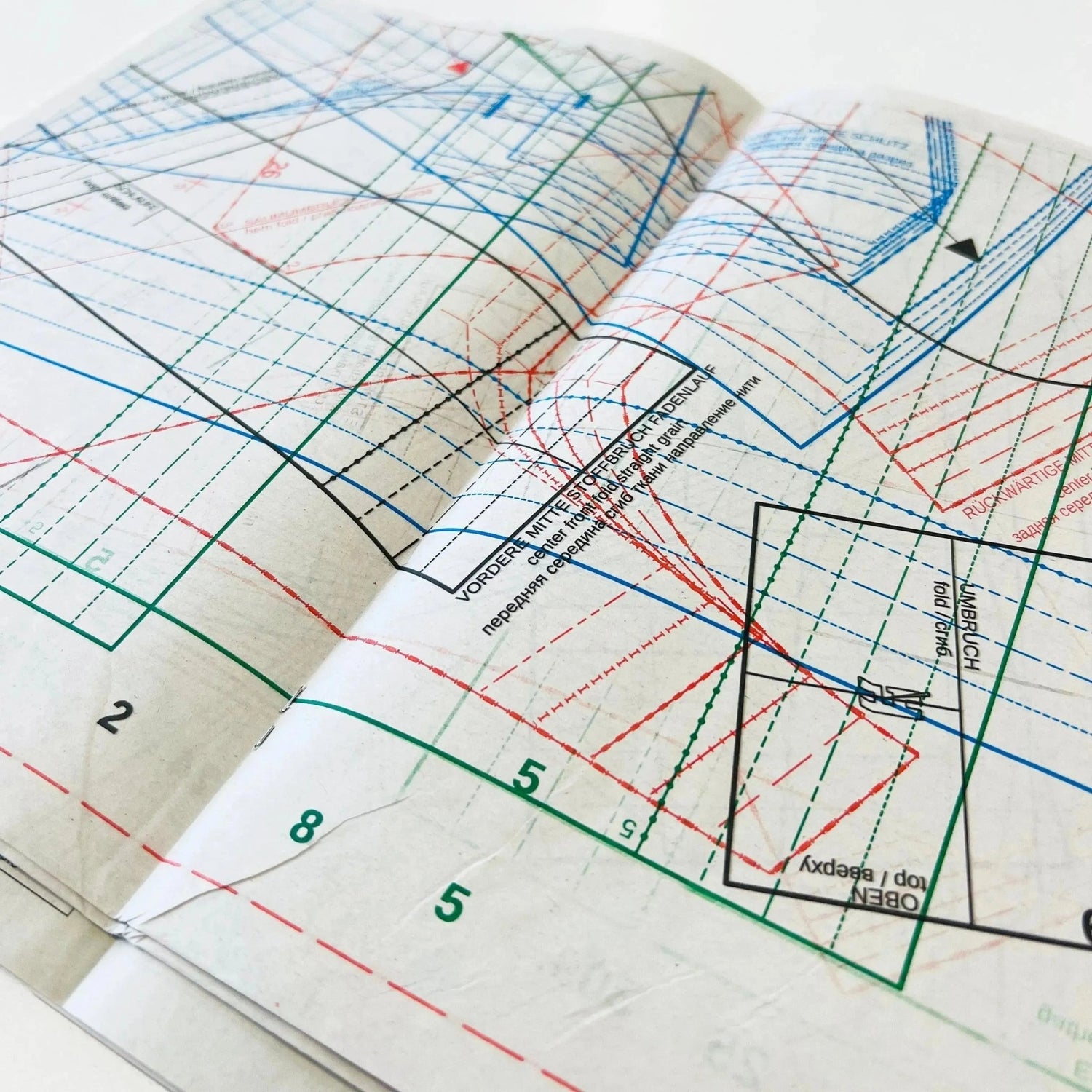
Reading a sewing pattern requires understanding the markings indicated on each piece. You need to identify the grainline, seam allowances, cutting lines, notches, darts, and fold instructions. Some patterns also include color codes, sewing symbols, and pre-included seam allowances. The goal is to quickly understand how to cut the pieces from the fabric, in which direction, and how to assemble them afterward. Learning to read a pattern is an essential skill for any sewing enthusiast or professional.
Pattern making in summary:
Pattern making is a key activity in the fashion industry, at the heart of creating custom garments or mass collections. This method transforms an idea into a concrete model, with crucial importance for the success of a project. Whether it is a first trial or a new collection, pattern making adapts to each brand, to each setting, whether professional or recreational. Every piece, from the back to the large pocket, has its specific function and handling. Creating a model requires rigor and creativity, especially in pattern design. This work can be done on one’s own base or from an existing example. There are many tips to save time, and each pattern holds a unique place in the creation process.

Leave a comment
This site is protected by hCaptcha and the hCaptcha Privacy Policy and Terms of Service apply.