


























Table of Contents:
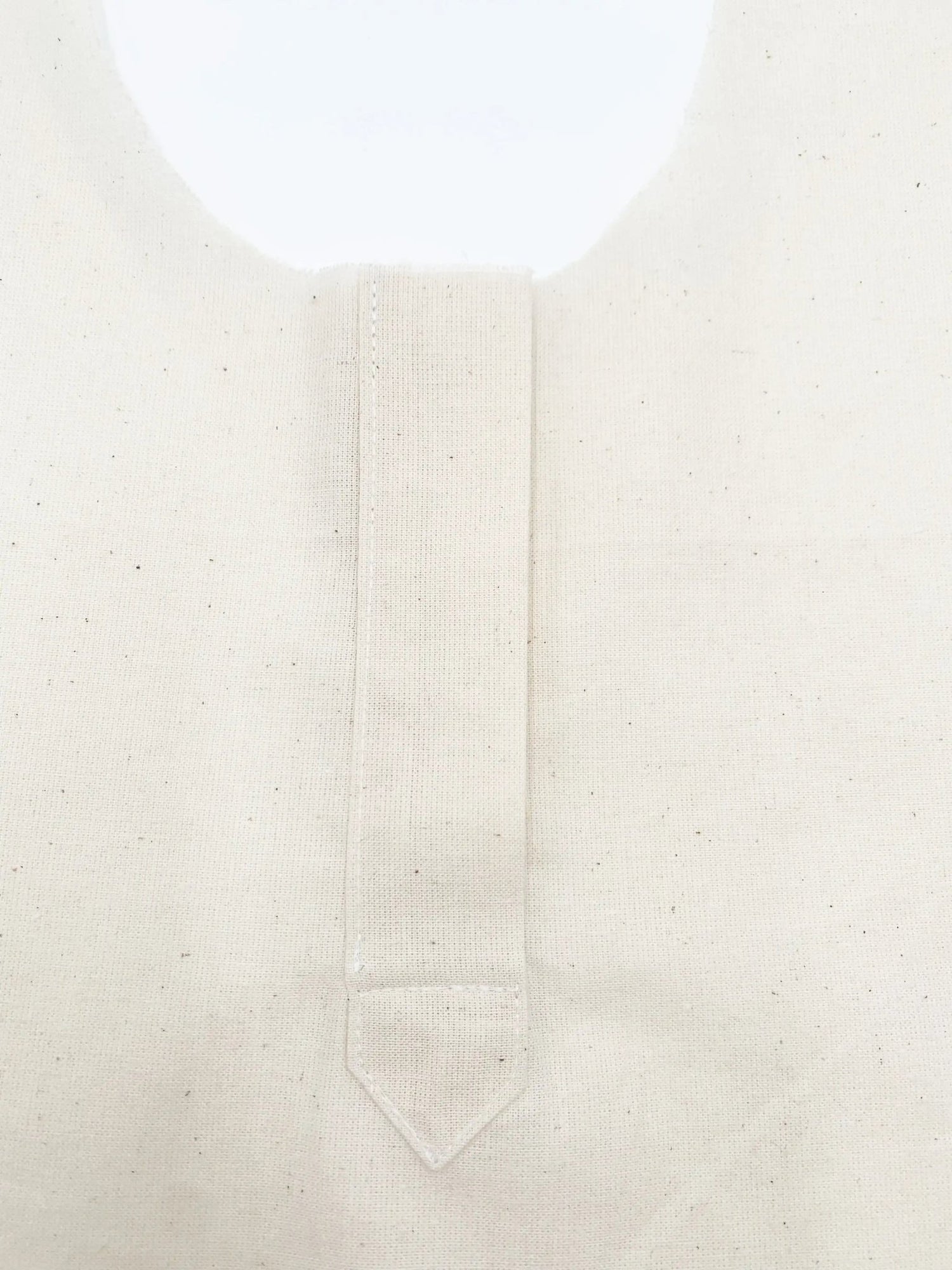
The capuchin placket, often used on shirts and cuffs, is distinguished by its neat triangular or rectangular finish. It adds an elegant, professional touch to garments. Follow this detailed guide to learn how to make this placket accurately.
How do you prepare the pattern?
Mark the placket placement
- On the fabric, draw a line along the center front corresponding to the opening.
- Mark the height of the capuchin placket and draw the lines defining its width.
- Connect the lines with a perpendicular at the bottom and add a small triangle at the base.
Example dimensions:
- Height (H) = 12 cm + seam allowance → 13 cm
- Width (L) = 3 cm
Cut out the placket piece
The capuchin placket consists of a single piece of fabric. Its width corresponds to the folds that will be made to achieve the finish.
- Placket height (Hp) = H + additional allowance
- Capuchin = 3 cm high
Example:
- Hp = 13 cm + 0.7 cm → 16.7 cm
- Total width = (L × 3) + 0.7 cm → 16.4 cm

Why and how should you apply fusible interfacing to the placket?
Reinforce the fabric with fusible interfacing
- On the wrong side of the fabric, fuse interfacing to the base of the placket to prevent any deformation.
- On the wrong side of the placket, apply fusible interfacing to each side of the red outline.

Pre-shape the capuchin
Fold the capuchin point right sides together and stitch 0.7 cm from the edge. Clip and turn to achieve a neat finish.


How do you position and sew the placket?
Place the placket on the fabric
- Transfer the placket markings onto the wrong side of the fabric.
- Position the placket right side against the wrong side on the center front, carefully aligning the markings.
- Pin carefully to ensure a secure hold.

Make the first seam
- Stitch along the outline, starting and ending at the neckline.
- Use a straight stitch with a length of 2.5 and secure the corners with backstitches.

How do you open and turn the placket?
Cut and trim the seam allowances
- Open the center line down to the bottom of the neckline.
- Cut diagonally on the sides of the triangle without cutting beyond the stitching points.
- Trim the seam allowances to obtain an even width of approximately 0.7 cm.


Turn and secure the placket
- Fold the seam allowances inward and press the seams open thoroughly.
- Turn the placket right side out and press it carefully.
- Check that the fabric of the front is completely hidden under the placket.


How do you finish the capuchin placket?
Overlap and baste the placket
- Overlap the capuchin placket with the capuchin-free one.
- The first one must perfectly cover the second. If not, adjust the seam allowance.
- Sew 1 or 2 mm from the edge of the capuchin-free placket to secure it. If necessary, baste before sewing 3 or 4 mm from the edge, keeping the layers firmly together.


- Along the length of the placket, pin or baste the capuchin section.

Topstitch and permanently secure the placket
- Place the garment right side out and topstitch along the indicated outline.
- Step 1 : Start from the neckline without stitching the capuchin-free placket.
- Step 2 : Then follow the tip of the capuchin and stitch through all the layers.
- Step 3 : Continue along the opposite edge until approximately 0.7 cm above the bottom of the capuchin-free placket.
- Step 4 : Finish with a horizontal seam resting on the first edge to hold the whole piece securely.
- Tie off the threads and tuck them into the layers for a neat finish.
Final step: final pressing
- Remove the basting thread and give the placket a final press to flatten it properly.
- Check that the placket is correctly positioned and that all topstitching is neat.


Conclusion
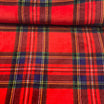
The capuchin placket is an elegant and technical finish, perfect for shirts and cuffs. It is particularly well suited to tartan fabrics, where its clean structure highlights the alignment of the checks. By following these steps, you will achieve a neat, well-structured and durable placket. Good preparation and careful pressing are essential for a professional finish!
![Pied biais avec râtelier : 5 avantages pour une pose parfaite [2025] - Verotex](http://verotex.be/cdn/shop/articles/pied-biais-avec-ratelier-5-avantages-pour-une-pose-parfaite-2026-6849281.jpg?v=1773393127&width=1776)

Leave a comment
This site is protected by hCaptcha and the hCaptcha Privacy Policy and Terms of Service apply.