



















Table of Contents:
The sewing machine needle plays an essential role in the quality of the stitching. A blunt, bent, or unsuitable needle can cause uneven stitches, broken threads, or even damage the fabric.
In this article, discover how to change a sewing machine needle safely and ensure that it is properly installed for optimal performance.
When should you change your sewing machine needle?
The needle should be replaced:
- Every 8 to 10 hours of sewing to prevent wear.
- If the fabric has holes or pulled threads, indicating a damaged needle.
- In the event of breakage, which can happen if the needle is too thin or incorrectly positioned.
- When changing the type of fabric, to use a suitable needle (jersey, jeans, leather, etc.).
Prepare the machine before changing the needle

Before handling:
- Turn off the machine to avoid any risk of accident.
- Turn the handwheel toward you until the needle is in its highest position.
- Place a piece of thick fabric under the presser foot to prevent the needle from falling into the mechanism.
- Lower the presser foot to create space and make handling easier.
Remove the old needle

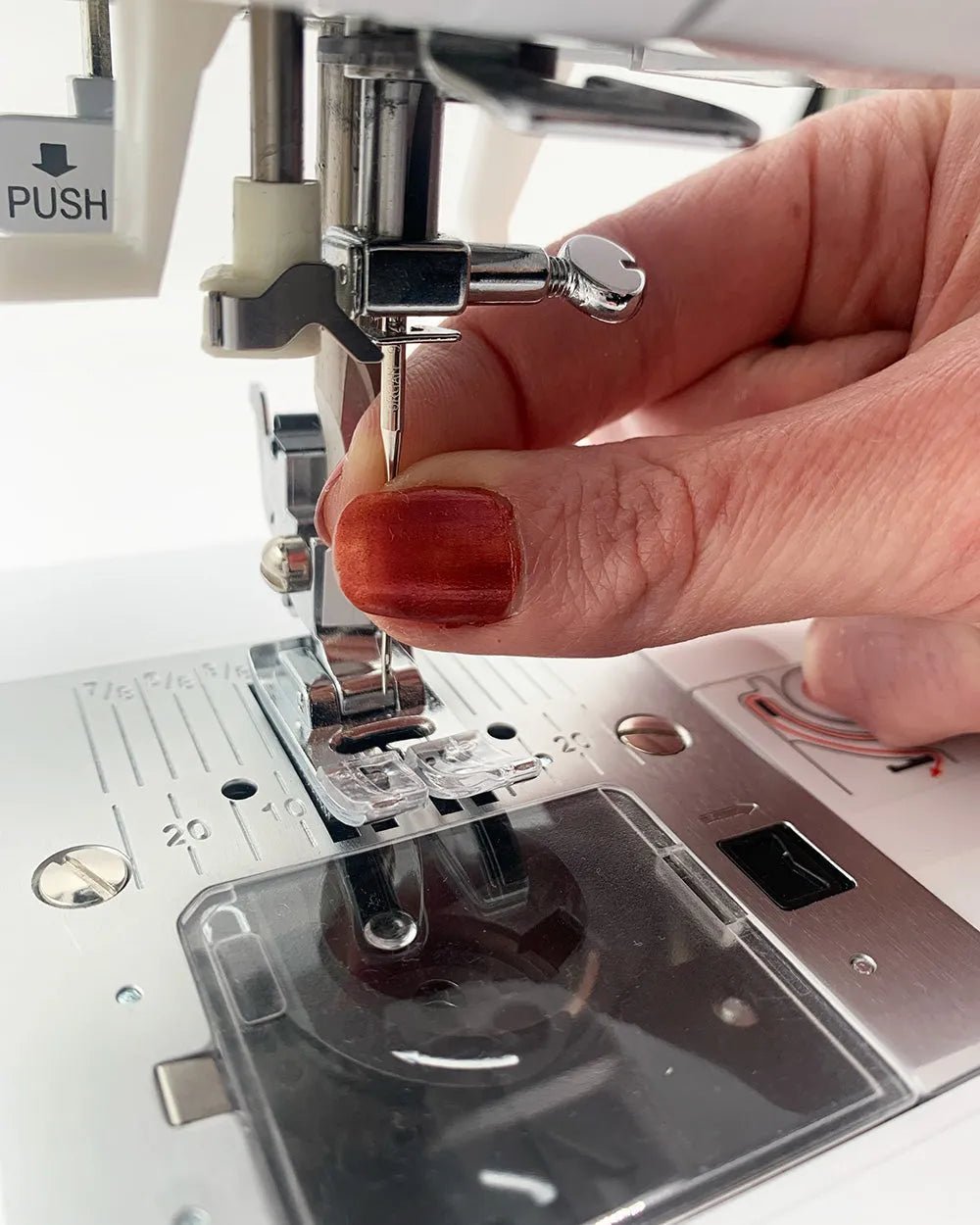
- Use a screwdriver to loosen the needle clamp screw. It is not necessary to remove it completely.
- Gently pull the needle downward to remove it from its holder.
Tip: Always keep a spare needle close at hand so you don't have to interrupt your project.
Insert the new needle


Before inserting the needle, identify its shape:
- The flat side of the needle should face the back (away from you).
- The rounded side should face you for proper positioning.
Securing the needle safely


- Insert the needle into its holder and push it in until it touches the bottom .
- Tighten the locking screw by hand, then finish tightening it with the screwdriver.
A properly secured needle ensures stable stitching and prevents it from coming loose during sewing.
What should you do if the stitch does not form after changing the needle?
If your machine stopped sewing after you replaced the needle, check the following:
- Is the needle pushed all the way in?
- Is the flat side of the needle facing the back?
- Is the locking screw tightened properly?
Choosing the right needle for the fabric
Each type of fabric requires a suitable needle:
- Universal needle: Suitable for standard fabrics such as cotton.
- Stretch or jersey needle: Ideal for stretchy fabrics.
- Jeans needle: More robust for thick fabrics.
- Leather needle: With a cutting point for easy penetration.
How do you maintain sewing machine needles?
- Change the needle regularly to prevent it from becoming blunt.
- Keep your needles in a case to avoid bending them.
- Always use a needle in good condition to avoid sewing problems.
Conclusion
Changing a needle is a simple but essential task to ensure neat and precise stitching:
- Always turn off the machine before changing the needle.
- Loosen the locking screw slightly and remove the old needle.
- Insert the new needle with the flat side facing the back.
- Push it all the way in and tighten the fixing screw securely.
- Check that the machine is working properly before resuming sewing.
With these tips, you can change a needle quickly and safely, ensuring perfect stitching for all your projects.


Leave a comment
This site is protected by hCaptcha and the hCaptcha Privacy Policy and Terms of Service apply.