







Table of Contents:
Introduction
Presser foot for a sewing machine: here is an essential accessory that every sewing enthusiast should master to achieve impeccable finishes. Whether you are a beginner or an experienced dressmaker, choosing the right presser foot can transform the quality of your creations. Thanks to this component, the fabric is held perfectly and stitching becomes smoother, more precise and more professional. However, there is a wide variety of presser foot types, each suited to a specific use: zipper, blind hem, thick fabric or even buttonhole.
In this article, you will discover what a presser foot is used for, how to choose one according to your project, how to change it easily, and above all, the benefits of using it correctly. Whether you want to improve the quality of your stitching, save time or explore new techniques, this guide is for you. We also offer a comparison table, practical tips, useful sewing machine accessories and a comprehensive FAQ.
What is a presser foot used for on a sewing machine?
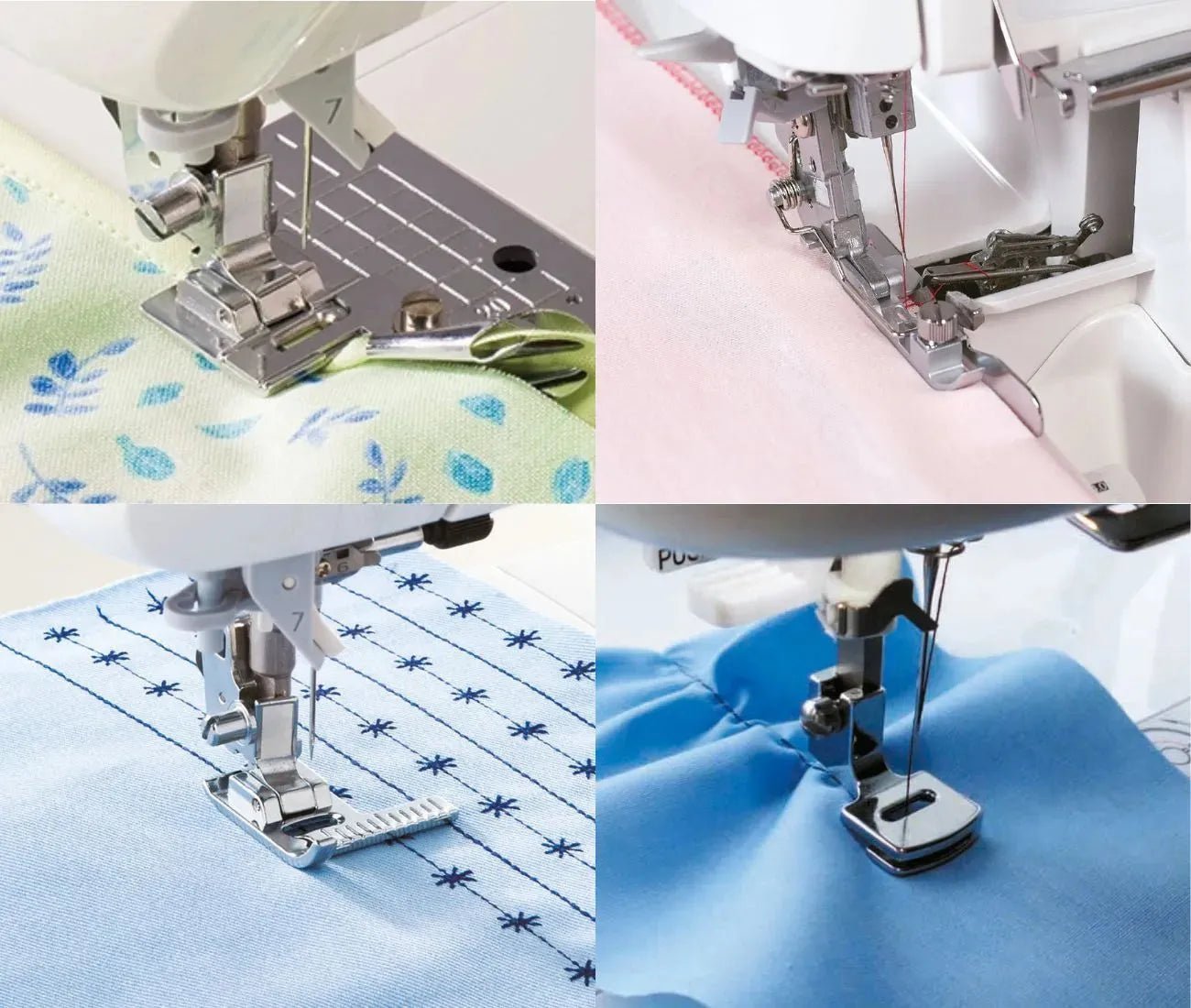
A presser foot for a sewing machine is essential for guiding the fabric and ensuring an even stitch. It lowers onto the fabric to hold it in place as the needle passes through, providing optimal precision, whatever the type of fabric or stitch used.

IMAGE (illustration of how the presser foot works on a sewing machine)
A presser foot performs several key functions:
- Holding the fabric in place to prevent slipping.
- Coordination with the feed dogs.
- Adaptation to different textiles and stitch types.
What are the main types of presser feet?
There is a wide variety of presser foot types, each with a specific use depending on the desired type of sewing. Choosing the right model helps you work more efficiently and achieve better quality.
Zipper: for installing zippers precisely.
Buttonhole: for creating automatic buttonholes.
Blind hem: for discreet finishes.
Teflon: ideal for faux leather or technical fabrics.
Comparison table
| Presser foot type | Main use | Suitable fabrics | Machine compatibility |
|---|---|---|---|
| Buttonhole | Automatic creation | Cotton, linen, poplin | Universal or brand-specific |
| Zipper | Zipper installation | Denim, gabardine | All clip-on brands |
| Teflon | Gliding over the surface | Faux leather, PVC, vinyl | Juki, Janome, Singer |
| Blind hem | Neat finishes | Sheer fabric, lightweight cotton | Clip-on or screw-on foot |
How to choose the right presser foot?
Choosing a suitable sewing machine presser foot depends on several criteria: fabric type, desired finish, and compatibility with the machine.


IMAGE (comparison between a standard presser foot and a specialized presser foot on the same fabric)
- Lightweight, thick, or stretch fabric = specific presser foot.
- Check the attachment (clip-on or screw-on) and shank height.
- Frequent projects (zippers, quilting, buttonholes) = a varied kit is recommended.
Is it easy to change a presser foot?
Changing a presser foot is quick, especially with clip-on systems. A simple operation, even for beginners.

Steps to follow:
- Raise the presser foot lever.
- Remove the old presser foot (clip-on or screw-on).
- Align the new foot and lower the lever to snap it into place.
Tips:
- Use a powerful lamp.
- Clean the area before each change.
- Keep the presser feet in a well-organized box.
Benefits of using a suitable presser foot
A good sewing machine presser foot ensures smooth sewing without mistakes. It improves the quality and consistency of the result.

Results achieved:
- Straight, neat seams.
- Fewer jams or distortions.
- Greater speed and comfort.
- Professional finishes, even for home use.
Bonus for sewing machine presser feet
Beyond the basic models, there are very practical and economical presser foot kits for expanding your equipment.
Useful tips:
- Invest in a complete kit from the start.
- Follow our video tutorials (YouTube with our official brands).
- Compare the models according to your machine.
FAQ about sewing machine presser feet
Which presser foot should I use when starting sewing?
A standard presser foot is sufficient for simple seams on cotton or lightweight fabric.
Are presser feet compatible with all sewing machines?
No, you need to check the shank height (low/high) and the type of attachment (snap-on or screw-on).
How do I know whether my presser foot is universal?
It generally has a standard snap-on attachment, compatible with several brands.
Which presser foot should I use for thick fabric such as denim or fleece?
A special presser foot for thick fabric or a walking foot is recommended.
Are there presser foot kits?
Yes, they often contain 5 to 20 feet, compatible with consumer sewing machines.
Conclusion
Whether you are a beginner or an experienced seamstress, using a sewing machine presser foot correctly is essential for achieving clean, even results. Thanks to the different types available, you can adapt each seam to your project, fabric, and style. Feel free to explore specialized models to improve your skills and experience the benefits they offer in terms of precision, speed, and finish.


Leave a comment
This site is protected by hCaptcha and the hCaptcha Privacy Policy and Terms of Service apply.