








Table of Contents:
Why is choosing the right pins or clips so important in sewing?
In sewing, the quality of fabric hold directly affects the accuracy of assembly. Knowing which type of pins or clips to choose helps avoid misalignments, irreversible marks, and rough finishes.
Pins or sewing clips: roles and functions
Pins and sewing clips are used to hold different pieces of fabric together before sewing. They ensure edge alignment, layer stability, and make it easier to sew under the presser foot.
Their role is the same, but their effectiveness varies greatly depending on the fabric, thickness, and level of precision required.
The risks of choosing the wrong sewing accessories
Using an unsuitable accessory can compromise an entire project, even with good sewing technique.
- Fabric permanently marked or pierced
- Progressive misalignment of pieces
- Lack of precision in curves and angles
- Uneven final result
What are the different types of sewing pins?
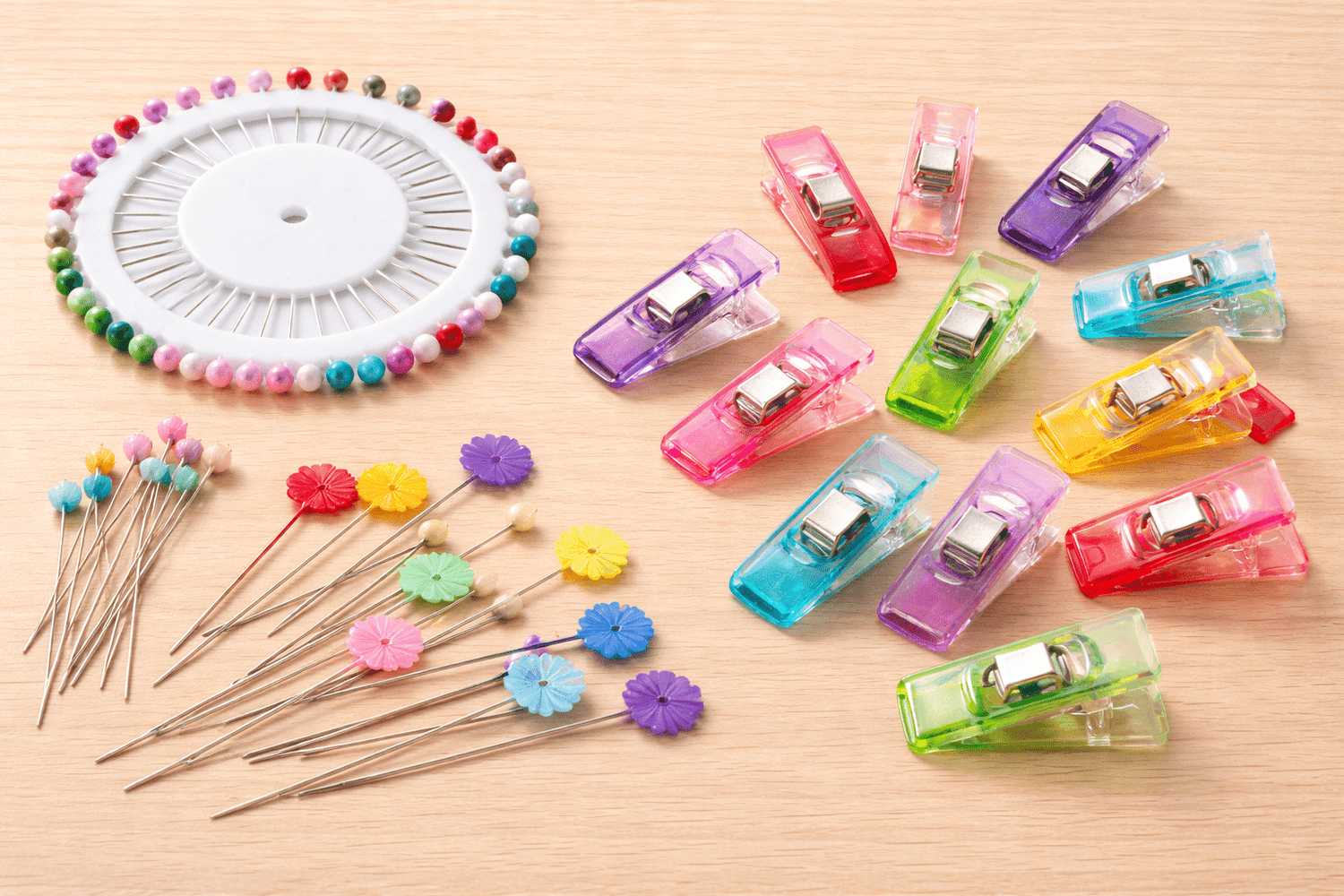
The sewing pins remain the reference tool for most fabrics. They offer unmatched precision when well chosen.
Main sewing pins and their uses
There are several types of pins, each suited to a specific use:
- Universal pins: for medium fabrics (cotton, linen)
- Fine pins: ideal for delicate fabrics
- Long pins: quilting and patchwork
- Flat-head pins: practical under the presser foot
Which pins to choose according to fabric type?
Thin fabrics require fine pins to avoid marking, while medium fabrics tolerate standard pins. Pins remain the most precise solution to keep layers perfectly aligned.
Sewing clips: when and why to use them?
The sewing clips are often presented as a universal alternative to pins. In reality, their effectiveness depends greatly on the type of material used.

Advantages of sewing clips compared to pins
The clips have undeniable advantages, but only in specific cases:
- No holes or fabric marks
- Excellent for non-pierceable materials
- Safe for fingers
- Easy to handle
Sewing clips: for which fabrics are they really recommended?
Sewing clips are highly recommended for:
- leather
- faux leather
- felt
⚠️ However, for most other fabrics (cotton, viscose, linen, light jersey), clips:
- hold much less precisely
- can allow layers to slip
- are less effective on curves and thin edges
- Leather / faux leather / felt → recommended clips
- Other fabrics → more reliable sewing pins
Pins or clips: which to choose according to your sewing project?
There is no universal answer. The right choice always depends on the fabric, the project, and the expected level of precision.
Comparison of sewing pins vs sewing clips
| Criterion | Sewing pins | Sewing clips |
|---|---|---|
| Lightweight fabrics | ✔️ Excellent hold | ❌ Not very precise |
| Medium fabrics | ✔️ Ideal | ⚠️ Possible slipping |
| Leather / faux leather | ❌ Marking | ✔️ Recommended |
| Precision | Very high | Medium |
| Fabric marking | Possible | None |
This table allows you to quickly see which type of pins or clips to choose depending on the situation.
Which solution should beginners prioritize?
To start, the best solution is to have both. Sewing pins help you learn precision, while clips secure certain specific materials.
How to properly use your pins or clips in sewing?
Even the right accessory can be ineffective if used incorrectly. The technique matters as much as the tool.
The right techniques for pinning fabric correctly
- Pin perpendicular to the seam
- Space regularly
- Remove pins before the needle passes when machine sewing
- Match the pin size to the fabric
Tips for using clips without hindering sewing
Clips must be placed further from the seam line and removed early enough. They should never go under the presser foot.
Bonus for What type of pins or clips to choose?
This section allows you to go further and optimize your sewing comfort.
Useful complementary sewing accessories
- Magnetic pin holder
- Compartment box
- Fine precision tweezers
Sewers’ tips to gain precision
Experienced sewers always adapt their tool to the fabric, without automatic habits. This is often what makes the difference between amateur work and professional finishing.
Conclusion: choosing the right sewing pins or clips
Knowing what type of pins or clips to choose is an essential skill in sewing. Pins remain the most precise solution for most fabrics, while clips are essential for leather, faux leather, and felt. By understanding their real uses and limitations, you gain precision, efficiency, and finishing quality on all your projects.
FAQ on What type of pins or clips to choose?
Do clips completely replace pins?
No, they are less precise on most fabrics.
Are clips essential in sewing?
They are essential for leather and faux leather, but not for all projects.
Do pins always damage the fabric?
No, if they are fine and suitable for the fabric.
Can you mix pins and clips on the same project?
Yes, it is even recommended depending on the areas and materials.
Do sewing clips damage the fabric?
No, they do not damage the fabric if used correctly.
What size pins should you choose to start?
Fine universal pins with colored heads are ideal.
Do the clips go under the machine foot?
No, they must be removed before sewing.

Leave a comment
This site is protected by hCaptcha and the hCaptcha Privacy Policy and Terms of Service apply.