



Table of Contents:
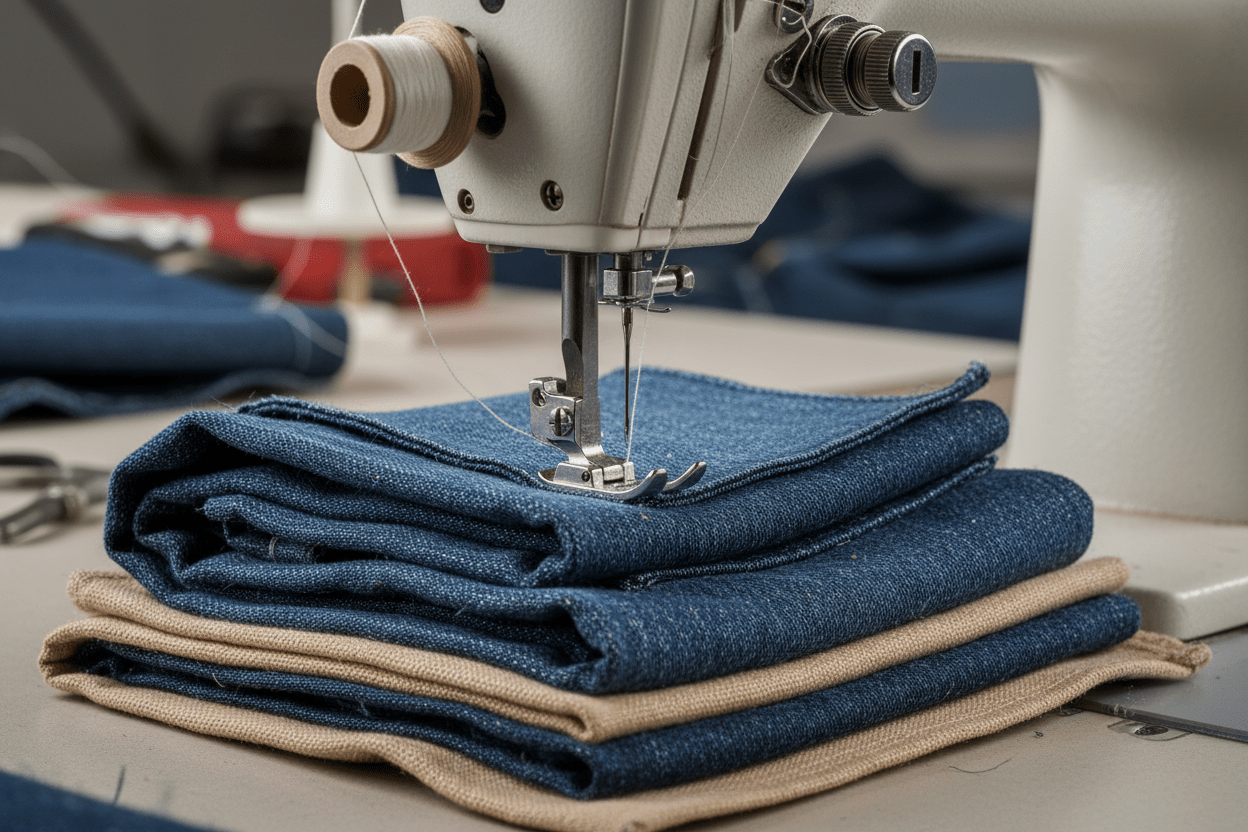
Sewing thick fabrics can seem difficult, especially when you are just starting out in sewing with a sewing machine. These sturdy materials require more power, precision, and suitable equipment to achieve a neat result.
Depending on the fabric used - denim, heavy canvas, faux leather, or velvet - the techniques may vary. It is therefore important to have the right equipment and adjust your settings.
In this guide, discover how to sew thick fabrics, the right tools to use, and the essential tips for successfully completing your sewing projects.

What are very thick fabrics?
Thick fabrics are often used for sturdy and durable projects.
They include denim, canvas, thick velvet, faux leather, and certain upholstery fabrics. These materials are more resistant but also more difficult to handle.
Their thickness can make sewing more complex, particularly where layers of fabric overlap.
Which thread should you choose for thick fabrics?
Choosing the right thread is essential to ensure strong seams.
It is recommended to use a strong polyester thread or a thread specially designed for thick fabrics. This type of thread can withstand the tension and stress placed on the fabric.
For visible topstitching, you can choose a thicker thread to achieve an attractive and durable finish.

Which needle should you choose?
The needle must be suitable for the thickness of the fabric.
It is recommended to use a sturdy needle, such as a special denim needle or a universal needle in size 90 to 110.
A needle that is too thin could break or fail to penetrate the fabric properly, which could damage your machine.
A few sewing tips
Sewing thick fabrics requires a few adjustments to achieve a neat result.
It is recommended to sew slowly to avoid putting too much strain on the machine.
Use a suitable presser foot, such as a walking foot, to make it easier for the fabric to pass through.
Do not hesitate to use a sewing hammer to flatten areas that are too thick before sewing.
Finally, adjust the stitch length by increasing it slightly to avoid weakening the fabric.
Thick fabrics: strength and structure for durable creations
Sewing thick fabrics allows you to create sturdy, durable, and perfectly structured projects. At Verotex, we offer a selection of fabrics suited to the most demanding creations: denim, canvas, velvet, and faux leather, carefully chosen for their quality and durability. With the right equipment, these materials become accessible and provide a professional finish.
Whether you want to sew a bag, a garment, or a decorative accessory, you will find fabrics and essentials suited to your needs at Verotex. When properly worked, thick fabrics provide neat, strong, and durable finishes, ideal for creations that stand the test of time.
Conclusion
Sewing thick fabrics requires some technique, but remains accessible with the right tools and settings.
By choosing a suitable needle and strong thread, and working precisely, you can create sturdy and durable projects.
With a little practice, you will be able to master these materials and expand your sewing creations.
FAQ - How to sew thick fabrics?
Which fabrics are considered thick?
Denim, canvas, thick velvet, or faux leather.
Which needle should you use?
A denim or universal needle (90-110).
Which thread should you choose?
A strong polyester thread.
Why is my machine jamming?
The fabric is too thick or the settings are not suitable.
Can thick fabrics be sewn easily?
Yes, with the right tools and by taking your time.


Leave a comment
This site is protected by hCaptcha and the hCaptcha Privacy Policy and Terms of Service apply.