









Table of Contents:
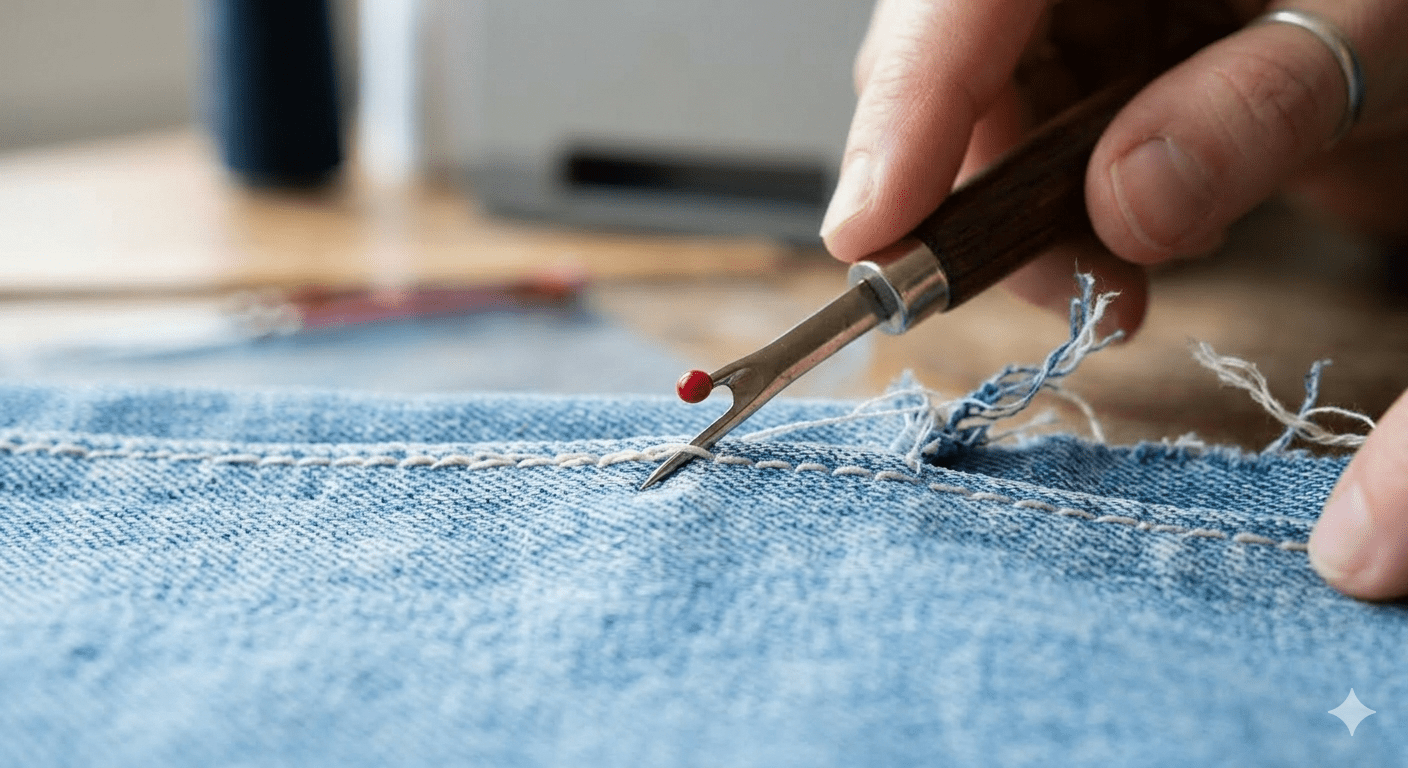
How to unpick your seams? This is a question that all sewing enthusiasts ask themselves at some point. Making a mistake in sewing is completely normal, but you still need to know how to correct it neatly without damaging the fabric.
Unpicking a seam requires precision and the right tools. A poor technique can lead to holes, pulled threads, or weakened fabric. It is therefore essential to know the right methods for unpicking effectively.
In this article, you will discover how to unpick your seams easily, the tools to use, the steps to follow, and tips for achieving a clean result.
Why learn how to unpick your seams?

Knowing how to unpick your seams is essential in sewing, whether you are a beginner or experienced.
The main advantages:
- correct mistakes
- adjust a garment
- improve the quality of the finish
- avoid starting a project over
Unpicking is an integral part of the sewing process.
Tools for easily unpicking a seam
Before getting started, it is important to have the right tools.
Here are the essentials:
- Seam ripper: the main tool for removing seams
- Fine scissors: for cutting threads
- Tweezers: for removing small threads
- Needle: for delicate areas
The haberdashery accessories offered by specialists such as Verotex help improve precision and comfort.

How to unpick your seams step by step?
To unpick correctly, it is important to follow a method.
1. Unpick flat (the safest method)
This technique is ideal for all fabrics.
Steps:
- cut one stitch every 2-3 cm
- pull gently on the thread
- remove the remaining threads
This is the cleanest and safest method.
2. Unpick by pulling the threads (quick method)
only for thick fabrics (denim, canvas)
Steps:
- break the backstitch
- pull the upper thread
- pull the lower thread
Very quick but risky on thin fabric.
3. Unpick with a seam ripper
Steps:
- slide the seam ripper under the threads
- cut every other thread
- pull gently
Quick technique but requires precision.
Take your time to avoid damaging the fabric.
How do you unpick an overlock stitch?
Unpicking an overlock stitch (a seam made with an overlocker) requires a little more precision because several threads are interwoven.
What is it used for?
The overlock stitch protects the fabric edges and prevents them from fraying.
How do you unpick an overlock stitch?
- identify the different threads (3 or 4)
- cut the threads of the main needles
- pull gently on the threads
- work slowly
- remove the small remaining threads
How do you remove marks left by the needle?

After unpicking, small marks may remain on the fabric. Fortunately, they disappear easily.
How do you remove needle marks?
- steam-iron the fabric if its composition allows it
- slightly dampen, then iron
- gently rub with your fingernail
- wash the fabric if necessary
Tip: natural fabrics such as cotton recover more easily.
Table: techniques for unpicking according to the fabric
| Fabric | Recommended technique |
|---|---|
| Cotton | classic seam ripper |
| Jersey | unpick gently, one thread at a time |
| Denim | scissors + seam ripper |
| Silk | fine needle |
This table helps you better understand how to unpick your seams depending on the fabric.
Mistakes to avoid when unpicking
Some mistakes are common:
- pulling too hard
- cutting the fabric
- going too fast
- not using the right tool
Taking your time is essential.
Conclusion
Knowing how to unpick your seams is an essential sewing skill. It allows you to correct mistakes, improve your creations and work more precisely.
With the right tools and techniques, unpicking becomes a simple and effective step. By taking the time to work carefully, you will avoid damaging your fabrics and quickly improve your sewing skills.
FAQ on how to unpick your seams
What tool should you use for unpicking?
A seam ripper is the most suitable tool.
Can you unpick without damaging the fabric?
Yes, by working gently and precisely.
How do you unpick a strong seam?
Cut several threads before pulling gently.
What should you do after unpicking?
Remove the remaining threads and iron the fabric.


Leave a comment
This site is protected by hCaptcha and the hCaptcha Privacy Policy and Terms of Service apply.