















Table of Contents:
Taking your measurements is an essential step in sewing. Whether you want to make a garment or adjust a pattern, accurate measurements help you achieve a well-fitting and comfortable result.
Taking measurements incorrectly can result in a garment that is too tight, too loose, or poorly proportioned. It is therefore important to know the right techniques and use suitable equipment.
In this guide, discover the necessary equipment, the basic body measurements, as well as the mistakes to avoid to take your sewing measurements successfully.

What equipment should you use?
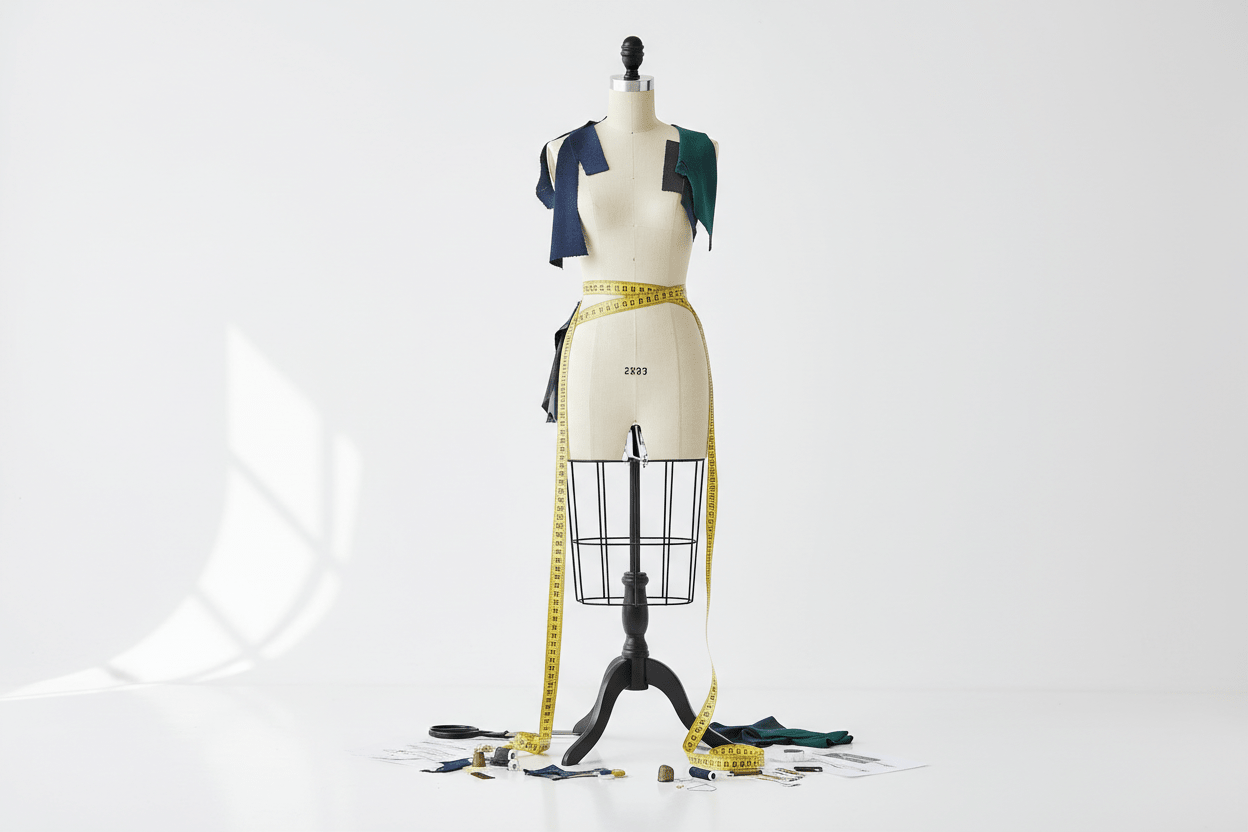
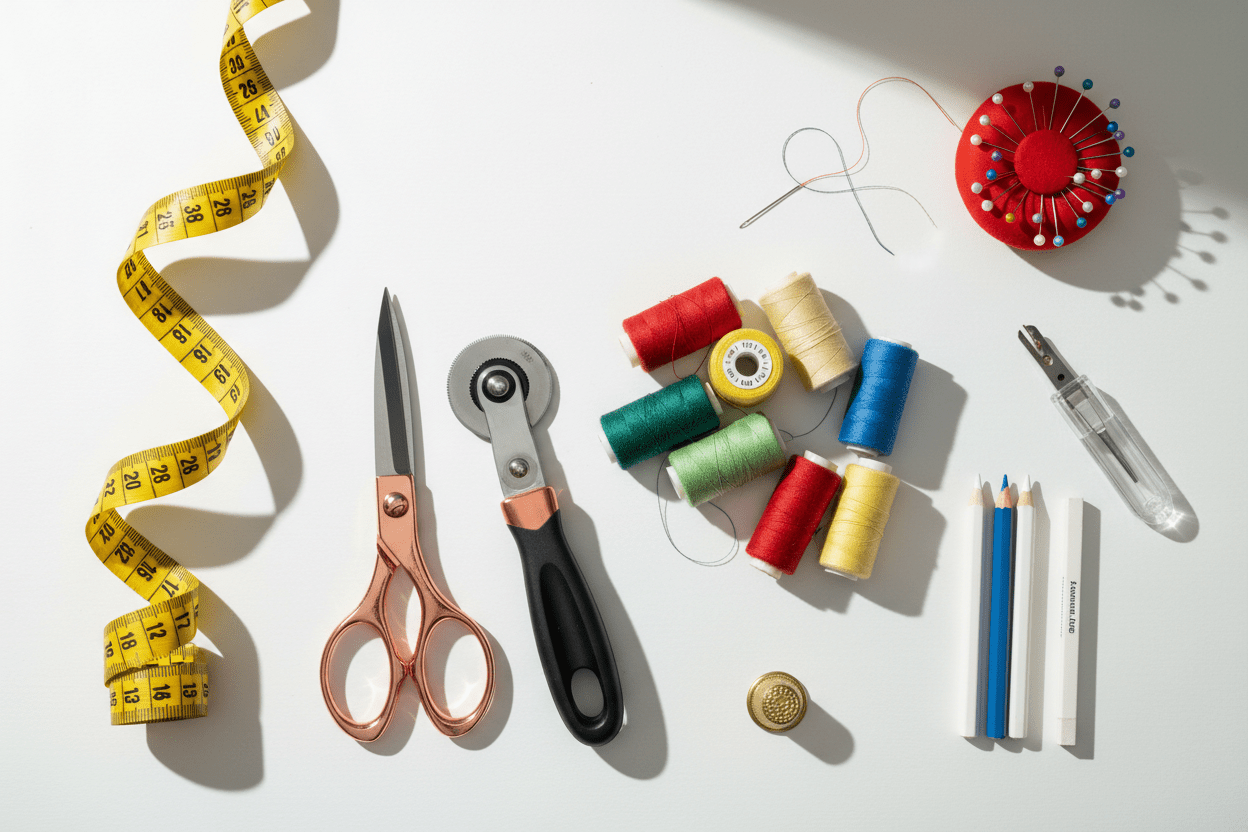
To take your measurements correctly, it is important to use suitable tools. The right equipment provides accurate and reliable results.
Essential tools:
- sewing tape measure
- notebook for recording measurements
- pen
- mirror (optional but useful)
The tape measure is the main tool. It should be flexible enough to fit the body's contours properly.

Basic body measurements: how do you take them?
Some measurements are essential for making most sewing projects. They allow you to adjust a pattern correctly to your body shape.
The main measurements to take:
- bust measurement
- waist measurement
- hip measurement
- arm length
- leg length
For each measurement, the tape measure should be placed at the exact point without pulling it too tight.
For example:
- The bust measurement is taken at the fullest point.
- The waist measurement is taken at the narrowest point.
- The hip measurement is taken at the widest point.
These measurements are essential for creating a well-fitting garment.
How do you determine the pattern size based on your measurements?
Once the measurements have been taken, it is important to compare them with the pattern's size chart.
Each pattern brand has its own size equivalents. It is therefore essential to refer to the information provided.
The steps to follow:
- compare your measurements with the chart
- choose the closest size
- adjust if necessary
It is sometimes recommended to choose a size slightly larger for greater comfort.
What mistakes should be avoided when taking your measurements?
Some mistakes can distort the measurements and compromise the final result.
The most common mistakes:
- pulling the measuring tape too tight
- taking measurements over thick clothing
- not standing up straight
- forgetting to record the measurements
These errors can lead to incorrect garment adjustments.
Conclusion
Taking your measurements for sewing is an essential step to successfully completing your projects and achieving a well-fitting garment. Although this may seem simple, this stage requires precision and a little method to avoid mistakes. A well-positioned measuring tape, a natural posture and accurately recorded measurements make all the difference to the final result.
By understanding the basic measurements and knowing how to use them to choose a pattern, you become more efficient and comfortable when creating your projects. This also helps limit alterations and achieve a more professional result from the outset.
Over time, taking your measurements becomes a quick and easy reflex. It is an essential sewing skill that will help you improve and make clothes perfectly suited to your body shape.
FAQ - How to take your measurements for sewing
Should you take your measurements alone or with someone else?
It is preferable to have someone help you obtain more accurate measurements, particularly for the back.
When should you take your measurements?
It is recommended to take your measurements in underwear or close-fitting clothing.
Should the measuring tape be tight?
No, it should be placed loosely so as not to distort the measurements.
Why don’t my clothes fit properly?
This may be due to incorrect measurements or choosing the wrong pattern size.


Leave a comment
This site is protected by hCaptcha and the hCaptcha Privacy Policy and Terms of Service apply.