











Table of Contents:
Knowing all the sewing techniques is not always easy when you’re starting out or want to progress. Between basic sewing techniques, tools, fabrics, and finishes, it’s easy to feel lost with all the possibilities.
Don’t worry, we guide you step by step! Whether you want to learn to sew easily or improve your creations, you just need to know the right moves and use the right tools.
In this complete sewing guide, discover all the essential steps to know all the sewing techniques, understand the types of sewing stitches, and successfully complete your projects with ease.
Sewing techniques

Needles
We don’t always think about it, but the choice of needle is crucial in a sewing project. An ill-suited needle can make sewing difficult or damage the fabric.
Each fabric requires a specific needle. Fine fabrics need fine needles, while thicker fabrics like denim require sturdier needles. Stretch fabrics, on the other hand, need special needles to avoid stretching or damaging them.

Threads
The thread is at the heart of all sewing projects. It allows fabrics to be joined and plays a key role in the strength of your creation.
There are different types of threads, each with its own use. Polyester thread is the most common and suitable for most fabrics. Cotton thread is ideal for natural materials, while some stronger threads are recommended for thick fabrics.

Taking your measurements
Before making a garment, it is essential to take your measurements correctly. This step is often overlooked, but it is crucial to achieve a result that fits your body shape.
Usually, you just need to measure the bust, waist, and hips, as well as certain lengths depending on the project. These measurements will help you choose the right pattern size and avoid major adjustments.

Sewing stitches to know
There are many types of sewing stitches, but some are essential. They allow you to complete most projects, even as a beginner.
The straight stitch is the most used for joining fabrics. The zigzag stitch is used for stretch fabrics and to reinforce edges. The invisible stitch is perfect for discreet hems, while the overlock stitch prevents fabric from fraying.

Fabrics and their specificities
Not all fabrics are worked the same way. That’s why it’s important to adapt your technique to the material used.
Cotton is often recommended for beginners because it is easy to handle. Denim requires more precision and appropriate equipment. Silk, being more delicate, demands patience and accuracy. Stretch fabrics, meanwhile, require specific stitches to avoid distorting the material.

Essential equipment
Having the right equipment completely changes the sewing experience. It makes working easier and results in a neater finish.
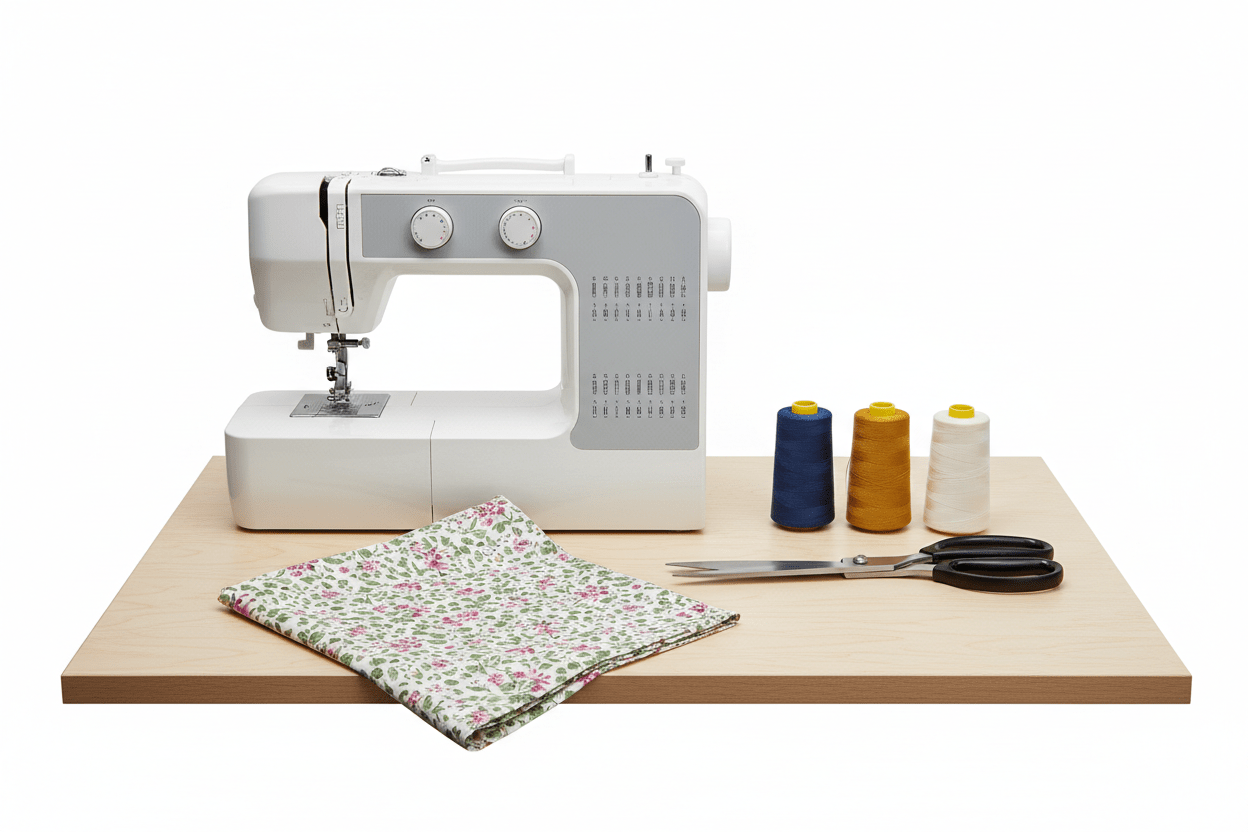
A reliable sewing machine, such as the Juki DX3, DX5, or DX7 models, is an excellent starting point. Add to that suitable needles, quality thread, precise scissors, and some measuring tools.

All about stuffing
Stuffing is not just about filling a cushion. There are different techniques to distribute it evenly and achieve a uniform finish.
It is important not to pack the material too tightly to maintain volume, while ensuring the stuffing is well distributed in the corners. Depending on the project, the density and amount used may vary.

Choosing your stuffing
When making cushions, stuffed toys, or decorative items, the choice of stuffing is essential. It will influence the comfort, firmness, and final appearance of your creation.
There are several types of stuffing, such as synthetic fibers, foam, or natural materials. Fibers are ideal for soft cushions, while foam is better suited for projects that require more structure.

Customizing fabric
Sewing also allows you to unleash your creativity. Customizing fabric is an excellent way to make your creations unique.
You can add embroidery, appliqués, or even dye your fabric to give it new life. It is also a good solution to transform or upcycle clothes you no longer wear.
Practice sewing
Sewing is learned primarily through practice. The more you practice, the more precise and confident you become.
Start with simple exercises, like sewing straight lines or corners, before moving on to more complex projects. This will allow you to gradually master the technical gestures.

Ripping seams
Making a mistake in sewing is completely normal. Knowing how to rip seams cleanly is therefore an essential skill.
For this, simply use a seam ripper and gently remove the stitches without damaging the fabric. This step requires a bit of patience, but it allows you to easily correct a seam.

Choosing your dress form
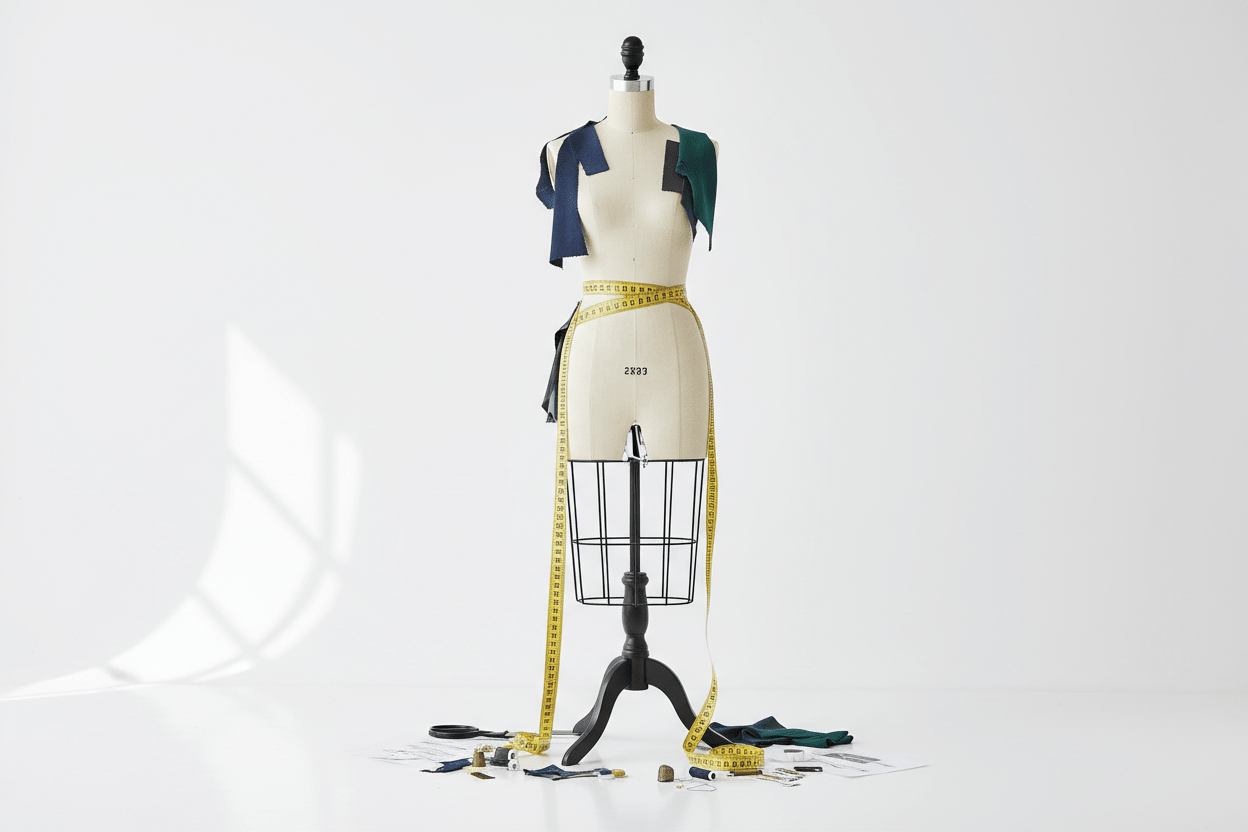
The dress form is a very useful tool, especially if you make clothes. It allows you to visualize the final result and easily adjust your creations.
There are different types of dress forms, adjustable or fixed. An adjustable dress form is ideal to fit your body shape, while a fixed model is suitable for occasional use.

Choosing your zipper
The zipper, or zip, is an essential element in many projects. It must be chosen carefully to suit your creation.
There are several types of closures: invisible, separable, or classic. The choice depends on the garment or accessory you are making. An invisible zipper is ideal for a dress, while a classic zipper is suitable for a bag or jacket.

Which shirt collar to choose?
Choosing the collar is an important step in making a shirt. It directly influences the style and look of the garment.
Some collars are more classic, like the French collar, while others bring a more modern or casual touch. The choice depends on your style, but also on your face shape and the garment’s use.
Different pleats in sewing
Pleats add volume, movement, or style to a garment. They are often used in skirts, pants, or dresses.
There are several types of pleats, such as knife pleats, box pleats, or accordion pleats. Each type of pleat has a different function, whether for aesthetics or to add ease.

How to match fabric?
When working with patterned fabrics, matching is an important step. It allows you to align the patterns correctly for a harmonious look.
To achieve a match, you need to take the time to position the pattern pieces respecting the fabric design. It requires some precision, but the result is worth it.
Conclusion
Learning to know all sewing techniques happens gradually, by taking the time to understand each step. By mastering basic sewing techniques, then discovering types of sewing stitches and fabric specifics, you develop solid skills.
The important thing is to practice regularly and stay curious. Every project is a new opportunity to learn and improve.
Over time, you will be able to know all sewing techniques and create projects that truly reflect you.
FAQ about knowing all sewing techniques
How to start sewing?
Start with simple projects and basic stitches.
What equipment is necessary?
A machine, thread, needles, and scissors are enough to start.
What are the essential stitches?
The straight stitch, zigzag, and invisible stitch.
Can you learn on your own?
Yes, with regular practice.
Do you need to know everything?
No, progress according to your needs and projects.

Leave a comment
This site is protected by hCaptcha and the hCaptcha Privacy Policy and Terms of Service apply.