






Table of Contents:
What are the different sewing rulers? In sewing, precision is essential for achieving a neat, professional result. To do this, it is essential to use suitable tools to measure, trace, and adjust your fabric pieces.
Sewing rulers are not only used for measuring: they also allow you to reproduce shapes, draw curves, and create perfectly straight hems. Each tool has a specific function and makes certain stages of garment making easier.
In this article, you will discover the different types of sewing rulers, what they are used for, and how to use them correctly in your projects.
Why use sewing rulers?
Sewing rulers are essential for working precisely.
They allow you to:
- measure correctly
- draw clean lines
- reproduce shapes
- avoid cutting errors
A good measuring tool considerably improves the final result. It helps achieve greater consistency and precision, even on simple projects.
The Japanese ruler

What is it used for?
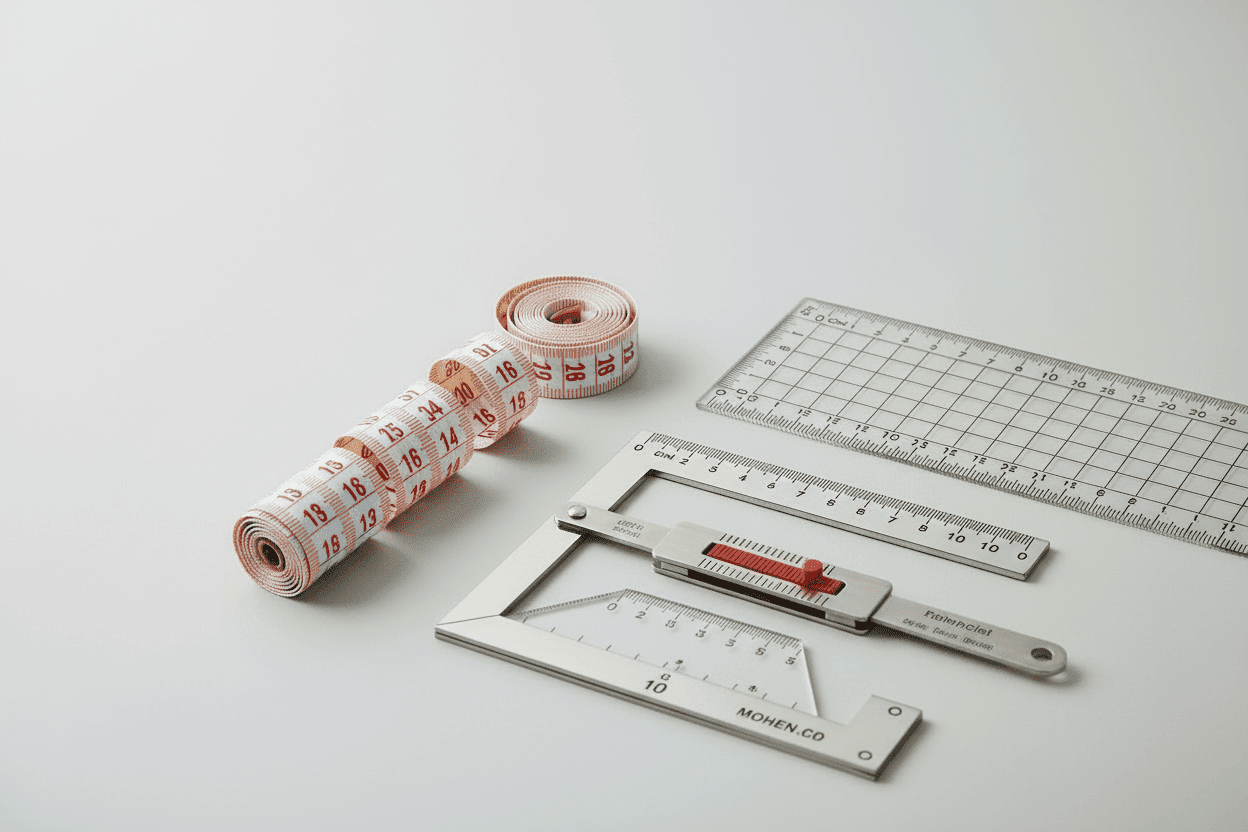
The Japanese ruler is a transparent, graduated ruler widely used in sewing for its precision.
It is ideal for:
- draw straight lines
- measure quickly
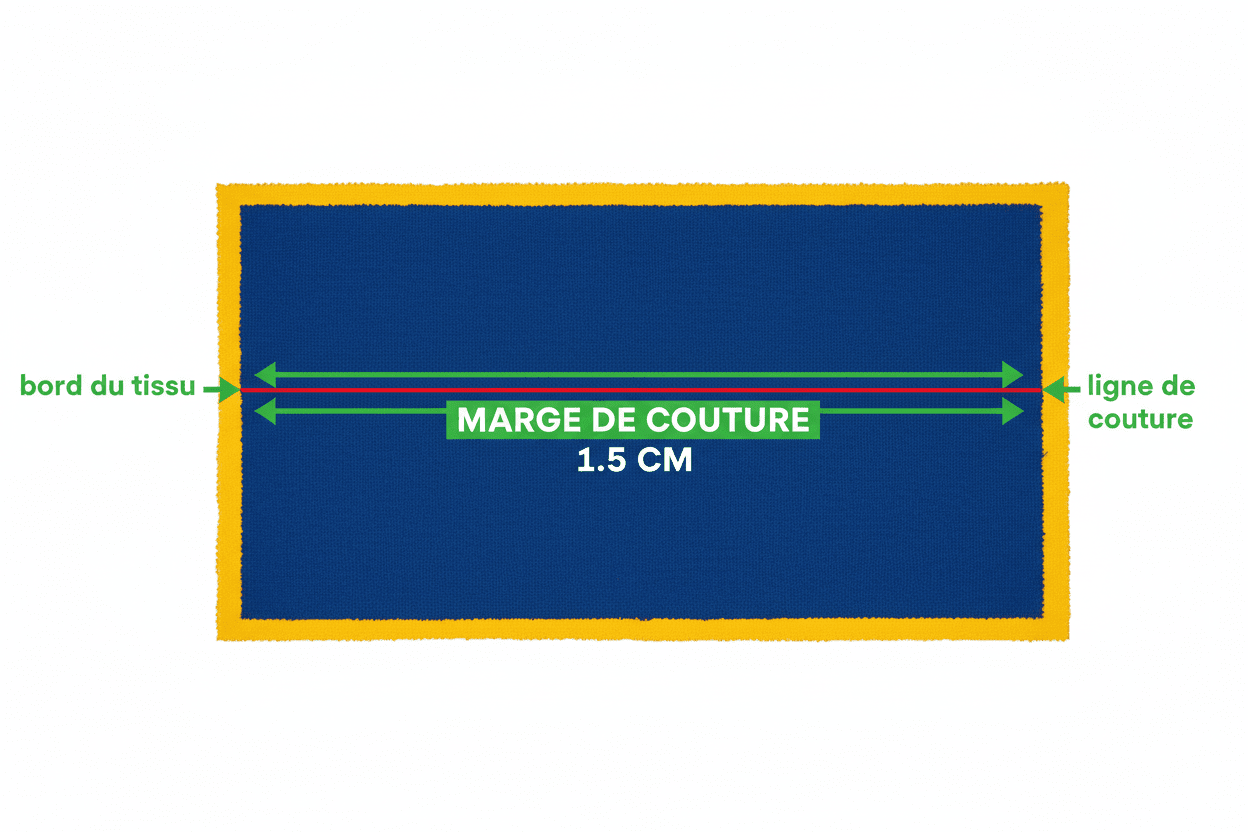
- check seam allowances
How do you use it?
- position the ruler on the fabric
- align the markings with the edge
- trace your line with tailor's chalk or a fabric pen
- hold the ruler firmly to prevent it from moving
The French curve

What is it used for?
The French curve is a curved ruler used to trace rounded shapes.
It is used to:
- armholes
- necklines
- the curves of patterns
How do you use it?
- place the ruler over the area to be traced
- follow the appropriate curve
- trace while keeping the ruler steady
The patchwork ruler

What is it used for?
The patchwork ruler is a rigid, transparent ruler often used with a rotary cutter.
It is ideal for:
- cut fabrics
- draw angles
- work precisely
How do you use it?
- position the ruler on the fabric
- hold it firmly
- cut or trace along the edge
The hem gauge

What is it used for?
The hem gauge makes it easy to measure and mark hems.
It is used to:
- create even hems
- measure small distances
- iron precisely
How do you use it?
- place the ruler on the fabric
- fold the fabric according to the desired measurement
- mark with an iron or chalk
The ruler

What is it used for?
The ruler is a small, highly precise metal ruler.
It is perfect for:
- measure short lengths
- draw accurately
- check seam allowances
How do you use it?
- position it on the area to be measured
- use the graduations to draw
- work precisely
The tape measure

What is it used for?
The tape measure tape is an essential flexible tool for sewing.
It is used to:
- take body measurements
- measure lengths
- follow shapes
How do you use it?
- place the tape around the area to be measured
- hold it without tightening too much
- read the measurement
The set square

What is it used for?
The set square is used to draw perfect right angles.
It is used to:
- draw angles
- check the alignment
- structure a pattern
How do you use it?
- place the set square on the fabric
- align an edge
- draw the right angle
Table: sewing rulers and their uses
| Tool | Use |
|---|---|
| Japanese ruler | straight lines |
| French curve ruler | curves |
| Quilting ruler | cutting |
| Hem ruler | hems |
| Ruler | precision |
| Tape measure | measurements |
| Set square | angles |
This table provides a better understanding of the different sewing rulers.
Essential tools for working precisely
The choice of tools directly affects the quality of the work. Well-designed, suitable rulers save time and help prevent mistakes.
Verotex offers quality sewing equipment, including precise rulers suited to different types of projects, whether for drafting, cutting, or creating patterns.
Conclusion
Understanding the different sewing rulers is essential for making progress and improving precision. Each tool has its own purpose and helps simplify certain stages of the work.
The Japanese ruler is ideal for straight lines, the French curve ruler for curves, while the tape measure remains essential for taking measurements. By using the right tools and taking the time to work precisely, it becomes much easier to achieve a neat, professional finish.
FAQ: what are the different sewing rulers?
Which ruler should you use to draw curves?
The French curve ruler is ideal.
Which ruler should you use for precise measuring?
The ruler is the most precise.
Which ruler is best for beginners?
The Japanese ruler is very versatile.
Is a tape measure essential?
Yes, for taking measurements.


Leave a comment
This site is protected by hCaptcha and the hCaptcha Privacy Policy and Terms of Service apply.