















Table of Contents:
The t-shirt is probably one of the most essential garments in a wardrobe. It is worn all year round, alone in summer, under a cardigan in mid-season, or tucked under a jacket when temperatures drop. It seems like a simple piece, but it still requires a good fabric choice to achieve a comfortable, durable, and pleasant-to-wear result.
When you want to sew a t-shirt, one question almost always comes up right away: which fabric should I use to sew a t-shirt? This question is essential because you can't choose the material at random. A t-shirt must move with the body, stay flexible, regain its shape, feel pleasant on the skin, and withstand repeated washing. A poorly chosen fabric can make the garment uncomfortable, too stiff, or hard to put on.
The vast majority of t-shirts are made from knit fabrics, especially jersey, a material known for its softness, natural stretch, and comfort. Cotton jersey, cotton-spandex jersey, viscose jersey, and French Terry are among the most popular options for making everyday t-shirts.
The different types of t-shirts
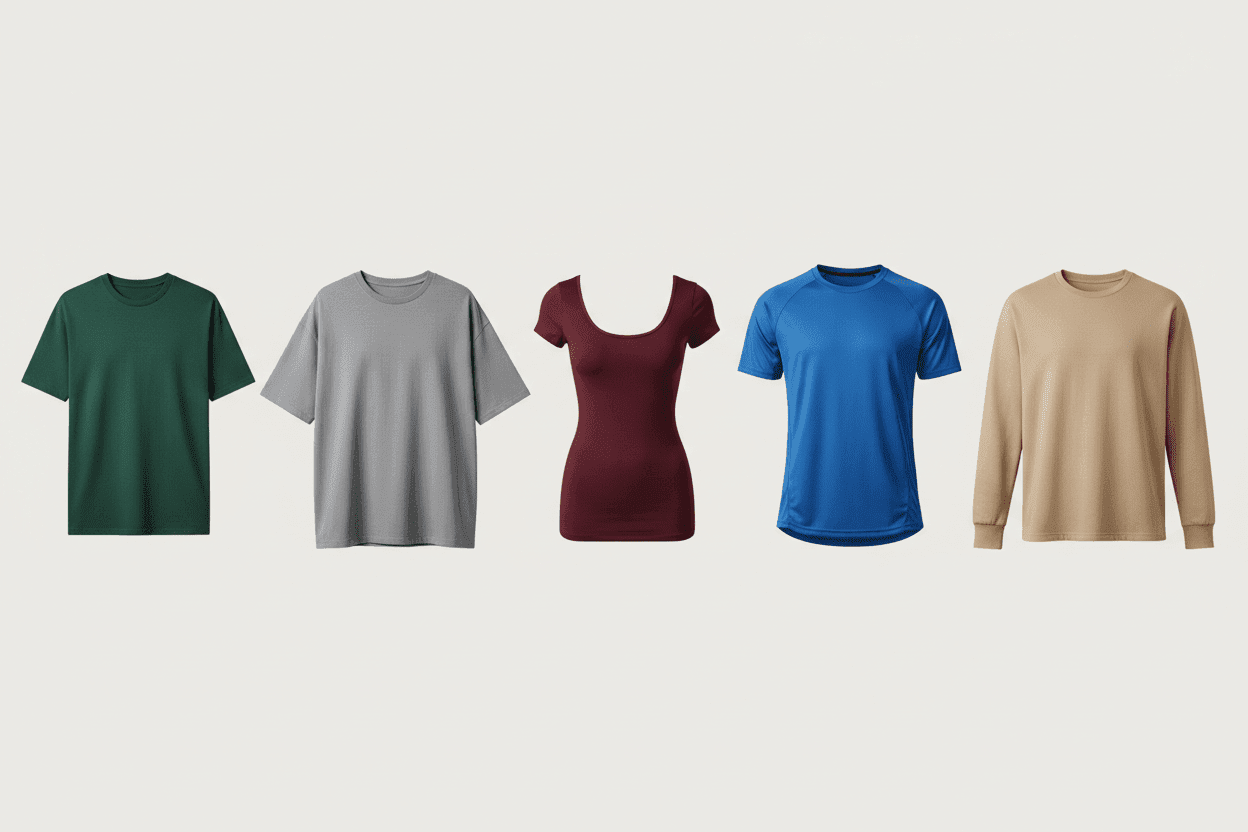
Before choosing the fabric, it is important to know the main types of t-shirts. Each style may require a slightly different material to achieve the right drape and desired level of comfort.
Here are some popular t-shirt styles:
- Classic t-shirt: straight cut, short or long sleeves
- Oversize t-shirt: loose and modern cut
- Fitted t-shirt: close to the body
- Sports t-shirt: designed for physical activities
- Long-sleeve t-shirt: more suitable for cold seasons
Each style slightly influences the choice of fabric. For example, a fitted t-shirt often requires a more stretchy fabric than an oversize model.
Why is the choice of fabric so important for a t-shirt?
A t-shirt seems simple, but that’s exactly what makes it demanding. On such a basic piece, the smallest detail shows: a neckline that puckers, seams that pull, a hem that twists, a fabric that’s too thick or too soft… all of this can affect the final result.
Fabric influences:
- the shape of the t-shirt;
- how it drapes on the body;
- the feel when worn;
- the durability of the finishes;
- ease of sewing.
A lightweight jersey will give a soft, flowing, and very pleasant t-shirt for summer. An interlock or a thicker jersey will provide more structure. A fabric with a bit of elastane will suit a fitted cut better. Conversely, an oversized t-shirt can work very well with a more stable jersey.
In other words, you don’t just choose a fabric because it looks nice: you choose it because it matches a pattern, a cut, and a specific use.
Which fabric to use for sewing a t-shirt according to style?
The choice of fabric also depends on the type of t-shirt you want to make. A basic t-shirt, a sports model, or a looser garment won’t necessarily use the same materials.
For sewing a t-shirt, it is highly recommended to use knit fabrics rather than woven fabrics. Unlike traditional fabrics, knits are naturally stretchy, allowing the garment to follow body movements without losing shape. At Verotex, you’ll find a wide selection of cotton jerseys, elastane jerseys, and French Terry, perfectly suited for making comfortable and durable t-shirts.

Fabric for classic t-shirts
The classic t-shirt is everyday wear. It prioritizes comfort and breathability to be worn all day long.
Recommended fabrics:
- cotton jersey
- French Terry
- bamboo jersey
To sew a basic, easy-to-wear t-shirt, a plain or slightly stretchy cotton jersey is often the safest choice. This is the type of knit you primarily look for to make a first comfortable and durable top.

Fabric for sports t-shirts
T-shirts designed for sports require breathable fabrics capable of wicking away moisture.
Recommended fabrics:
- technical polyester
- breathable synthetic jersey
- sports microfiber
These materials help keep you dry during exercise.

Fabric for fitted t-shirts
The fitted t-shirt hugs the body shape more closely. It therefore requires a stretchier fabric to ensure comfort and freedom of movement.
Recommended fabrics:
- cotton jersey
- French Terry
- viscose elastane jersey
These fabrics allow you to create a fitted t-shirt that remains comfortable to wear.

Fabric for long-sleeve t-shirts
Long-sleeve t-shirts are often worn in autumn or winter. The fabric should therefore provide a bit more warmth while remaining comfortable.
Recommended fabrics:
- interlock
- thick cotton jersey
- cotton jersey
- French Terry
These fabrics offer good structure and optimal comfort for cooler seasons.

Fabric for crew neck t-shirt
The crew neck t-shirt is the most classic and widespread model. It is appreciated for its simplicity and comfort, making it an excellent choice for beginners in sewing.
This type of t-shirt doesn’t necessarily require a very stretchy fabric, but it should remain pleasant to wear daily.
Recommended fabrics:
- cotton jersey
- cotton elastane jersey
- interlock
These fabrics allow you to create a comfortable, breathable, and easy-to-sew t-shirt.

Fabric for V-neck t-shirt
The V-neck t-shirt adds a more elegant and modern touch. It requires a bit more precision when sewing, especially around the neckline.
The fabric choice is similar to that of the classic t-shirt, but a slightly stretchy material is preferable for a clean finish.
Recommended fabrics:
- cotton jersey
- cotton elastane jersey
- viscose jersey
These fabrics allow you to get a flowing t-shirt with a nice collar structure.

Fabric for oversize t-shirt
The oversize t-shirt is characterized by a wide and relaxed cut. It doesn’t cling to the body, which allows the use of fabrics that are a bit less stretchy.
This type of t-shirt is often chosen for a modern and comfortable style.
Recommended fabrics:
- thick cotton jersey
- French Terry
- cotton jersey
These fabrics allow you to create a t-shirt with good structure and a defined shape. If you like modern and relaxed cuts, the oversize t-shirt is an excellent base. A slightly denser jersey or a light French Terry immediately gives the garment more presence.

Fabric for Tunisian collar t-shirt
The Tunisian collar t-shirt is recognized by its neckline with a button placket. It offers a style that is both casual and refined, between the classic t-shirt and the shirt.
This type of model requires a comfortable fabric, but also stable enough to maintain the structure of the collar and button placket.
Recommended fabrics:
- cotton jersey
- cotton elastane jersey
- interlock
These fabrics allow you to create a comfortable t-shirt while ensuring good collar structure.

Fabric for tank top
The tank top is a lightweight version of the t-shirt, ideal for summer. It requires a soft, breathable fabric that feels pleasant against the skin.
Recommended fabrics:
- cotton jersey
- viscose jersey
- bamboo jersey
These fabrics allow you to create a light and comfortable tank top, perfect for hot weather.

Fabric for pocket t-shirt
The pocket t-shirt allows you to add an aesthetic and personalized touch. The main fabric remains classic, but the pocket can be made from a different material to create contrast.
Recommended fabrics:
- cotton jersey
- cotton elastane jersey
- contrasting fabrics for the pocket
These fabrics allow you to create an original t-shirt while staying comfortable.

Fabric for Breton t-shirt
The Breton t-shirt is a timeless classic inspired by nautical style. Recognizable by its horizontal stripes, it adds an elegant and timeless touch to an outfit.
This type of t-shirt requires a comfortable, breathable fabric that is stretchy enough to follow movements while maintaining a nice stripe pattern.
Recommended fabrics:
- striped cotton jersey
- striped cotton elastane jersey
- striped interlock
These fabrics allow you to create a comfortable Breton shirt with a clean and structured look.
What characteristics should a t-shirt fabric have?
To understand which fabrics to use for sewing a t-shirt, it is important to know the properties this type of fabric must have.
A good t-shirt fabric should have several characteristics:
- natural elasticity
- breathability
- softness against the skin
- wash resistance
- suitable weight
The weight of a t-shirt fabric is generally between 150 and 200 g/m², which offers a good balance between lightness and durability.
How much fabric should you allow?
The amount depends on the pattern and your size:
- Short-sleeve t-shirt → 60 cm to 1 m
- Long-sleeve t-shirt → about 1.20 m
- Oversized t-shirt → allow a bit more (up to 1.50 m)
Tip: if your fabric has patterns or matching designs, always allow extra margin.
Which accessories should you prioritize?
Sewing a t-shirt requires some specific accessories to properly work with stretch fabrics.
Here are the most useful accessories:
- special jersey needle
- polyester thread
- sewing scissors
- fine pins or sewing clips
- sewing machine with stretch stitch
These tools make it easier to sew stretch fabrics and achieve strong seams. To regularly sew t-shirts and knits, it is useful to have a machine capable of making clean and even stretch stitches. A machine like a Juki DX5 or a Juki DX7 can provide real comfort for everyday sewing, especially for hems, neckline finishes, and assembling stretch fabrics.
The most used fabrics to sew a t-shirt
Certain materials are particularly popular in t-shirt making because they offer comfort, breathability, and durability.
| Fabric | Properties | Use |
|---|---|---|
| Cotton jersey | soft and breathable | everyday t-shirt |
| Cotton jersey elastane | stretchy | fitted t-shirt |
| Viscose jersey | flowing | lightweight t-shirt |
| Interlock | thick | winter t-shirt |
| Technical polyester | breathable | sport t-shirt |
Finishes for a successful t-shirt
Finishes play a key role in the final look:
- Ribbing → for necklines
- Stay tape → reinforces the neckline
- Double needle hem → professional finish
- Jersey bias tape → for clean and stretchy finishes
A machine like the Juki DX5 or DX7 makes it easy to create regular stretch stitches for clean and durable finishes.
Conclusion
Understanding which fabrics to sew a t-shirt is essential to succeed in a comfortable and durable sewing project. Jersey fabrics like cotton jersey, French Terry, or viscose jersey are the most used because they offer stretch, softness, and breathability. By choosing a t-shirt material suited to the garment style and your sewing skill level, you can create a t-shirt that is both attractive and pleasant to wear. Testing the fabric before sewing and using the right tools remains the best way to succeed in your project.
FAQ on Which fabrics to sew a t-shirt?
What is the best fabric to sew a t-shirt?
Cotton jersey is the most used fabric because it is comfortable, breathable, and easy to sew.
Can you sew a t-shirt with non-stretch fabric?
No, a t-shirt generally requires a stretchy fabric like jersey to be comfortable.
What weight to choose for t-shirt fabric?
A weight between 150 and 200 g/m² is generally ideal for a comfortable t-shirt.
What fabric for a breathable t-shirt?
Cotton jersey or viscose jersey are particularly breathable.
Should fabric be washed before sewing?
Yes, this prevents the fabric from shrinking after the first wash.

Leave a comment
This site is protected by hCaptcha and the hCaptcha Privacy Policy and Terms of Service apply.