















Table of Contents:
You dream of sewing your first creation, but patterns seem incomprehensible? Discover how to choose your beginner sewing pattern thanks to simple, concrete criteria.
Whether you choose a pouch format or a PDF, we reveal the secrets to recognizing a model suited to your skills, with clear explanations, basic techniques, and even video tutorials.
Turn your frustration into success by following a progressive path, from tote bag to flowy blouse, with tips to master the basics without ever getting lost in overly complex steps.
Recognize an easy sewing pattern: the guide to avoid mistakes
Choose a beginner sewing pattern may seem simple, but some details make all the difference between a successful project and a discouraging failure. In this guide, discover how to recognize an easy sewing pattern, the features that reassure beginners, and why the choice of fabric plays a role as essential as the pattern itself for progressing confidently in sewing.
Features of an ideal beginner sewing pattern
To avoid unpleasant surprises, look for elements that turn a pattern into a beginner’s ally. A pattern suited to your level will guide you without frustration. Here are its features:
-
Few pieces to assemble: Fewer pieces mean less risk of confusion. A project like a tote bag or elastic skirt can be limited to 2-3 parts.
-
Mostly straight lines: Curves and panels complicate sewing. Opt for clean lines, like on a loose t-shirt or straight pants.
-
Basic techniques: Beginner patterns exclude technical challenges. No complex darts, shirt collars, or invisible zippers should be included.
-
Clear instructions: The best patterns include detailed diagrams and explanations in clear French. Some even offer video tutorials.
-
No complex alterations: Simple designs (straight dresses, sleeveless tops) avoid body shape adjustments. Perfect for your first project.
Brands clearly indicate the required skill level for each pattern. Their classification (Beginner, Intermediate, etc.) guides you to projects tailored to you.
Your passion for sewing deserves to be perfected. Get started with the Verotex pattern-making course and learn to handle patterns like a professional.

Why is the choice of fabric as important as the pattern?
An easy beginner sewing pattern can become a nightmare if the fabric is poorly chosen. Here is your checklist to avoid pitfalls :
-
Beginners’ allies: Cotton (poplin, chambray, canvas), linen, or lightweight denim offer reassuring stabilityThey don’t slip under the beginner sewing machine and cut easily.
-
Pitfalls to avoid: Stretch fabrics (jersey with elastane), fluid fabrics (silk, satin), or directional fabrics (velvet, patterned with matching seams) multiply challenges. It’s better to save them for later.
Ready-to-sew kits (pattern + fabric) solve this dilemma and prevent combination errors while saving you time. Did you know that 80% of beginners who use these kits succeed with their first projects?
Your learning path: 8 projects to start and the skills to master
Are you new to sewing and looking for a beginner sewing pattern suited to your level? To progress step by step, it’s essential to choose simple projects that gradually develop your skills.
Here are 8 creation ideas, from the first accessory to the first garment, accompanied by a clear summary table to track your progress and confidently master the basics of sewing.
From the first accessory to the first garment: our pattern selection
Hesitant to sew your first project? Know that 90% of beginners succeed with their first creations by following a simple beginner sewing pattern. Fabric choice plays a key role: 75% of avoidable mistakes come from choosing the wrong material.
A tip often overlooked: also make sure you have the right sewing machine accessories, such as presser feet or specific needles, to make your first steps easier.
The tote bag
The tote bag is ideal to master the basicsBy sewing this model, you will learn to make perfect straight seams, manage corners, and finish edges with a simple hem. Choose thick cotton or sturdy canvas for easier handling. This project can even be customized with pockets or reinforced handles.
The elastic waist skirt
The elastic waist skirt introduces you to making casings and inserting elastic. This very easy project allows you to create a comfortable garmentViscose or poplin are ideal for this type of skirt. For a professional finish, plan for an elastic band 2 to 3 cm wide.
The pajama shorts
The pajama shorts introduce the concept of symmetry and crotch assembly. This simple project prepares you to sew garments in soft fabric like cotton or flannel. Use pins to mark the center before sewing, ensuring perfect symmetry. For an even cleaner result, work with a Juki serger and follow a beginner sewing pattern to avoid fraying and progress with confidence.
The sleeveless blouse
The sleeveless blouse guides you in creating smooth curves for armholes and necklines. This easy project is an opportunity tolearn to apply a simple bias. Double gauze or washed linen are ideal choices for this type of top. For a neat finish, press each seam after assembly.
The kimono or simple jacket
The kimono or simple jacket is an accessible challenge to approach sleeves. This project requires handling large pieces of fabric. Poplin or cotton allow you to master this technique without excessive difficulty. To start machine sewing, it is recommended to follow a beginner sewing pattern and take the time to hem before setting in the sleeves to avoid unsightly wrinkles.
Summary table of your sewing progress
|
Project Idea |
Key Skill Acquired |
Difficulty Level |
Recommended Fabrics |
|
Tote bag |
Sew straight and make a hem |
Very easy |
Thick cotton, canvas |
|
Elastic waist skirt |
Create a casing |
Very easy |
Viscose, poplin |
|
Pajama shorts |
Sew a simple crotch |
Easy |
Cotton, washed linen |
|
Simple top |
Attach a neckline bias |
Easy |
Double gauze, flannel |
|
Kimono |
Set in sleeves |
Easy |
Poplin, cotton |
By completing these projects, you will gradually develop your skills. Patterns sorted by level make your progress easier. Remember that each creation is a step toward independence: 85% of beginners master the basics after 3 successful projects.
Their star rating system allows you to identify the technical level at a glance. To progress even more easily, use Juki machines, known for their reliability, with a beginner sewing pattern suited to your level.
To deepen your knowledge, brand video tutorials accompany your first projects. Free guides complement this learning. With these resources, your first garments will have the same professionalism than those of experienced seamstresses.

From the pattern envelope to the PDF: how to choose and understand your first pattern?
Choosing your first beginner sewing pattern is a crucial step to learn confidently. Between printed and PDF patterns, it’s not always easy to know which to favor when starting out. Here are the differences, how to read and properly prepare your pattern before cutting the fabric, so you can succeed in your first sewing projects without stress and with pleasure.
Printed pattern or PDF pattern: which to choose to start?
Unsure between the two formats? Here is a comparison to guide you :
Printed Pattern :
-
Advantages: Ready to use, instruction booklet included, nice aesthetic for collectors. Ideal for fans of tangible items.
-
Disadvantages: Higher cost, overlapping size lines to trace.
PDF Pattern :
-
Advantages: Available immediately after download, cheaper, option to print only your size using layers.
-
Disadvantages: Need for a printer, requirement to assemble A4/A3 sheets.
Why do 80% of beginners choose the PDF? The answer might surprise you, but know that both formats are available if you choose models marked "Beginner."
Reading and preparing your pattern: key steps before cutting
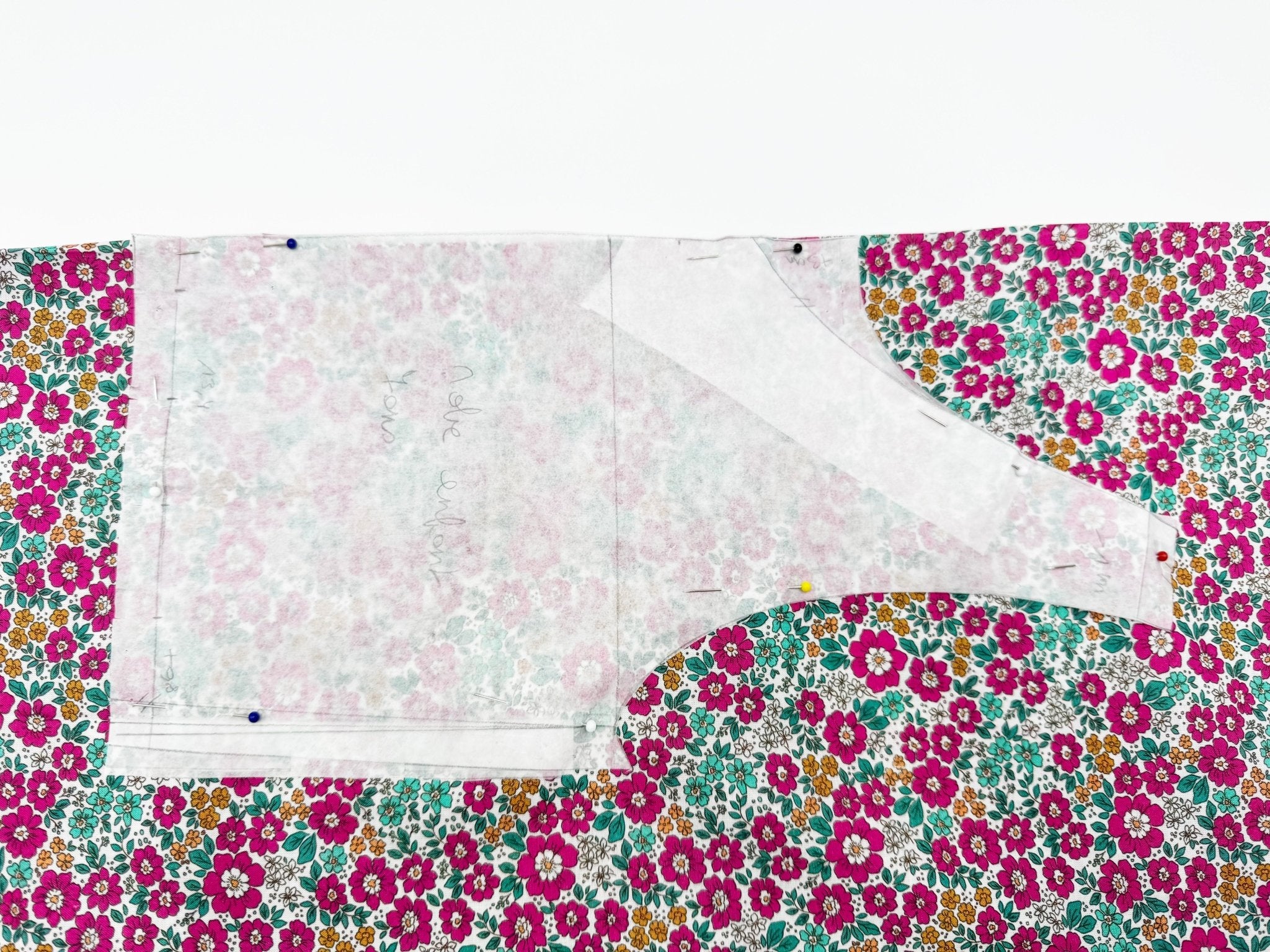
Before picking up the scissors, follow these essential steps :
-
Taking your measurements : Forget your ready-to-wear size! Measure your bust, waist, and hips precisely to match the size chart specific to each pattern.
-
Choosing your size : Compare your measurements with the guide provided by the brand. Note: each brand has its own sizing chart.
-
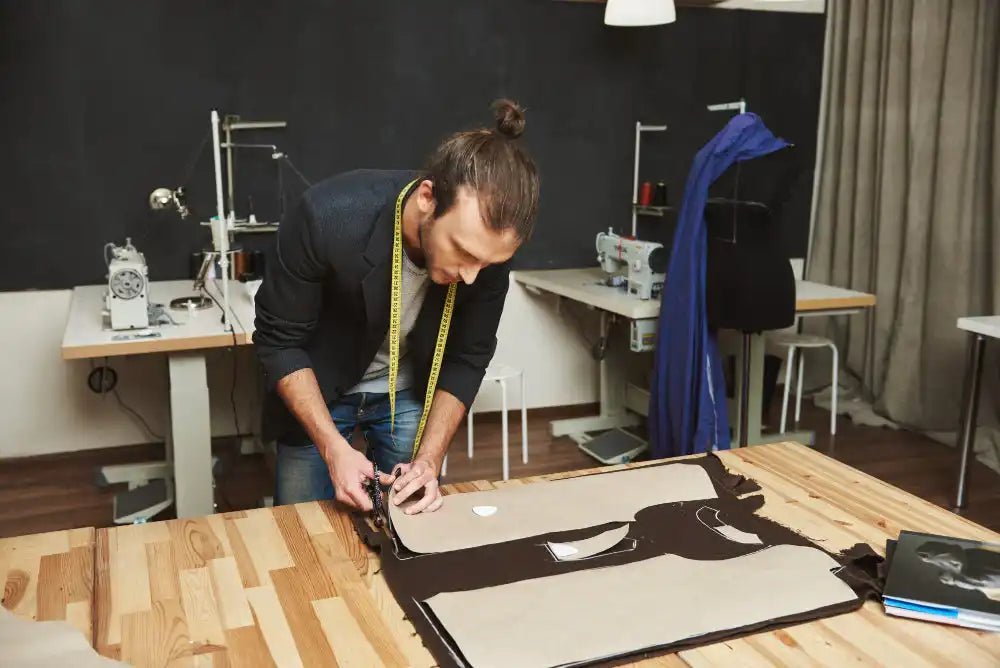
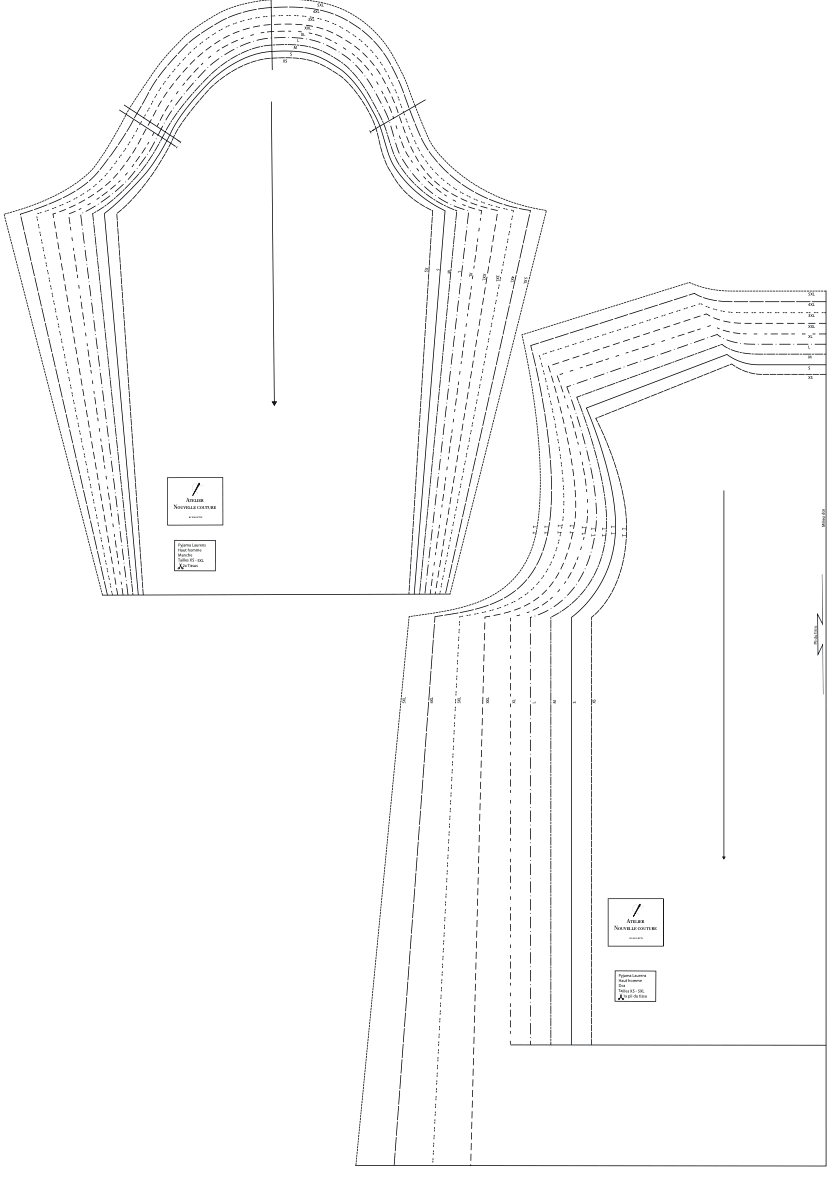
Tracing the pattern : Even though the printed pattern seems simpler, tracing your size remains best practice. This preserves the original pattern and avoids reading errors between overlapping sizes.
-
Understanding the symbols : Get familiar with the grainline markers (aligned with the fabric selvages), notches (to align pieces), and "fold" lines (to place on the fabric fold).
-
Benefit from brand support : Video tutorials explain each step. Maison Fauve’s "Little Guide to Custom Sewing" is an essential free resource for adjustments.
Costly mistakes are avoided if you master these basics. According to a study, 65% of beginners fail due to a poor understanding of the symbols. A tip: keep the sewing tutorials at your fingertips and pick a beginner sewing pattern designed to guide you through each step without stress.
For your first project, choose a cotton or linen, easy to sew and cut. Some kits even include fabric and pattern to avoid mistakes related to choosing unsuitable materials.
Where to find the best beginner sewing patterns?
Finding the right beginner sewing pattern is the key to learning without frustration and progressing quickly. Between specialized brands, free or paid models, the selection is vast and can be overwhelming. This guide helps you identify the best patterns suited for beginners, while discovering complementary resources that make learning easier and encourage you to go further in your sewing projects, from your first accessories to your first garments.
Brands that pamper beginner sewing enthusiasts
Some brands classify their patterns by levels. Some use a 5-level scale (Beginner, Easy, Intermediate, Advanced, and Expert). Others offer three categories: Beginner, Intermediate, and Advanced. This helps choose a project that fits you without getting discouraged.
Sewing kits are perfect for first steps. They include the pattern, fabric, and notions, eliminating the stress of choosing materials. You have everything on hand to succeed in your first project without complications.

Free or paid patterns: what should you know?
Free patterns are an ideal entry point to try sewing without investment. You can easily find them on blogs or through brand offers. However, these models often lack educational details.
Paid patterns offer full support: detailed booklets, video tutorials, and sometimes even customer service. For a beginner, this assistance can make the difference between success and giving up. Taking a sewing class alongside and choosing a beginner sewing pattern helps avoid roadblocks and progress with confidence.
Be careful, price doesn’t always guarantee simplicity. A well-designed free pattern can be more suitable than a complex paid model. The key is to check that the project matches your skill level.
More than just patterns: resources to help you improve
Learning to sew is not limited to patterns alone. A supportive community is waiting to guide you through your beginnings. Here are the essential resources :
-
YouTube channels : find step-by-step video tutorials for every stage.
-
Sewing blogs and Instagram accounts : find inspiration and practical tips.
-
Sewing forums and Facebook groups : ask your questions and connect with fellow enthusiasts.
-
Sewing podcasts and magazines : nurture your passion with expert interviews and educational features.
By combining suitable patterns and educational resources, you’ll be well equipped to start sewing with confidence. Sewing quickly becomes a creative pleasure accessible to all, even without prior experience.
Sew with confidence. Join Verotex to master patterns and create perfectly fitted clothes that stand out.
Sewing with or without a pattern? The definitive answer to start well
Are you new to sewing and unsure about using a pattern? This question often divides beginners. Here is a clear summary to guide you.
“Free” sewing: when can you do without a pattern?
Sewing without a pattern suits simple projects: accessories (cushions, sponges), elastic-waist skirts, or T tunics. Two main methods: copying an existing garment by tracing its outline on paper, or folding fabric to create the shape directly.
However, to start sewing, it’s best to follow a beginner sewing pattern because it ensures precision and makes adjusting clothes easier, even for your first t-shirts.
Why is the sewing pattern a beginner’s best friend?
The pattern is an essential educational tool which offers clear explanations and pre-sized pieces. Some brands offer "Beginner" patterns with few pieces and straight cuts. PDF patterns often include video tutorials and size layers. They teach the logic of garment construction and fitting to body shapes.
For your first projects, favor easy-to-work fabrics like cotton, stable jersey, or linen. Resources like brand YouTube videos or forums (e.g., Coudre en images) help understand the steps. With experience, you can do without patterns, but they remain the safest way to learn without frustration.
Start with a pattern suited to successfully complete your creations. Favor simple designs and easy fabrics, with brand guides. Choose between physical formats or PDF, and progress through step-by-step projects. Patience and practice make sewing accessible, opening the door to bold creations.
Ready to stop following instructions and start creating them? The Verotex pattern-making course are here to take you from beginner to expert in patterns.

Leave a comment
This site is protected by hCaptcha and the hCaptcha Privacy Policy and Terms of Service apply.